

Best Mixers for Mocktail Recipes: 2026 Guide
Table of Contents
- What Makes a Great Mocktail Mixer?
- Best Shrub Mixers for Drinks: Top Picks Ranked
- Other Essential Mocktail Mixer Categories
- How to Make Mocktails at Home: Ratios and Techniques
- Flavor Profiles: Matching Mixers to the Right Taste
- Storage, Shelf Life, and Budget-Friendly DIY Alternatives
- Garnish Techniques and Seasonal Mocktail Ideas
- Which Mocktail Mixer Should You Choose?
Last Updated: August 17, 2026
The sober-curious movement has moved well past sparkling water and sad lime wedges. Sophisticated, alcohol-free entertaining is now a genuine craft, and the best mixers for mocktail recipes are the foundation that separates a memorable drink from a forgettable one. At Drink Balo, we've spent years sourcing, fermenting, and refining shrub mixers from farmers market produce. Below, we break down the top picks, essential categories, and techniques that work, so you can build a home bar that impresses everyone, whether they drink alcohol or not.
Quick Picks:
- Best Overall: Blueberry, Moringa & Yuzu Shrub Mixer, complex, botanical, and endlessly versatile
- Best for Stone Fruit Lovers: Santa Rosa Plum Grapefruit Shrub Mixer, tart, juicy, and stunning with tonic
- Best Tropical Option: Passionfruit & Lemongrass Shrub Mixer, bright and aromatic with effervescent seltzer
- Best for Bold, Dark Flavors: Concord Grape, Lime & Guava Leaf Shrub Mixer, rich, layered, and deeply satisfying
What Makes a Great Mocktail Mixer?
A great mocktail mixer delivers genuine complexity, acid-base balance, and layered flavor without relying on alcohol. The best options bring natural sweetness, a bright acidic note, and an aromatic or botanical dimension that gives the drink depth.

Most store-bought mixers fall short because they rely on artificial flavors, added preservatives, or concentrated fruit juice that tastes flat once carbonated. Naturally fermented shrub mixers preserve volatile aromatic compounds that get cooked out of pasteurized products, which is why they taste more alive in the glass.
Prioritize these qualities:
- Natural ingredients only: No additives, artificial flavors, or juice concentrates
- Acid balance: Shrubs, citrus, and fermentation-derived acids provide the brightness that alcohol normally provides
- Botanical complexity: Herbs, roots, and florals create layered flavor experiences
- Fermentation: Raw fermentation adds prebiotics and subtle effervescence
- Versatility: A good mixer works with seltzer, tonic water, or as a base for complex builds
According to NIH National Library of Medicine research on non-alcoholic beverage trends, consumer demand for alcohol-free alternatives with functional benefits has grown substantially across all age groups.
Best Shrub Mixers for Drinks: Top Picks Ranked
A shrub is a vinegar-based or fermented fruit and herb concentrate that brings acidity, sweetness, and botanical depth to any drink. Here are the top picks, ranked.
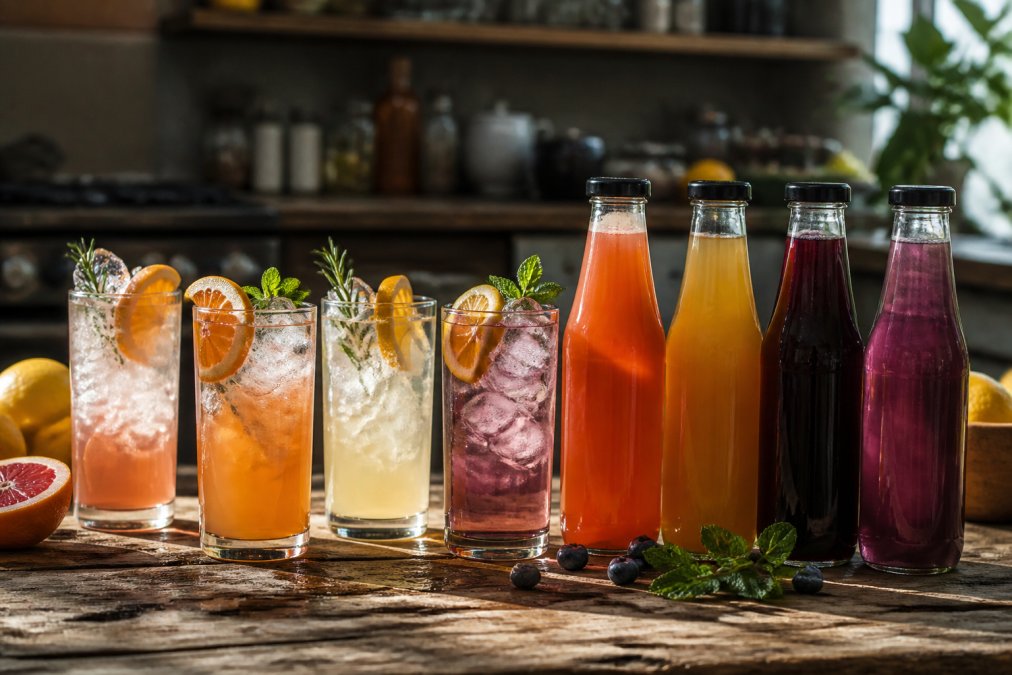
1. Blueberry, Moringa & Yuzu Shrub Mixer
The Blueberry, Moringa & Yuzu Shrub Mixer is the top pick for anyone wanting a mocktail mixer that genuinely surprises. Blueberry brings deep, jammy fruit character. Yuzu adds a citrus note between lemon and grapefruit with a floral edge. Moringa layers in subtle earthiness that keeps the whole thing from reading as just fruit.
At $19.50 per bottle, each makes 16-18 drinks using the 1:5 ratio of 1 oz shrub to 5 oz sparkling water over ice, well under $1.50 per drink for a naturally fermented, additive-free product.
Best for: Gin-style non-alcoholic spirit pairings, sparkling water builds, or as a palate cleanser between courses.
2. Santa Rosa Plum Grapefruit Shrub Mixer
The Santa Rosa Plum Grapefruit Shrub Mixer executes stone fruit and citrus cleanly. Santa Rosa plums are known for their tart-sweet balance and deep ruby color. Grapefruit adds a bitter citrus backbone that keeps sweetness in check.

This mixer works best with tonic water rather than plain seltzer. The quinine bitterness amplifies the grapefruit note and creates a sophisticated alcohol-free aperitif.
Best for: Tonic-based builds, pre-dinner drinks, and anyone who finds most mocktails too sweet.
3. Passionfruit & Lemongrass Shrub Mixer
The Passionfruit & Lemongrass Shrub Mixer pairs passionfruit's natural tartness with lemongrass, which adds a citrus-herbal note that keeps the profile clean and refreshing. Lemongrass is underused in mocktails, and its aromatic compounds act like a bridge between fruit and carbonation, making effervescence feel integrated rather than just fizzy.

Best for: Sparkling water builds, warm weather entertaining, and pairing with non-alcoholic rum-style spirits.
4. Concord Grape, Lime & Guava Leaf Shrub Mixer
The Concord Grape, Lime & Guava Leaf Shrub Mixer stands apart from generic grape mocktails. Concord grapes have flavor intensity that table grapes can't match, and raw fermentation preserves that intensity. Lime adds acidic edge, and guava leaf brings subtle tannic quality that gives the finish real structure.
This is the boldest flavor in the lineup and pairs exceptionally well with non-alcoholic whiskey-style spirits, where the tannic guava leaf note mirrors barrel character.
Best for: Richer, more complex builds, pairing with food, and guests who find lighter mocktails underwhelming.
The 3-Pack Shrub Mixer at $55.00 lets you offer three different flavor profiles across an evening.
Other Essential Mocktail Mixer Categories
Shrub mixers are the most nuanced option, but a complete mocktail pantry requires understanding other categories.
Seltzer and Tonic Water
Carbonation is the backbone of most mocktails. Plain seltzer is neutral and lets the mixer's flavor lead. Tonic water adds bitterness from quinine, creating a more complex base that works especially well with citrus-forward or botanical mixers. For most shrub-based mocktails, a 5:1 ratio of high-quality unflavored seltzer to shrub mixer gives the best balance.
Avoid using flavored seltzer with complex shrub mixers, competing flavors muddy the profile rather than complement it.
Simple Syrups and Botanical Infusions
Simple syrup adds sweetness and body. The standard ratio is equal parts sugar and water, dissolved over low heat. Botanical infusions like lavender simple syrup or rosemary honey syrup add extra dimension.
For a quick DIY version: combine 1 cup water with 1 cup sugar, add fresh herbs or dried botanicals, heat until dissolved, steep for 20 minutes, and strain. Refrigerated syrups last two to three weeks.
Citrus Juices and Fruit Purees
Fresh citrus juice is non-negotiable. Bottled juice lacks volatile aromatic compounds that make fresh citrus bright. Squeeze to order when possible. Fruit purees add body and color that juice alone can't provide. A tablespoon of muddled strawberry or mango puree at the base of a shaken mocktail gives it texture that feels like a craft cocktail. Balance purees with acid (citrus or shrub) to keep the flavor profile from falling flat.
How to Make Mocktails at Home: Ratios and Techniques
The most important skill in making mocktails at home is understanding ratios. A mocktail that tastes off is almost always a ratio problem, not an ingredient problem.
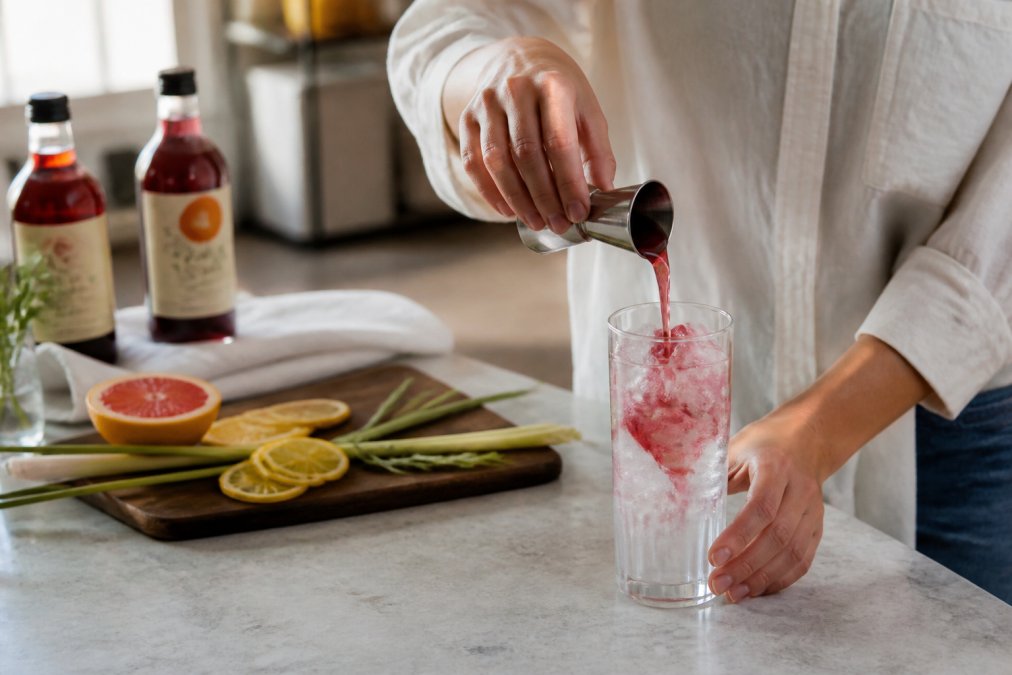
The 1:5 Shrub-to-Sparkling Ratio
The standard ratio for shrub-based mocktails is 1 oz shrub mixer to 5 oz sparkling water over ice. This is the ratio Drink Balo's mixers are calibrated for. At this ratio, the shrub provides the flavor backbone while carbonation carries the aromatics.
Adjusting from there:
- Stronger flavor: Move to 1:4 (1 oz shrub, 4 oz sparkling)
- Lighter, more refreshing: Move to 1:6
- Adding a non-alcoholic spirit: Use 1 oz shrub, 1.5 oz non-alcoholic spirit, 3.5 oz sparkling water
Temperature matters more than most people think. A well-iced glass dilutes the drink slightly as it sits, softening sharp acidic edges and integrating flavors. Build over plenty of ice and let the drink settle for 30 seconds before serving.
Shaken vs. Stirred vs. Built in Glass
- Shaken: Best for mocktails with citrus juice, fruit purees, or egg white alternatives. Shaking aerates the drink and creates a slightly frothy texture. Shake for 10-12 seconds with ice.
- Stirred: Best for spirit-forward builds where you want clarity and silky texture without aggressive dilution. Stir for 20-30 seconds in a mixing glass with ice, then strain.
- Built in glass: The simplest method and the right choice for most shrub-and-seltzer mocktails. Add ice, pour the shrub, top with sparkling water, and give one gentle stir.
Flavor Profiles: Matching Mixers to the Right Taste
Understanding three core profiles helps you choose the right mixer.
Sweet and fruity profiles work best for casual entertaining and guests new to mocktails. The Passionfruit & Lemongrass and Blueberry, Moringa & Yuzu both sit here, though the yuzu and moringa add enough complexity to appeal to sophisticated palates.
Tart and acidic profiles appeal to serious mocktail drinkers. The Santa Rosa Plum Grapefruit leads here, with grapefruit bitterness and plum tartness creating a genuinely adult drink. Pair with tonic water to amplify the bitter edge, or with simple syrup to soften acidity without losing brightness.
Bold and complex profiles offer depth. The Concord Grape, Lime & Guava Leaf delivers tannic structure, dark fruit, and citrus that rewards slow sipping. Pair with food, serve in a rocks glass over a large ice cube, and garnish with lime zest.
The acid-base balance separates a flat mocktail from a great one. Shrub mixers handle this naturally through fermentation.
Storage, Shelf Life, and Budget-Friendly DIY Alternatives
Drink Balo shrub mixers stay fresh for 6 months after opening when refrigerated. A single bottle at $19.50 making 16-18 drinks is a practical pantry staple.
Storage rules for all open mixers:
- Keep refrigerated at all times after opening
- Use a clean pour or spoon each time
- Check for off-odors or unusual cloudiness before using
- Date the bottle when opened
Budget-friendly DIY alternatives: The most accessible option is a drinking vinegar shrub: combine 1 cup fresh fruit, 1 cup sugar, and 1 cup apple cider vinegar. Muddle fruit with sugar, macerate for 24 hours, add vinegar, and let sit 24-48 hours before straining. It won't have the botanical complexity of naturally fermented products, but it works at the standard 1:5 ratio.
Honey syrup (1:1 honey to warm water) adds more complexity than plain sugar. Agave syrup diluted 2:1 with water dissolves easily in cold drinks.
Garnish Techniques and Seasonal Mocktail Ideas
A garnish signals flavor and adds aromatic dimension that hits before the first sip.
Essential garnish techniques:
- Citrus zest: Use a vegetable peeler to cut a wide strip of lemon, lime, or grapefruit peel. Express oils over the drink by bending the peel toward the glass, then run it around the rim before dropping it in.
- Fresh herbs: Press a sprig of mint, basil, or rosemary between your palms before garnishing to release volatile oils. Place on top rather than submerging.
- Dehydrated citrus wheels: Slice citrus thin, bake at 200°F for two to three hours, and store in an airtight container. They last for weeks.
- Salted or sugared rims: Wet the rim with a citrus wedge, then roll in flaky sea salt or colored sugar.
Seasonal mocktail ideas by mixer:
| Season | Mixer | Garnish | Suggested Build |
|---|---|---|---|
| Spring | Passionfruit & Lemongrass | Fresh lemongrass stalk, lime zest | 1 oz shrub, 5 oz seltzer, lime wedge |
| Summer | Blueberry, Moringa & Yuzu | Fresh blueberries, yuzu zest | 1 oz shrub, 5 oz seltzer, shaken |
| Fall | Santa Rosa Plum Grapefruit | Dehydrated grapefruit wheel | 1 oz shrub, 5 oz tonic water, rosemary sprig |
| Winter | Concord Grape, Lime & Guava Leaf | Lime zest, fresh sage | 1 oz shrub, 1 oz pomegranate juice, 4 oz seltzer |
Which Mocktail Mixer Should You Choose?
Choosing the right mixer comes down to three questions: what flavor profile do you prefer, what are you mixing it with, and how much complexity do you want?
For most people starting out, the Blueberry, Moringa & Yuzu Shrub Mixer is the best first choice. It's complex enough to impress guests but approachable enough to work with just seltzer and ice. The Passionfruit & Lemongrass is right for warm weather and tropical builds. The Santa Rosa Plum Grapefruit is for guests wanting something that feels like an adult aperitif. The Concord Grape, Lime & Guava Leaf is for anyone wanting depth and structure.
All four are naturally fermented, 100% non-alcoholic, made with only natural ingredients, and built to work at the standard 1:5 ratio. The 3-Pack Shrub Mixer at $55.00 is practical for anyone wanting to experiment before committing to a single flavor.
The craft non-alcoholic segment is one of the fastest-growing areas in the drinks market, driven by consumers wanting flavor and function without compromise. The right shrub mixer is where that starts.
| Mixer | Flavor Profile | Best Pairing | Price |
|---|---|---|---|
| Blueberry, Moringa & Yuzu | Sweet, tart, botanical | Plain seltzer, non-alcoholic gin | $19.50 |
| Santa Rosa Plum Grapefruit | Tart, bitter, juicy | Tonic water, aperitif style | $19.50 |
| Passionfruit & Lemongrass | Bright, tropical, aromatic | Seltzer, non-alcoholic rum | $19.50 |
| Concord Grape, Lime & Guava Leaf | Bold, tannic, complex | Tonic, non-alcoholic whiskey | $19.50 |
| 3-Pack Shrub Mixer | Varied | Any of the above | $55.00 |
Frequently Asked Questions
What is a good non-alcoholic cocktail mixer for beginners?
Shrub mixers are one of the easiest starting points for non-alcoholic mixology. They combine fruit, acid, and botanical flavors in a single bottle, so you only need to add sparkling water and ice. A ratio of 1 oz shrub mixer to 5 oz sparkling water gives a balanced, refreshing mocktail without any bartending experience. Naturally fermented shrub mixers also add a gentle complexity that plain syrups cannot match.
Are shrub sodas good for mocktails?
Shrub sodas work well as both ready-to-drink beverages and as a base for mocktail recipes. Because they are already carbonated and lightly sweetened, they pair cleanly with muddled herbs, citrus zest, or a splash of tonic water. Probiotic shrub sodas add gut-health benefits alongside complex flavors, making them a functional upgrade over standard soda mixers.
How do you balance flavors in a mocktail?
Good mocktail balance comes from managing four elements: sweet, tart, bitter, and effervescence. Start with an acid-forward mixer like a shrub, then adjust sweetness with a small amount of simple syrup if needed. Add carbonation through seltzer or tonic water to lift the palate. A few drops of non-alcoholic bitters or a citrus zest garnish can round out the flavor profile without adding sugar or alcohol.
How long do open mocktail mixers stay fresh?
Most shrub mixers stay fresh for up to 6 months after opening when kept refrigerated. The natural acidity from the fermentation process acts as a preservative, slowing spoilage. Always keep the bottle sealed and cold between uses. If you notice any off aromas or visible changes, discard the bottle. Ready-to-drink shrub sodas have a longer unopened shelf life of around 9 months in the refrigerator.
Can I pair shrub mixers with non-alcoholic spirits?
Yes. Shrub mixers pair well with non-alcoholic spirits because both bring botanical complexity without alcohol. Use the standard 1 oz shrub to 5 oz liquid ratio, replacing the sparkling water with a non-alcoholic spirit topped with seltzer. Tart fruit shrubs like plum-grapefruit or passionfruit-lemongrass complement the herbal and citrus notes common in most non-alcoholic spirits on the market.
Knowing which mocktail mixer to reach for is the difference between a drink that gets finished and one that sits on the table. Drink Balo's shrub mixer lineup is built on naturally fermented, farmers market-sourced ingredients that bring real flavor complexity to every glass, with no additives, no artificial flavors, and a shelf life that makes them practical for regular home entertaining. Add to cart and start building mocktails that actually taste like something.
This article was written using GrandRanker