

Get the Buzz Without the Alcohol: A 2026 Review
Table of Contents
- Why the Buzz Without Alcohol Is Driving Organic Marketplace Sales
- How We Evaluated These Alcohol-Free Options
- Shrub Soda: The Organic Marketplace Category to Watch
- Raw Kombucha and Fermented Drinks for Gut Health
- Best Mixers for Mocktail Recipes and Zero-Proof Cocktails
- Non-Alcoholic Drinks for Social Occasions and Happy Hour
- What Organic Marketplace Buyers Should Check Before Stocking
- Conclusion
- Frequently Asked Questions
Last Updated: October 6, 2026
Why the Buzz Without Alcohol Is Driving Organic Marketplace Sales
Shoppers still want the lift, ritual, and social ease of a cocktail without ethanol, which is why the buzz without alcohol has become a shelf-defining category on organic marketplaces.
At Drink Balo, we ferment excess farmers market produce into raw kombucha, shrub sodas, and shrub mixers, and buyers keep asking: what actually delivers a satisfying, sophisticated drink with zero alcohol?
The answer is a set of categories, each with a different job. Below: what shoppers want, how we evaluate these drinks, and which deserve shelf space in 2026.
What Shoppers Are Actually Looking For
The buzz without alcohol is a feeling, not a chemical. Shoppers describe it as the calm, social, elevated sensation of a well-made drink shared with others, not intoxication.
That reframing changes what they buy: complexity over sweetness, a drink that looks right in a wine glass or coupe, readable ingredients, and a clear alcohol-content statement, for most non-alcoholic beverages, none at all.
Customers arrive with a specific occasion in mind, a dinner party, a Sunday afternoon, a Dry January stretch that became permanent. The product has to fit the moment.
How We Evaluated These Alcohol-Free Options
We judge every category against six criteria, our own bottles included.
- Alcohol content and labeling: Is zero alcohol stated clearly on the front of the pack?
- Ingredients: Are they recognizable, organic where possible, and free of artificial additives?
- Sugar and carbohydrates: How much per serving, and is the sweetness balanced?
| Category | Alcohol | Typical Sugar | Best Occasion | Shelf Life |
|---|---|---|---|---|
| Shrub soda | Zero | Low | Everyday, mixers | Long, refrigerated |
| Raw kombucha | Trace to zero | Low to moderate | Daily gut health | Short, refrigerated |
| Alcohol-free spirits | Zero | Varies | Cocktail building | Long, ambient |
| Non-alcoholic wine | Zero | Low | Dinner pairing | Moderate |
| Functional sodas | Zero | Varies | Calm, wind-down | Long, ambient |
That table is the fastest way to sort a category; the rest of this guide explains each row.

Shrub Soda: The Organic Marketplace Category to Watch
Shrub soda is a carbonated drinking vinegar made from fruit, sugar, and vinegar, and it is gaining the most shelf space on organic marketplaces right now. Shrubs deliver acidity and complexity sugary sodas cannot, satisfying adult palates without alcohol.
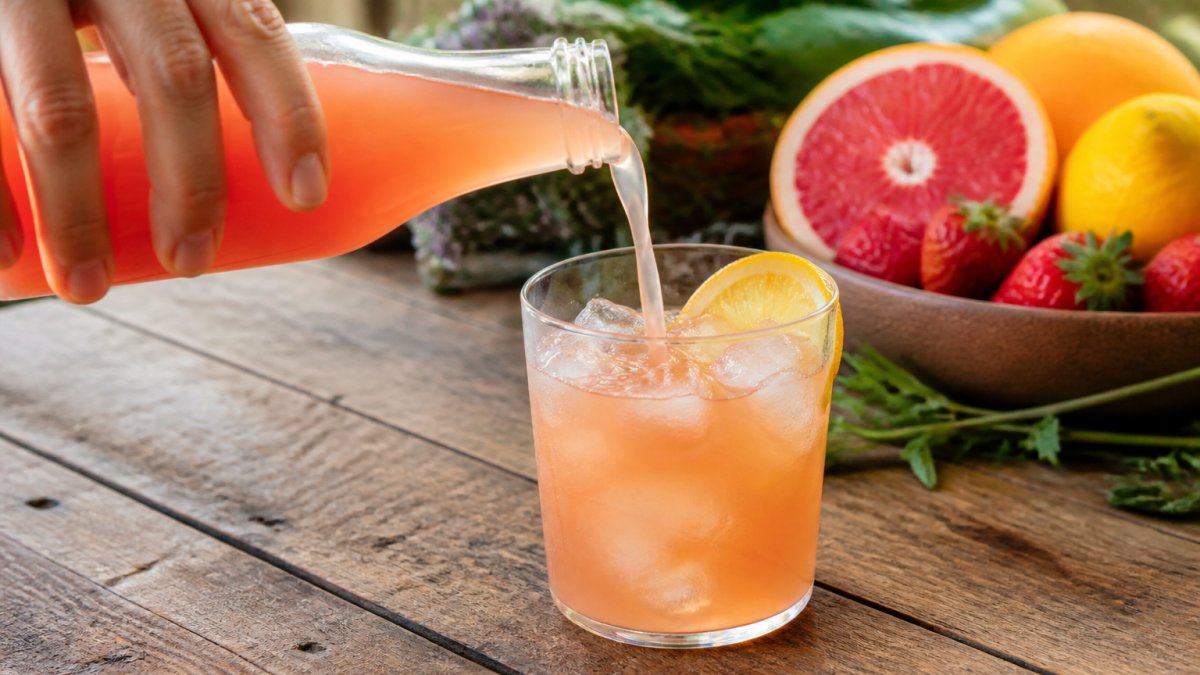
A good shrub uses real fruit and cane sugar rather than high-fructose syrup and ferments naturally, a clean label story for buyers.
The Balo Shrub Soda Lineup, Reviewed
Our shrub sodas come in 8.5 oz bottles, sold as four-packs at $18.00.
4 pack Santa Rosa plum & grapefruit shrub soda (shop the plum and grapefruit pack) leads with stone fruit and finishes on bitter citrus peel, our most food-friendly bottle, ideal with roasted vegetables.
4 pack Passionfruit Makrut lime shrub soda (shop the passionfruit and lime pack) is the brightest of the five, its makrut lime leaf adding an herbal edge that reads tropical without tipping into candy.

4 pack Blueberry, moringa, yuzu shrub soda (shop the blueberry and yuzu pack) is the most layered: blueberry gives body, yuzu brings sharpness, moringa rounds it out.

4 Pack Melon Satsuma Mandarin Shrub soda (shop the melon and mandarin pack) is the softest and most approachable, the right first bottle for someone new to shrubs.
4 pack Concord grape, lime & guava leaf shrub soda (shop the Concord grape pack) is the boldest.
Raw Kombucha and Fermented Drinks for Gut Health
Raw kombucha is a fermented tea drink with live cultures and the category most shoppers already know by name. The draw is gut health; the caution is consistency, since flavor and culture activity vary between batches.
Buyers should look for brands that state their fermentation process openly and keep the product refrigerated throughout distribution.
For merchandising, kombucha belongs in the refrigerated set, not the ambient soda aisle.
Best Mixers for Mocktail Recipes and Zero-Proof Cocktails
The best mixers for mocktail recipes have real acidity, low sugar, and a defined bitter or botanical note, the three elements that carry the structure ethanol normally provides. Too sweet flattens the drink; no bitterness leaves it hollow.
Match the mixer to the job
Different zero-proof bases do different work in a glass. Use this framework when building a mocktail set:
| Base | What it adds | Best in | Watch for |
|---|---|---|---|
| Shrub (drinking vinegar) | Acidity, fruit depth, tannic grip | Spritzes, highballs, food pairing | Vinegar sharpness if over-poured |
| Raw kombucha | Tartness, light funk, live cultures | Highballs, mimosas, everyday pours | Keep refrigerated |
| Alcohol-free spirits | Botanical and juniper-like aromatics | Martini, negroni, and old fashioned builds | Often sweetened; check the label |
| Hop-based drinks | Bitterness, malt body | Beer-style pours, cookouts | Bitterness can dominate light food |
| Tonic and soda water | Carbonation, quinine bitterness | Lengthening any base | Adds no flavor on its own |
| Functional sodas | Aroma, adaptogen or botanical notes | Wind-down and calm occasions | Effects are often marketing-led |
Three builds, with ratios
Ratios matter more than brand names. These are the proportions we use:
4 pack Santa Rosa plum & grapefruit shrub soda →
- Zero-proof spritz: 3 oz shrub soda, 2 oz soda water, 1 orange twist over ice. The shrub carries the acid; the soda water lengthens it.
- Faux paloma: 3 oz grapefruit shrub soda, 0.5 oz fresh lime, salted rim, grapefruit peel. The salt suppresses bitterness and makes the fruit read sweeter without added sugar.
- Berry highball: 3 oz blueberry and yuzu shrub soda, 1 oz sparkling water, 4 mint leaves slapped (not muddled) to release oils.
Bartenders building zero-proof menus treat the mixer as the base spirit and soda water as the dilution, highball logic, minus the ethanol.
Check the label before you pour
Mixers are where alcohol-content labeling gets murky. In the United States, a beverage labeled "non-alcoholic" beer, wine, or malt beverage may still contain up to 0.5% alcohol by volume under federal rules, while "alcohol-free" is held to a stricter standard. Kombucha is its own case: fermented, it can carry trace alcohol, and some producers pasteurize or otherwise manage it to stay below the threshold.
For a shopper or a buyer, the practical move is the same:
- Read the front panel for "0.0%" or "alcohol-free" rather than "non-alcoholic."
- Check the nutrition and ingredient panel for a stated ABV or a "contains less than" note.
What this means for a marketplace set
A credible mocktail section needs at least one acid-forward base (shrub or citrus), one bitter base (hop drink or tonic), and one aromatic base (alcohol-free spirit) so shoppers can build a drink without leaving the aisle. Stocking three sweet mixers and no bitter option is the most common merchandising mistake in the category.
Non-Alcoholic Drinks for Social Occasions and Happy Hour
Non-alcoholic drinks for social occasions work when they look and feel like everyone else's drink and the host has enough of them, a merchandising and planning problem as much as a recipe one.
Map the drink to the occasion
Shoppers arrive with a specific moment in mind. Matching category to occasion is the fastest way to build a set that gets used:
| Occasion | Best-fit category | Why it works |
|---|---|---|
| Cocktail hour | Alcohol-free spirits, shrub mixers | Aromatic, served in stemware, feels intentional |
| Dinner party | Non-alcoholic wine, shrub soda | Acid and tannin pair with food |
| Cookout | Hop-based drinks, kombucha | Bitter, cold, sessionable |
| Wind-down | Functional sodas | Botanical aroma, no sugar spike |
| Everyday | Shrub soda, kombucha | Low sugar, repeat purchase |
Price and value, per serving
Price-per-serving is the comparison shoppers actually make. The pattern is consistent: alcohol-free spirits cost the most per serving (small bottles, small measures), non-alcoholic wine sits in the middle, and shrub soda, kombucha, and hop-based drinks cost the least (multi-packs, poured whole).
For buyers, the zero-proof set needs a range: a shelf of only premium spirits loses the everyday shopper, and one of only multi-pack sodas loses the host building a cocktail menu.
Merchandising the set
A zero-proof section scattered across the store does not sell. A few practical moves:
- Group by occasion, not by category. A "cocktail hour" block next to the glassware outsells a "non-alcoholic" block buried in the soda aisle.
- Cross-merchandise with garnish. Citrus, mint, and cocktail cherries next to the mixers lift basket size and answer the "what do I do with this" question.
- Sample at the right hour. A demo during cocktail hour converts better than a midday demo, because the shopper is already thinking about the occasion.
Dry January and the year-round set
Dry January has made this easier. What began as a one-month reset now shapes year-round buying, and marketplaces with a credible zero-proof set capture customers who would otherwise bring their own. January trial typically converts into a smaller but steady year-round base, so the set should shrink after January, not disappear.
The occasion is the product. A shopper buying for a dinner party and a shopper buying for a Tuesday night want different bottles, and a set that serves both is the one that earns repeat visits.
What Organic Marketplace Buyers Should Check Before Stocking
Before a zero-proof product earns shelf space, buyers should verify five things: organic certification where claimed, a transparent alcohol-content statement, ingredient sourcing, refrigeration requirements, and realistic sell-through.
Sustainability belongs on that list too. Shoppers increasingly ask where the fruit comes from and what happens to surplus produce, the question Drink Balo was built around, turning excess farmers market produce into bottled drinks and supporting local growers.
Conclusion
The zero-proof shelf is no longer a courtesy section. Health-conscious shoppers, sober-curious customers, and hosts who want a better option all land here, and they expect real flavor rather than a consolation prize.
That is the standard we hold at Drink Balo.
Add to cart and give your customers a drink that tastes like a treat and feels like one too.
Frequently Asked Questions
What will give you a buzz without alcohol?
Adaptogenic and fermented drinks like shrub sodas and raw kombucha can create a calming, focused feeling without alcohol. Ingredients such as adaptogens and probiotics support mood and digestion, while the naturally fermented flavor gives the drink a complex, grown-up taste. Many people find that the ritual of a crafted zero-proof drink plus the functional ingredients delivers the social buzz they are after, minus the hangover.
Can kombucha be a satisfying alcohol-free drink for social occasions?
Yes. Raw kombucha and shrub sodas work well for social occasions because they feel special and are served in glassware like a cocktail. They offer tangy, layered flavors that hold up alongside food, and they give guests something to hold and sip. For hosts, having a few flavors on hand means everyone has a zero-proof option that does not feel like an afterthought.
How can you make a flavorful mocktail with shrub mixers?
Shrub mixers bring sweet, tart, and botanical notes that replace the complexity of alcohol in a mocktail. Try mixing a shrub soda with fresh citrus, herbs like mint or basil, and sparkling water over ice. You can also use a shrub as the base for a zero-proof spritz by adding tonic or soda water. The vinegar-based fermentation gives the drink a tangy depth that plain juice cannot match.
What should organic marketplace buyers look for in non-alcoholic beverages?
Buyers should check for transparent labeling: alcohol content, sugar grams, probiotic claims, and whether ingredients are organic. Look at shelf life and refrigeration needs, since fermented drinks often require cold storage. Also review sell-through data and packaging sustainability. Products with clear certifications and a story behind the ingredients tend to build repeat customers and stronger margins in the organic set.
Is raw kombucha different from regular kombucha?
Raw kombucha retains live cultures and enzymes. If you want the functional upside, check the label for 'raw' and 'naturally fermented' and keep it cold from purchase to pour.