

Drink Ghia vs Shrub Mixers: A 2026 Comparison
Table of Contents
- What Sets Shrub Mixers Apart from Apéritifs Like Ghia
- Flavor, Acidity, and Mouthfeel: A Sensory Comparison
- Sugar, Calories, and Ingredient Labels: What's Actually in the Bottle
- The Benefits of Fermented Shrub Mixers for Gut Health and Social Drinking
- How to Make Shrub Sodas at Home (and When to Buy Instead)
- Shelf Life, Storage, and Cost Per Serving: The Practical Math
- Pairing Guide: Shrub Mixers with Soda, Tonic, and Base Spirits
- Which Zero-Proof Option Fits Your Palate and Priorities?
- Frequently Asked Questions
Last Updated: October 2, 2026
What Sets Shrub Mixers Apart from Apéritifs Like Ghia
Shrub mixers are vinegar-based, fermented concentrates you dilute with sparkling water or a base spirit; apéritifs like Ghia are ready-to-drink botanical blends built around gentian and other bittering roots. That structural difference, a concentrate you mix versus a bottle you pour, drives almost every other distinction, from flavor and sugar to shelf life and cost.
The category has grown quickly as sober-curious drinking has moved from niche to normal. According to NielsenIQ's non-alcoholic beverage tracking, no- and low-alcohol beverage sales have climbed steadily over the past several years, with younger buyers driving much of the growth. Shrub mixers sit at the intersection of two trends: the cocktail ritual and the fermented, gut-friendly drink.
A shrub is not a diluted apéritif, and an apéritif is not a concentrated shrub. They solve different problems.
Flavor, Acidity, and Mouthfeel: A Sensory Comparison
Shrub mixers lead with acidity and fruit; apéritifs lead with bitterness and herbal complexity. A good shrub hits your palate with tartness first, then rounds out with its fruit or botanical base.
The two products are chemically different, and that shows up in the glass:
| Attribute | Shrub Mixers | Apéritifs Like Ghia |
|---|---|---|
| Primary acid | Vinegar (acetic) | Citric and tartaric |
| Lead flavor | Fruit, tart, juicy | Bitter, herbal, botanical |
| Mouthfeel | Bright, thin, palate-cleansing | Syrupy, coating, lingering |
| Sweetness | Low, fruit-driven | Moderate, balanced by bitterness |
| Best served | Diluted 1:5 with soda | Over ice, straight or with tonic |
Vinegar-based acidity gives shrubs a sharper, more citrus-forward edge than most apéritifs.
Bitterness is the dividing line. Tannins and herbal notes in apéritifs are an acquired taste that dilution cannot hide. Shrubs are forgiving: mix them too strong and they just taste more tart.
Sugar, Calories, and Ingredient Labels: What's Actually in the Bottle
Sugar content varies widely across both categories, and the label tells you more than the marketing does. Because shrubs are concentrates, sugar per ounce looks high on the bottle but drops sharply once diluted.
A few things worth checking on any label:
- Added sugar vs. fruit sugar. Some brands lean on cane sugar for body; others rely on the fruit itself.
- Artificial sweeteners. Many zero-proof brands use stevia, monk fruit, or sucralose to cut calories. If you avoid those, read carefully.
- Preservatives and additives. Naturally fermented products often skip them; shelf-stable concentrates sometimes do not.
- Serving size. A concentrate listed at 5 grams of sugar per serving is not comparable to a ready-to-drink at 12 grams per serving.
Drink Balo's shrub mixers land at 5 grams of cane sugar per mixed drink, made with only natural ingredients and no additives. The company processes every ingredient from fresh rather than buying pre-made juices, and each bottle makes about 16 to 18 drinks.
The Benefits of Fermented Shrub Mixers for Gut Health and Social Drinking
Fermented shrub mixers offer two practical benefits: naturally occurring organic acids from fermentation, and a lower-sugar way to join social drinking without alcohol.
Here is where labels get slippery. Three terms get used interchangeably, and they are not the same thing:
- Fermented. The product went through a microbial process at some point. This says nothing about whether live cultures survive in the bottle.
- Contains live and active cultures. A specific claim that viable microorganisms are present at the time of sale. This is the claim yogurt carries, and it is the one that matters if you are buying for gut-health reasons.
- Prebiotic. The product contains fiber or compounds that feed your existing gut bacteria. This is a separate mechanism from probiotics and does not require live cultures at all.
A shelf-stable shrub that has been pasteurized or hot-filled will typically not carry live cultures, because heat kills them.
The FDA does not pre-approve structure-function claims like 'supports digestive health.' (the FDA) A manufacturer can use that language, but it must be truthful and not misleading, and cannot claim to treat or prevent disease. The honest framing for any fermented mixer is 'fermented to feel better,' not 'clinically proven to improve digestion.' Treat products that blur that line with suspicion.
For sober-curious drinkers, the bigger and more defensible win is social.
Drink Balo's shrub mixers are naturally fermented, 100% non-alcoholic, and labeled adaptogenic and prebiotic.
How to Make Shrub Sodas at Home (and When to Buy Instead)
Making a shrub soda at home takes about 15 minutes of active work plus 2 to 3 days of fermentation. The base recipe is simple: fruit, sugar, and vinegar, left to sit until syrupy and tart.
Here is the working method:
- Macerate the fruit. Combine 1 cup chopped fruit with 1 cup sugar in a clean jar. Stir, cover, and refrigerate 24 to 48 hours until the fruit releases its juice.
- Strain and add vinegar. Press the fruit to extract all liquid, then stir in 1 cup of apple cider or champagne vinegar.
- Rest the mixture. Let it sit 2 to 3 days at room temperature, then refrigerate. The flavor deepens with time.
- Build the soda. Mix 1 ounce of shrub with 5 ounces of sparkling water over ice.
The catch is consistency. Home shrubs vary batch to batch, and fermentation can go sideways if your fruit or equipment is not clean. A finished shrub mixer removes that variability and delivers a reliable flavor every time.

For the ritual without the guesswork, a bottled shrub mixer is faster. Drink Balo's Blueberry, moringa, yuzu shrub mixer and Santa Rosa Plum Grapefruit Shrub Mixer each make 16 to 18 drinks per bottle.
Blueberry, moringa, yuzu shrub mixer →

Shelf Life, Storage, and Cost Per Serving: The Practical Math
Opened shrub mixers last about 6 months in the refrigerator, while most ready-to-drink apéritifs should be consumed within a few weeks of opening, one of the most underrated reasons to keep a shrub on hand.
Cost per serving is the other. A $19.50 bottle of shrub mixer that makes 16 to 18 drinks works out to roughly $1.10 to $1.20 per serving. Ready-to-drink apéritifs are priced per bottle, so per-serving cost depends on your pour.
| Factor | Shrub Mixers | Apéritifs |
|---|---|---|
| Opened shelf life | About 6 months, refrigerated | A few weeks |
| Cost per serving | About $1.10-$1.20 | Varies by pour |
| Storage | Refrigerate after opening | Refrigerate after opening |
| Dilution | Required (1:5) | Optional |
| Waste risk | Low, concentrate keeps | Higher, ready-to-drink oxidizes |
For regular entertainers, the concentrate model wins on storage and cost: open a bottle when you need it, and it stays good for months.
Pairing Guide: Shrub Mixers with Soda, Tonic, and Base Spirits
The best pairing for a shrub mixer depends on two variables: the acidity and fruit character of the shrub, and the bitterness and carbonation of the base. Here is a structured way to think about it.
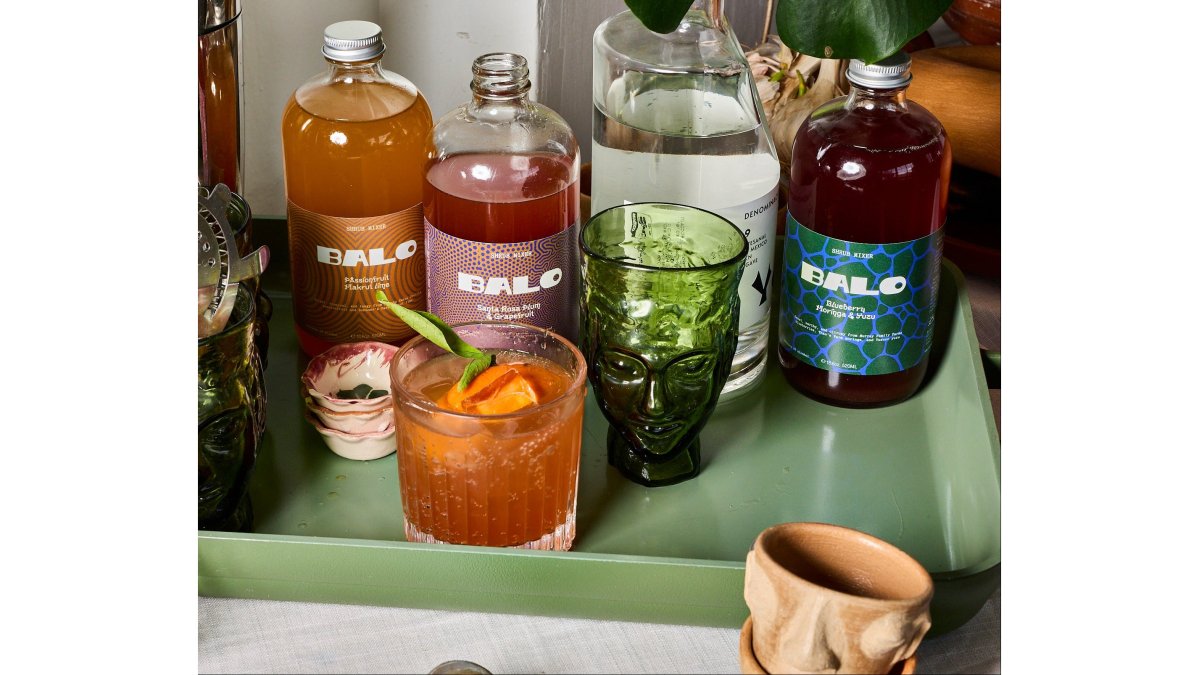
The pairing matrix. Match the shrub's dominant note to the base that complements rather than competes with it:
| Shrub profile | Best soda/base | Ratio (shrub : base) | Why it works |
|---|---|---|---|
| Bright citrus (yuzu, grapefruit, lime) | Sparkling water | 1:5 | Clean carbonation lets the acid lead |
| Bright citrus | Tonic water | 1:4 | Quinine bitterness echoes the citrus peel |
| Berry (blueberry, concord grape) | Ginger beer | 1:4 | Spice cuts the fruit's sweetness |
| Berry | Sparkling water | 1:5 | Keeps it light and drinkable |
| Stone fruit (plum, peach) | Tonic water | 1:4 | Bitterness balances the rounder fruit |
| Stone fruit | Club soda | 1:5 | Neutral base preserves the fruit |
| Herbal or floral (moringa, lemongrass) | Sparkling water | 1:5 | Delicate notes need a neutral canvas |
| Herbal or floral | Gin | 1:2 (plus 3 oz soda) | Botanical gin amplifies the herbal layer |
Sparkling water. The cleanest option and the default for a reason.
Tonic water. Adds bitterness and carbonation.
Gin. Botanical gin and a fruit shrub make a low-proof spritz that tastes like a real cocktail.
Tequila or mezcal. Pairs well with tart, citrusy shrubs; the smoke in mezcal contrasts nicely with vinegar.
Vodka. Neutral base that lets the shrub do all the talking.
Garnish matters more than people expect.
Which Zero-Proof Option Fits Your Palate and Priorities?
Choose a shrub mixer for a tart, fruit-forward concentrate that keeps for months and costs about a dollar per drink. Choose an apéritif like Ghia for bitter, herbal, ready-to-drink pours and a shorter shelf life.
They are not substitutes. A shrub is a building block; an apéritif is a finished drink. If you like to mix, host, and experiment, a shrub mixer gives more range.
For buyers stocking a shelf, the concentrate model reduces waste and lets you carry more flavor variety without more inventory risk. Drink Balo's 3-Pack Shrub Mixer at $55.00 covers three flavors, and the Passionfruit & Lemongrass Shrub Mixer and Concord grape, lime & guava leaf shrub mixer round out the seasonal range.

Frequently Asked Questions
What is the difference between an apéritif like Ghia and a shrub mixer?
Ghia is a non-alcoholic apéritif built around gentian root, rhubarb, and other botanicals for a bitter, complex profile. Shrub mixers are vinegar-based concentrates made from fruit, sugar, and fermentation, delivering a tart, juicy flavor. Ghia leans bitter and herbal; shrub mixers lean bright and acidic. Both work in mocktails, but they serve different taste preferences and mixing styles.
Are shrub mixers better for digestion than non-alcoholic apéritifs?
Shrub mixers contain fermented vinegar, which has traditionally been used as a digestive aid. The benefits of fermented shrub mixers include prebiotic compounds from the fermentation process. Ghia's botanical blend may also support digestion through gentian root and other bitter herbs. Neither is a medicine, but if you prefer a fruit-forward, vinegar-based option, shrub mixers are a natural fit.
How do you use shrub mixers in non-alcoholic cocktails?
The standard ratio is 1 ounce of shrub mixer to 5 ounces of sparkling water or tonic water over ice. For a more complex mocktail, add fresh citrus, muddled herbs, or a splash of non-alcoholic spirit. Shrub mixers also work well in spritzers, iced tea, and lemonade. Start with the 1:5 ratio and adjust to taste.
Does Ghia contain fermented ingredients?
Ghia's formula focuses on botanical extracts and juices rather than fermented ingredients. Shrub mixers, by contrast, rely on fermentation of fruit and sugar with vinegar, creating naturally occurring prebiotics and a tangy, complex flavor. If fermentation is a priority for you, shrub mixers are the clearer choice.
Can you substitute shrub mixers for Ghia in mocktail recipes?
You can substitute, but expect a different drink. Shrub mixers bring more acidity and fruit sweetness, while Ghia adds bitter, herbal notes. In a recipe calling for Ghia, using a shrub mixer will make the drink brighter and less bitter. Try a 1:1 swap first, then adjust with tonic water or a bitter non-alcoholic spirit to balance the profile.
Non-alcoholic drinkers deserve options that taste as considered as the cocktails they replace, and finding the right one usually comes down to whether you want a concentrate or a ready-to-drink. Drink Balo makes shrub mixers from excess farmers market produce, fermented to feel better and grown to taste good, with each bottle making 16 to 18 drinks at 5 grams of cane sugar per mixed drink. Add to cart and build a zero-proof shelf that holds up to any occasion.