

How to Make Shrub Sodas at Home
Table of Contents
- What You'll Need to Make Shrub Sodas at Home
- Understanding the Basic Shrub Ratio
- How to Make a Fruit Drinking Vinegar Recipe
- Fermented Shrub Soda Benefits and Why Fermentation Matters
- How to Use Shrub Mixers to Serve Your Sodas
- Flavor Combinations, Pairings, and Advanced Carbonation
- Storage, Shelf Life, and Shelf-Stable Safety
- Common Mistakes to Avoid When Making Shrub Sodas
- Frequently Asked Questions
Last Updated: September 18, 2026
What You'll Need to Make Shrub Sodas at Home
To make shrub sodas at home, you need just a few basic ingredients and tools.
Essential ingredients:
- Fresh fruit or vegetables (or both)
- Cane sugar
- Apple cider vinegar or other quality vinegar
- Club soda or sparkling water
- Optional: herbs, spices, and botanicals for flavor
Tools you'll want:
- Glass jars (mason jars work perfectly)
- Measuring cups and spoons
- A fine mesh strainer
- A wooden spoon for stirring
- Bottles for storage
Most home cooks already have these items in their kitchen.
Understanding the Basic Shrub Ratio
The foundation of every shrub soda is the basic shrub ratio: 1:1:1, equal parts fruit, sugar, and vinegar by weight, which creates the perfect balance between sweetness and acidity.
The sugar dissolves into fruit juices and vinegar, creating a concentrated syrup that preserves well and adds complexity. Mix 1 ounce of concentrate with 5 ounces of club soda for a perfectly balanced drink.
The 1:1:1 ratio breakdown:
- 1 part fruit (by weight)
- 1 part cane sugar (by weight)
- 1 part vinegar (by weight)
For example, 2 pounds of fresh berries requires 2 pounds of sugar and 2 cups of vinegar, creating a shelf-stable base for the season.
How to Make a Fruit Drinking Vinegar Recipe
A fruit drinking vinegar is the concentrated base for your shrub sodas. You'll prepare it using cold-process or hot-process methods, both creating shelf-stable mixtures that last for months.
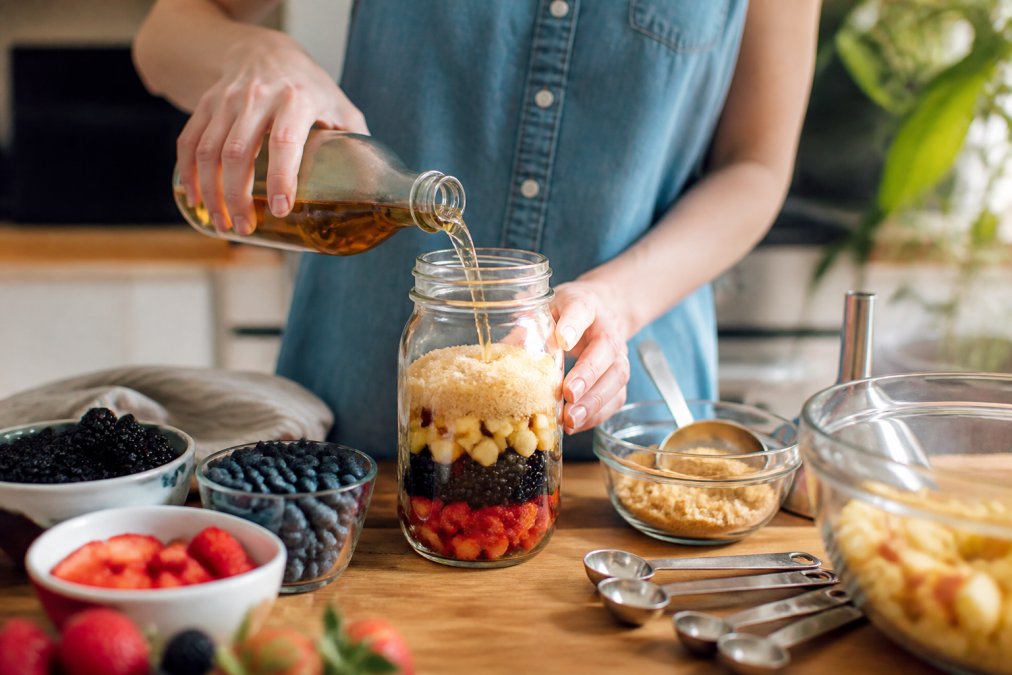
Cold-Process Method
The cold-process method requires patience but produces vibrant flavors through maceration, allowing fruit to slowly release its juices.
Steps for cold-process shrub sodas:
- Chop your fruit into small, even pieces
- Layer fruit and sugar in a clean glass jar, alternating between them
- Pour vinegar over the mixture until it covers the fruit
- Stir gently to combine
- Cover the jar loosely (use cheesecloth or a coffee filter)
- Let it sit at room temperature for 2-4 weeks
- Strain through fine mesh, pressing gently on the fruit
- Transfer the liquid to clean bottles
Use cold-process for delicate fruits like berries and stone fruits, which release essential oils without heat damage.
Hot-Process Method
The hot-process method speeds up infusion by combining all ingredients with heat, creating a finished base in hours rather than weeks.
Steps for hot-process shrub sodas:
- Combine fruit, sugar, and vinegar in a pot
- Heat gently until sugar dissolves (do not boil)
- Simmer for 15-20 minutes
- Cool completely to room temperature
- Strain through fine mesh
- Transfer to clean bottles
Heat accelerates extraction but may lose delicate aromatics; use hot-process for hardy fruits like apples and citrus.
Fermented Shrub Soda Benefits and Why Fermentation Matters
Fermentation transforms fruit drinking vinegar into a living beverage, with beneficial bacteria and yeast creating compounds that distinguish shrub sodas from simple fruit syrups.
Fermentation creates probiotics that support digestive health through live cultures that develop naturally with unpasteurized vinegar and time.
What fermentation adds to shrub sodas:
- Probiotics for gut health
- Enhanced acidity through natural fermentation
- Improved flavor complexity
- Better preservation without additives
- Nutritional compounds created during fermentation
Fermented shrub sodas develop deeper flavor profiles over time as acidity balances, which is why many makers age their concentrate for a few weeks before use.
How to Use Shrub Mixers to Serve Your Sodas
Once your shrub concentrate is ready, the standard serving ratio is 1 ounce concentrate to 5 ounces sparkling water or club soda.
Basic serving formula:
- 1 oz shrub concentrate
- 5 oz club soda
- Ice
- Optional garnish (citrus zest, fresh herbs, or botanicals)
Pour concentrate into a highball glass with ice, top with cold club soda, and stir gently for a balanced, refreshing drink.
Tips for serving shrub sodas:
Blueberry, moringa, yuzu shrub mixer →
- Chill your glasses before serving
- Use cold club soda for maximum fizz
- Stir gently to avoid losing carbonation
- Garnish with complementary flavors
- Serve immediately for best results
Flavor Combinations, Pairings, and Advanced Carbonation
Creating unique flavor combinations elevates homemade shrubs to professional quality.
Flavor Pairing Fundamentals
Classic flavor pairings:
- Berry with basil and black pepper
- Stone fruit with ginger and cardamom
- Citrus with turmeric and black pepper
- Apple with cinnamon and clove
- Tropical fruit with lemongrass and ginger
Balance is key: strong aromatics should complement, not overpower, the fruit. Start small and taste as you go.
Steep dried herbs, spices, or flowers in finished concentrate for 24-48 hours; lavender, rosemary, and thyme work well with fruit-based shrubs.
Advanced Carbonation: Beyond Club Soda
Advanced carbonation techniques allow you to control fizz levels precisely and create professional-grade drinks at home.
Home soda siphon method: A soda siphon carbonates liquid on demand using CO₂ cartridges.
Process:
- Fill a sanitized keg with finished shrub concentrate
- Attach to a CO₂ tank via regulator set to 10-15 PSI
- Carbonate for 24-48 hours at 35-40°F
- Dispense directly from tap into glasses with ice
Process:
- Fill clean, sturdy glass bottles (designed for carbonation) with finished shrub concentrate
- Seal tightly and store at room temperature (65-72°F)
- "Burp" bottles daily to release excess pressure
- After 3-7 days, refrigerate to slow fermentation
- Check carbonation by opening carefully over a sink
Choosing Your Carbonation Method
Casual use: Club soda ($3-$6/case). Regular consumption: Soda siphon ($100-$300) pays for itself after 50-100 uses. Batch production: Kegging system ($200-$500). Adventurous: Natural bottle carbonation is free but requires daily monitoring.
Storage, Shelf Life, and Shelf-Stable Safety
Properly stored shrub sodas remain shelf-stable and safe for extended periods. Understanding the science behind preservation is crucial for confident home production.
Storage guidelines:
- Keep shrub concentrate in clean glass bottles
- Store in a cool, dark place away from direct sunlight
- Unopened bottles last 6-12 months at room temperature
- Once opened, refrigerate and use within 6 months
- Shake before each use to redistribute any settled ingredients
pH and Food Safety: The Science Behind Shelf Stability
The acidity of your shrub, measured as pH, determines shelf stability and safety. Acidic environments inhibit harmful bacteria, including Clostridium botulinum.
Safe pH thresholds for shelf-stable shrubs:
- pH below 3.5: Safe for shelf-stable storage at room temperature
- pH 3.5-4.6: Borderline; requires refrigeration after opening
- pH above 4.6: Not shelf-stable; requires refrigeration or pressure canning
Vinegar Variety and Its Impact on pH and Shelf Life
The acidity percentage and type of vinegar directly affect your shrub's pH, flavor profile, and shelf stability.
Common vinegars and their acidity levels:
- Apple cider vinegar (standard): 4-6% acidity, pH typically 2.5-3.0
- Distilled white vinegar: 5-8% acidity, pH typically 2.4-2.7
- Raw/unpasteurized apple cider vinegar: 4-6% acidity, pH typically 2.8-3.2 (contains "mother," beneficial bacteria)
- Champagne vinegar: 5-6% acidity, pH typically 2.8-3.1
- Balsamic vinegar: 4-6% acidity, pH typically 2.5-3.5
- Sherry vinegar: 4-7% acidity, pH typically 2.8-3.2
- Rice vinegar: 4-5% acidity, pH typically 2.6-3.0
Temperature and Long-Term Storage
Keep finished shrub sodas in a cool space (ideally 50-70°F). Refrigeration extends shelf life significantly, especially after opening, and slows residual fermentation.
Shelf-stable shrub sodas depend on proper acidity (pH below 3.5), clean bottles, cool storage, and the right vinegar choice. When stored correctly, your homemade shrub concentrate will stay fresh for 6-12 months unopened, and several months after opening if refrigerated. If you're unsure about pH, test it, a $10 pack of pH strips removes all guesswork. ::: Mastering the balance of acidity and preservation in these concentrates provides a reliable foundation for experimenting with other homemade syrup recipes that rely on similar shelf-stable techniques.
Common Mistakes to Avoid When Making Shrub Sodas
Most shrub-making failures come from a few predictable errors. Knowing what to avoid saves time and ingredients.
Frequently Asked Questions
What is the best vinegar for making shrub sodas?
Apple cider vinegar is the most popular choice for shrub sodas because its mild acidity and subtle flavor complement fruit without overpowering it. The acidity level matters, aim for vinegars between 4-6% acidity for proper preservation and balance. Raw, unfiltered apple cider vinegar adds beneficial bacteria, though any quality vinegar works. The vinegar variety you choose directly affects your final flavor profile, so experiment with different types to find your preference.
How long does homemade shrub soda last in the refrigerator?
Once opened, Drink Balo's shrub mixers stay fresh for 6 months when refrigerated. Once you've mixed your shrub with sparkling water to serve, consume the drink within a few hours for best carbonation and freshness. The high acidity from the vinegar and sugar content acts as a natural preservative, making shrubs one of the longest-lasting homemade beverages you can prepare.
How much shrub should I use in a drink?
The standard ratio is 1 ounce of shrub syrup to 5 ounces of sparkling water and ice in a highball glass. This creates a balanced, refreshing drink with proper sweetness and tartness. You can adjust based on preference, use less for a lighter flavor or more for intensity. One bottle of Drink Balo's shrub mixers makes approximately 16-18 drinks at this ratio.
Are shrub sodas healthy compared to regular soda?
Fermented shrub sodas offer significant advantages over commercial sodas. They contain no artificial sweeteners or additives, just natural fruit, sugar, and vinegar. The fermentation process creates beneficial bacteria and probiotics that support digestive health. A typical serving of Drink Balo's shrub mixers contains 5 grams of cane sugar per mixed drink. The acidity aids digestion and nutrient absorption, making shrubs a functional, non-alcoholic alternative for health-conscious drinkers.