

Shrub Soda vs Regular Kombucha: Key Differences
Table of Contents
- Shrub Soda vs Regular Kombucha: Side-by-Side Overview
- What Is a Drinking Vinegar and How Does a Shrub Work?
- How Fermentation Differs Between Shrub Soda and Kombucha
- Benefits of Drinking Raw Kombucha for Gut Health
- Flavor Profiles, Versatility, and Mocktail Mixing
- Cost Per Serving, Shelf Life, and Dietary Considerations
- How to Make Shrub Sodas at Home
- Which One Should You Choose?
Last Updated: August 19, 2026
Shrub Soda vs Regular Kombucha: Side-by-Side Overview
Shrub soda vs regular kombucha are not interchangeable products. A shrub is a vinegar-based drinking syrup that gets its tartness and preservation from acetic acid, while kombucha is a living, tea-based fermented beverage produced by a SCOBY culture. Both are non-alcoholic, refreshing alternatives to conventional carbonated beverages and can support digestive health through entirely different biological pathways.

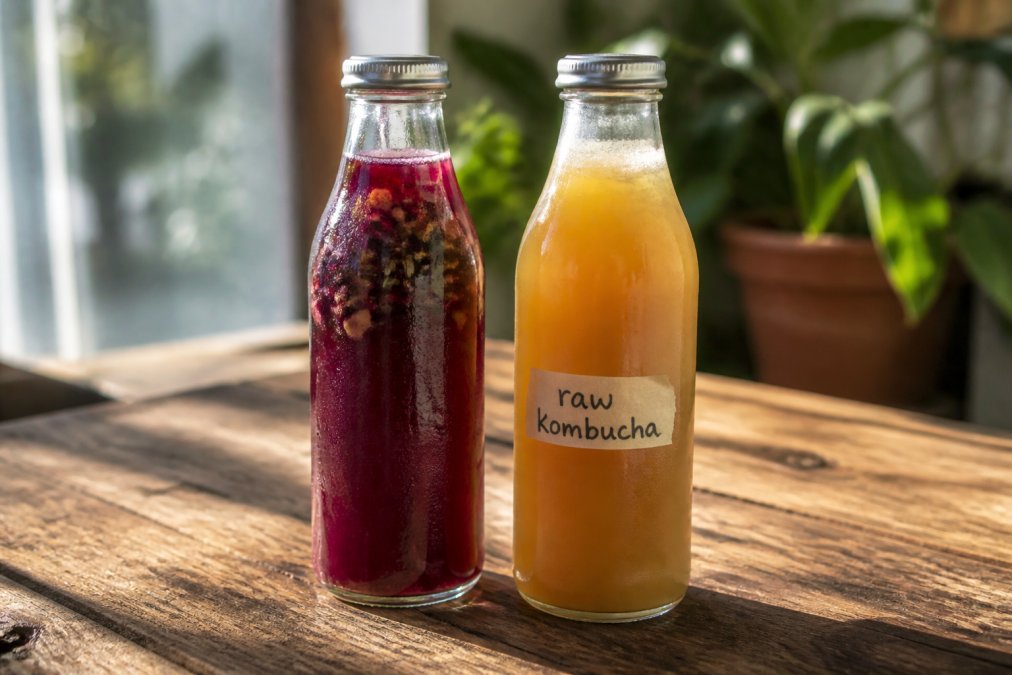
Nutritional Comparison Table
| Attribute | Shrub Soda | Raw Kombucha |
|---|---|---|
| Primary acid | Acetic acid (vinegar) | Organic acids (lactic, acetic, gluconic) |
| Fermentation agent | Raw vinegar | SCOBY (bacteria + yeast culture) |
| Probiotic cultures | Varies (vinegar-based) | Live cultures from active fermentation |
| Caffeine | None | Present (from tea base) |
| Sugar per serving (Drink Balo) | 4 grams cane sugar | 4 grams cane sugar |
| Serving size (Drink Balo) | 8.5 oz | 12 oz |
| Shelf life (refrigerated) | Up to 9 months | Up to 9 months |
| Carbonation source | Mixed with soda water | Natural fermentation CO2 |
| Alcohol content | None | Trace (typically under 0.5%) |
| Best for | Mocktails, mixers, aperitif-style drinking | Daily gut health, caffeine alternative |
Both formats at Drink Balo contain 4 grams of cane sugar per serving and are naturally fermented, adaptogenic, and non-alcoholic.
What Is a Drinking Vinegar and How Does a Shrub Work?
A drinking vinegar, or shrub, is a concentrated syrup made by combining fruit, sugar, and vinegar, then diluting it with soda water to create a tart, refreshing non-alcoholic beverage. The word "shrub" comes from the Arabic word "sharab," meaning a drink or syrup, with roots in American colonial-era preservation traditions.
Fruit is macerated with sugar to draw out its juices, forming a syrup base. Raw vinegar, often apple cider vinegar, is then added. The acetic acid acts as a natural preservative, allowing shelf-stable shrubs to last months without refrigeration. Once carbonation is added via soda water, you get a layered drink with real tartness and fruit depth.
Raw, unfiltered apple cider vinegar contains live enzymes and naturally occurring cultures that contribute to the drink's functional profile. Drink Balo uses naturally fermented processes with farmers market produce, delivering complexity that mass-produced shrubs cannot replicate. According to the National Center for Home Food Preservation at the University of Georgia, acidity is the critical variable in vinegar-based preservation.
How Fermentation Differs Between Shrub Soda and Kombucha
Kombucha fermentation is a living, ongoing biological process. A SCOBY consumes sugar in sweetened tea over one to four weeks, producing organic acids (acetic, lactic, and gluconic acid), carbon dioxide for natural carbonation, and metabolic byproducts including B vitamins and probiotic cultures. Raw kombucha is never pasteurized, so live cultures remain intact in the bottle.
Shrub fermentation is different. The "fermentation" is primarily the transformation of alcohol to acetic acid, the same process that turns wine into vinegar. When you use raw apple cider vinegar as your shrub base, you incorporate the results of that fermentation rather than initiating a new one. The acidity is stable, the process is complete before mixing, and shelf stability is high.
The practical implication: kombucha is a living beverage that continues to change in the bottle. Shrubs are stable concentrates that deliver consistent flavor every time.
Probiotic Cultures and Live Enzymes: What Each Delivers
Raw kombucha delivers active probiotic cultures directly from its SCOBY fermentation process. According to the National Institutes of Health Office of Dietary Supplements, these living microorganisms may support the gut microbiome when consumed as part of a varied diet. Pasteurized kombucha kills those cultures, which is why raw fermentation matters.
Shrubs made with raw, unfiltered vinegar contribute live enzymes and naturally occurring cultures from the vinegar's mother culture. This is not equivalent to the probiotic load in raw kombucha, but it is meaningfully different from a plain carbonated beverage. The acetic acid in vinegar also has a documented relationship with metabolic health and sugar absorption.
Benefits of Drinking Raw Kombucha for Gut Health
Raw kombucha's defining functional claim is its relationship with gut health. The gut microbiome is a complex ecosystem, and fermented foods with live cultures are one of the most studied dietary interventions for supporting microbial diversity.
Raw kombucha contains live probiotic cultures produced during fermentation. These cultures survive into the bottle only when kombucha is not pasteurized after brewing. Drink Balo's raw kombucha skips pasteurization entirely, which is what "raw" means on the label.
Beyond probiotics, raw kombucha contains organic acids that may support digestive health by influencing the gut environment. Gluconic acid is associated with liver support in some research contexts. The tea base also contributes polyphenols with antioxidant properties that may support gut microbiome diversity.
Individual responses to fermented beverages vary. People with certain digestive conditions, histamine intolerance, or compromised immune systems should consult a healthcare provider before making fermented drinks a daily habit. Drink Balo's Cold Brew, Dates & Calamansi raw kombucha contains approximately 80mg caffeine per 12-oz serving, worth factoring in for caffeine-sensitive individuals.

As documented in Harvard T.H. Chan School of Public Health's nutrition guidance on fermented foods, fermented foods including kombucha are associated with increased gut microbial diversity. Drink Balo's Cherry Fig Leaf and Cold Brew, Dates & Calamansi raw kombucha are naturally fermented, adaptogenic, and probiotic, at $24.00 for a 4-pack of 12-oz bottles.
Flavor Profiles, Versatility, and Mocktail Mixing
Shrubs lead with tartness. The acidity from raw vinegar is upfront and intentional, creating the same mouth-puckering brightness as a well-made cocktail with citrus. Layered over that base acidity, fruit and botanicals add complexity. Drink Balo's Santa Rosa Plum & Grapefruit shrub soda pairs the tannic depth of plum with grapefruit's bitter edge. The Blueberry, Moringa & Yuzu shrub soda hits a different register: earthy, citrus-forward, with the slight grassiness of moringa underneath.
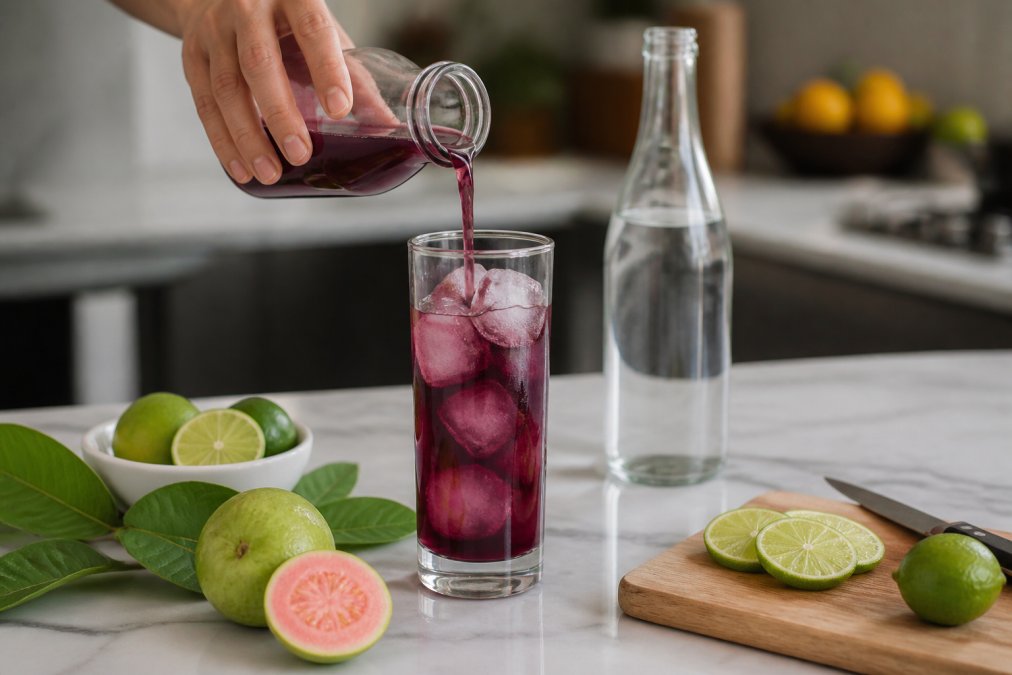
Kombucha's flavor profile is more complex and variable. It has natural effervescence from fermentation carbonation, a mild vinegar note, and the underlying character of the tea base. Drink Balo's Cherry Fig Leaf raw kombucha brings dark fruit richness that reads almost wine-like, while the Cold Brew, Dates & Calamansi version has coffee depth and bright citrus acidity.

For mocktail mixing, shrubs have a structural advantage. Because they function as a syrup base before carbonation is added, you can build with them like a bartender builds with cordial. A few practical formats:
- Shrub soda over ice with soda water and fresh herbs
- Shrub mixed with sparkling water and citrus for a spritz-style drink
- Shrub as a base in a mocktail with muddled botanicals and tonic water
- Kombucha as the carbonated element in a mocktail, replacing ginger beer or soda
The Concord Grape, Lime & Guava Leaf shrub soda is particularly well-suited to mocktail applications, with enough body to anchor a drink without getting lost when other elements are added.
Cost Per Serving, Shelf Life, and Dietary Considerations
Drink Balo's shrub sodas are priced at $18.00 for a 4-pack of 8.5-oz bottles, putting each serving at $4.50. The raw kombucha 4-packs are $24.00 for 12-oz bottles, or $6.00 per serving. That gap reflects bottle size and fermentation complexity.
Both Drink Balo formats hold up to 9 months in the refrigerator. Keep both refrigerated from purchase; the cold chain matters for maintaining live cultures in kombucha and flavor integrity in shrubs.
Dietary considerations worth flagging:
- Caffeine sensitivity: Shrub sodas contain no caffeine. The Cold Brew, Dates & Calamansi raw kombucha contains approximately 80mg caffeine per serving.
- Sugar content: Both formats contain 4 grams of cane sugar per serving at Drink Balo.
- Histamine intolerance: Fermented foods can be high in histamines. Individuals with histamine intolerance should introduce both formats slowly.
- Pregnancy: Trace alcohol content in kombucha (typically under 0.5% ABV) and live bacterial cultures are reasons some healthcare providers recommend caution during pregnancy.
- Gut conditions: People with IBS, SIBO, or other gut conditions may find fermented beverages trigger symptoms. Start with small servings.
How to Make Shrub Sodas at Home
Home brewing shrubs requires no special equipment, temperature control, or SCOBY maintenance. The basic process involves three ingredients and about a week of patience.
What you'll need:
- Fresh or excess fruit (stone fruits, berries, and citrus all work well)
- Granulated sugar
- Raw, unfiltered apple cider vinegar
- Soda water or seltzer for serving
- Glass jars for infusion
Basic Fruit Syrup and Vinegar Ratio
The standard cold-process shrub ratio is 1:1:1, one part fruit, one part sugar, one part raw vinegar by volume.
Cold-process method (recommended for preserving live enzymes):
- Combine equal parts fruit and sugar in a clean glass jar. Muddle or crush the fruit slightly to release juice.
- Seal the jar and refrigerate for 24 to 48 hours. The sugar will draw liquid from the fruit through osmosis.
- Strain out the fruit solids, pressing them to extract maximum liquid.
- Add an equal volume of raw apple cider vinegar to the strained syrup.
- Stir to combine, taste for balance, and adjust with more sugar or vinegar as needed.
- Store in a sealed glass jar in the refrigerator. The shrub will keep for several months.
Hot-process method (faster, but reduces live enzyme content):
- Combine fruit and sugar in a saucepan over medium heat.
- Stir until sugar dissolves and fruit begins to break down (5 to 10 minutes).
- Strain, cool completely, then add raw vinegar.
- Bottle and refrigerate.
The cold-process method is preferred for anyone prioritizing the functional benefits of raw vinegar, since heat degrades live enzymes and naturally occurring cultures.
Mixing With Soda Water and Serving Tips
The standard dilution ratio for drinking is one part shrub syrup to four or five parts soda water. Pour the shrub over ice first, then add the carbonated water to preserve carbonation.
A few serving adjustments:
- Tighter ratio (1:3): Produces a more intense, aperitif-style drink.
- Standard ratio (1:4 to 1:5): Light and refreshing, sessionable for warm weather.
- Mocktail base: Use the shrub at a 1:2 ratio with soda water, then add muddled herbs, citrus, or cold brew tea.
Fresh botanicals make a real difference as a garnish. Guava leaves, fresh basil, thyme, or citrus peel all complement vinegar-forward drinks.
Which One Should You Choose?
Shrub soda and raw kombucha solve different problems and are not competing for the same occasion.
Choose raw kombucha when you want a daily functional drink with live probiotic cultures, a natural caffeine lift from the tea base, and complex fermentation character. Drink Balo's Cold Brew, Dates & Calamansi delivers coffee-inflected, citrus-bright experience with approximately 80mg caffeine, while the Cherry Fig Leaf reads like a sophisticated non-alcoholic wine alternative.
Choose shrub soda when you want maximum versatility, stable shelf life, and a drink that functions beautifully as a mocktail mixer or standalone refresher. The shrub's vinegar base delivers digestive benefits from acetic acid and live enzymes without active culture management. Drink Balo's Concord Grape, Lime & Guava Leaf, Santa Rosa Plum & Grapefruit, and Blueberry, Moringa & Yuzu shrub sodas are built from excess farmers market produce, meaning fruit quality is genuinely seasonal and local.
| Your Priority | Better Choice |
|---|---|
| Daily gut health support | Raw kombucha |
| Mocktail mixing and entertaining | Shrub soda |
| Caffeine-free option | Shrub soda |
| Natural caffeine alternative to coffee | Raw kombucha |
| Maximum flavor versatility | Shrub soda |
| Active probiotic cultures | Raw kombucha |
| Longer dilution range | Shrub soda |
| Wine-alternative experience | Raw kombucha |
Many people keep both in the refrigerator: kombucha for mornings and afternoons, shrub soda for evenings and entertaining. For anyone new to fermented beverages, shrub sodas are the lower-commitment entry point. The flavor is immediate and accessible, the acidity is familiar, and there is no adjustment period.
According to the Cleveland Clinic's guidance on fermented foods and gut health, incorporating a variety of fermented foods into your diet supports microbial diversity, and rotating between shrub sodas and raw kombucha gives you two distinct fermentation pathways.
Choosing between fermented beverages should not require a chemistry degree. Drink Balo makes both raw kombucha and shrub sodas using excess farmers market produce, naturally fermented with no alcohol and just 4 grams of cane sugar per serving. Whether you start with the Concord Grape, Lime & Guava Leaf shrub soda or the Cherry Fig Leaf raw kombucha, you are getting a drink built to taste good and fermented to help you feel better.
Frequently Asked Questions
What is the difference between a shrub and kombucha?
A shrub is a fruit-and-vinegar syrup base preserved with acetic acid, the same acid found in apple cider vinegar, then diluted with soda water or seltzer. Kombucha is brewed by fermenting sweetened tea with a SCOBY (symbiotic culture of bacteria and yeast), producing probiotic cultures, organic acids, and trace carbonation. Both are non-alcoholic and support digestive health, but their fermentation processes and flavor profiles are distinct. Shrubs are sharper and more shelf-stable; kombucha is earthier and live-cultured.
Is shrub soda good for your gut?
Shrub soda made through raw fermentation does support gut health. The acetic acid in the vinegar base helps regulate sugar absorption and creates a mildly acidic environment that can benefit the gut microbiome. Raw, naturally fermented shrub sodas also retain live enzymes. However, most commercial shrubs are pasteurized and shelf-stable, which reduces live cultures. For maximum digestive benefit, choose a shrub soda labeled naturally fermented and refrigerated, like those from Drink Balo, which contain active probiotic cultures.
Are shrub sodas considered fermented foods?
Traditionally made shrub sodas are fermented foods when the vinegar base is raw and unpasteurized. Raw apple cider vinegar, for example, contains the 'mother', a colony of beneficial bacteria and enzymes. However, shrubs made with distilled or pasteurized vinegar are not fermented in the probiotic sense; they are acidified fruit syrups. Always check labels for 'raw,' 'naturally fermented,' or 'unpasteurized' to confirm you're getting a true fermented product with gut health benefits.
Why do I feel buzzed after drinking kombucha?
Raw kombucha contains trace amounts of alcohol produced during fermentation, typically under 0.5% ABV, which is below the legal threshold for alcoholic beverages in the US. Some people also report a mild energy lift from B vitamins and organic acids produced during the fermentation process. The sensation is subtle and not equivalent to alcohol intoxication. If you're sober-curious, raw kombucha is a safe, non-alcoholic choice that still delivers a refreshing, slightly effervescent experience.
How does the cost of shrub soda compare to regular kombucha?
Craft shrub sodas typically cost less per bottle than raw kombucha because the fermentation process is shorter and requires fewer inputs. Drink Balo's shrub sodas are $18 for a 4-pack of 8.5 oz bottles (about $4.50 per serving), while their raw kombucha runs $24 for a 4-pack of 12 oz bottles (about $6 per serving). Mass-market store kombucha can be cheaper, but it's often pasteurized, which reduces live probiotic cultures. For a genuinely raw, naturally fermented option, the per-serving cost difference between shrubs and kombucha is modest.
This article was written using GrandRanker