

Why Choose Raw Fermented Beverages: A 2026 Guide
Table of Contents
- What Are Raw Fermented Beverages and Why They Matter
- The Benefits of Raw Kombucha for Gut Health and Beyond
- Raw vs Pasteurized Fermented Drinks: What You Need to Know
- Sustainable Beverage Choices: How Raw Fermentation Reduces Waste
- Sensory Profile and Flavor Evolution of Raw Fermented Drinks
- Safety and Storage: Best Practices for Raw Fermented Beverages
- How to Incorporate Raw Fermented Beverages into Your Daily Routine
- Frequently Asked Questions
Last Updated: September 13, 2026
What Are Raw Fermented Beverages and Why They Matter
Raw fermented beverages are drinks made through microbial fermentation and left unpasteurized, so their live cultures, enzymes, and organic acids remain intact. At Drink Balo, we ferment excess farmers market produce into non-alcoholic raw kombucha and shrub sodas, which is why we think the "raw" label deserves a closer look before you grab the next shelf-stable bottle.

Fermentation itself is ancient. What changed recently is consumer attention: more people now read labels for live cultures, bacterial strains, and added sugar rather than just calories. The USDA dietary guidelines frame fermented foods as part of a varied diet, and that framing has pushed raw options into the mainstream.
Here's the part most guides gloss over: pasteurization doesn't just kill pathogens. It also eliminates the yeasts and lactic acid bacteria that make a drink alive in the first place.
Keep reading, and we'll show you exactly what survives in a raw bottle, how it compares to heat-treated alternatives, and how to store it without wasting your money.
The Benefits of Raw Kombucha for Gut Health and Beyond
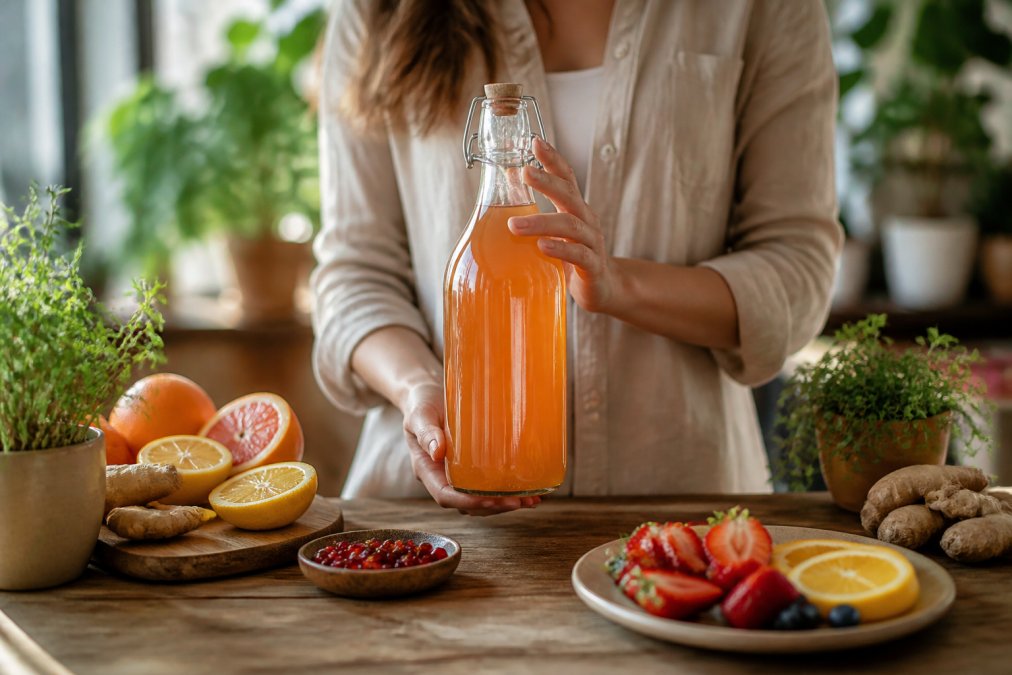
The benefits of raw kombucha start with what's still in the bottle. Because raw kombucha isn't heat-treated, it can carry live cultures, organic acids, and postbiotics that pasteurized versions lose during processing. That distinction matters more than the generic "gut health" label most guides stop at.

What's actually in a raw bottle
A finished raw kombucha is a living matrix, not a single-ingredient supplement. The main actors:
- Lactic acid bacteria, strains like Lactobacillus and Leuconostoc that acidify the brew and are the same family studied in yogurt and sauerkraut
- Acetic acid bacteria, the Komagataeibacter group that converts ethanol into acetic acid and gives kombucha its tang
- Yeasts, Saccharomyces and Brettanomyces cousins that produce the trace carbonation and the small alcohol fraction that acetic acid bacteria then consume
- Organic acids, acetic, gluconic, glucuronic, and lactic acid, which lower pH and create the environment that keeps the drink stable
- Postbiotics, the metabolic byproducts (short-chain fatty acids, peptides, exopolysaccharides) left behind after fermentation, which are increasingly the focus of microbiome research because they may act on the gut lining even when the live cells don't colonize
That last point is the part most "probiotic drink" articles skip. Live cultures are only half the story. The metabolites they leave in the liquid, the postbiotic fraction, survive pasteurization far better than the cells do, which is one reason even heat-treated kombucha can show some bioactivity. Raw keeps both halves.
Why "raw" changes the benefit profile
Heat treatment above roughly 140°F denatures the enzymes and inactivates the live bacteria and yeast (the FDA). What's left is flavored, acidified tea. What's lost:
- Active enzymatic breakdown of sugars and polyphenols
- Continued production of organic acids after bottling
- Strain diversity that a single-strain probiotic capsule can't replicate
Consistency matters more than volume, and a smaller daily pour, 4 to 8 ounces, tends to sit better than an occasional large one.
What raw kombucha may support
- Digestive comfort, organic acids and live cultures are present in the drink, and many people report less bloating with regular small servings
- Microbiome diversity, a mixed community of bacteria and yeast, not a single isolated strain, which is closer to how fermented foods have historically been consumed
- Immune signaling, postbiotic compounds from fermentation are an active area of gut-immunity research
- Antioxidant potential, tea polyphenols and botanical compounds survive when heat isn't applied, and some evidence suggests fermentation increases their bioavailability
A note on expectations
Raw kombucha is a food, not a treatment. It won't replace a varied diet, and it isn't a probiotic supplement in a bottle, the CFU counts vary batch to batch and aren't standardized the way a shelf-stable capsule is. What it offers is a live, diverse, food-form source of the same categories of compounds researchers study in fermented foods generally.
Raw vs Pasteurized Fermented Drinks: What You Need to Know
The core difference between raw and pasteurized fermented drinks is heat, but the interesting question isn't whether heat is applied. It's what heat actually destroys, and why that changes the drink in ways a label rarely explains.
What pasteurization does to a ferment
Commercial pasteurization for beverages typically runs in one of two ranges: a high-temperature short-time (HTST) process around 161°F for 15-30 seconds, or a lower-temperature, longer hold. Both are designed to reduce pathogenic bacteria to safe levels and extend shelf life. The problem for fermented drinks is that the process doesn't discriminate.
At those temperatures:
- Live bacteria are inactivated. Lactic acid bacteria and acetic acid bacteria that define the ferment are killed or rendered non-viable.
- Yeasts are killed. That ends the slow secondary fermentation that produces natural carbonation and evolving flavor.
- Enzymes are denatured. The proteases, amylases, and other enzymes the microbes produced lose their shape and stop working.
- Volatile aromatics are driven off. Some of the fruity, floral, and yeasty notes that make a ferment interesting are heat-sensitive.
What survives is the acid profile, some polyphenols, and a portion of the postbiotic metabolites. That's not nothing, but it's a fundamentally different product from a live ferment.
The 'raw' distinction, stated plainly
A raw fermented drink is one that has never been heat-treated after fermentation. The cultures are alive, the enzymes are active, and the drink continues to change in the bottle. That's why raw products require refrigeration and carry shorter best-by dates, the same biology that makes them interesting also makes them perishable. This ongoing biological activity transforms simple ingredients into complex profiles that maximize fermented nutritional benefits while supporting the body's internal ecosystem.
| Feature | Raw Fermented Drinks | Pasteurized Fermented Drinks |
|---|---|---|
| Live cultures | Present and active | Inactivated or removed |
| Enzymes | Active | Denatured |
| Storage | Refrigeration required | Often shelf-stable |
| Shelf life | Shorter, date-sensitive | Longer |
| Flavor | Evolving, fizzy, complex | Consistent, flatter |
| Natural carbonation | Yes, from ongoing fermentation | Usually added CO2 |
| Postbiotics | Present | Partially retained |
How to tell which one you're holding
Label language is the fastest read:
- "Keep refrigerated" + "live cultures" or "unpasteurized" = raw
- Room-temperature shelf + long best-by date = pasteurized or sterile-filtered
- "Kombucha" with no refrigeration requirement is almost always heat-treated
A second signal is the bottle itself. Raw kombucha keeps fermenting, so it builds pressure. Producers use heavier glass and sometimes a pressure-rated cap. A thin, lightweight bottle on a warm shelf is a strong hint the contents are inert.

Is one better?
Neither is inherently unsafe, and pasteurized options have real advantages: consistent flavor, longer shelf life, easier shipping, and no refrigeration. The trade-off is microbial diversity and enzymatic activity. If your goal is live cultures and the compounds that come with them, raw is the category that delivers them. If your goal is a shelf-stable, predictable drink, pasteurized is the honest choice.
Sustainable Beverage Choices: How Raw Fermentation Reduces Waste
Sustainable beverage choices are often framed around packaging, but fermentation tackles a different problem: food waste. Raw fermentation can turn surplus or cosmetically imperfect produce into a shelf-ready drink instead of landfill.
The EPA's food waste research documents how much edible food ends up discarded each year, and fermentation is one of the few processes that absorbs that surplus rather than discarding it. Fruit that won't sell at a market stall still ferments beautifully.
That's a real distinction for buyers. When a producer builds its supply around excess farmers market produce, every bottle supports local growers and keeps usable food in the supply chain.
Sensory Profile and Flavor Evolution of Raw Fermented Drinks
Raw fermented drinks taste different from batch to batch, and that's the point. Because live cultures keep working after bottling, acidity, fizz, and aroma develop over time rather than staying fixed.
What to expect from a raw ferment:
- Fizzy flavor from natural carbonation, not injected gas
- Acidity that sharpens with age as organic acids build
- Botanical notes from whatever fruit, herb, or tea went into the batch
- Yeast character in small amounts, which reads as depth rather than funk
A common mistake is treating a flavor shift as spoilage. If it develops mold, off-putting rot, or a burst of pressure, that's a different story.
This is also why raw drinks pair so well with food. The acidity cuts through rich dishes, and the fizz gives a non-alcoholic option the same mouthfeel a cocktail would.
Safety and Storage: Best Practices for Raw Fermented Beverages
Raw fermented beverages are safe when they're handled correctly, and the rules are simple. Keep them cold, respect the date, and treat an opened bottle like fresh produce rather than a pantry item.
Storage essentials:
- Refrigerate immediately after purchase
- Keep the bottle upright and out of direct sunlight
- Check the "keep refrigerated" and best-by guidance on the label
- Drink within a few days of opening for best flavor and fizz
- Loosen the cap carefully on a very active bottle to release pressure
People with compromised immune systems, pregnant women, and young children are sometimes advised to be cautious with unpasteurized foods. That's a conversation to have with a healthcare provider, not a reason to avoid the category outright.
How to Incorporate Raw Fermented Beverages into Your Daily Routine
Dietary inclusion works best when it's small and consistent. A few ounces with a meal, most days, is easier to sustain than a large pour once a week, and it lets your gut adjust gradually.
Simple ways to work them in:
- Morning: a small glass alongside breakfast instead of juice
- Afternoon: swap the second coffee for a cold, fizzy kombucha
- Evening: use a shrub mixer as a non-alcoholic base for entertaining
- Cooking: add a splash to dressings and marinades for acidity
For anyone sober-curious, a raw shrub mixer over ice gives you the ritual of a drink without the alcohol. That's the "buzz without the alcohol" idea in practice: the glass, the fizz, the flavor, none of the next-day cost.
If you want a starting point, Drink Balo's 12-pack raw kombucha is an easy way to build a daily habit, and the 8-pack mixed raw kombucha lets you rotate flavors without committing to one. For something with a little lift, the cold brew, dates & calamansi raw kombucha brings caffeine into the mix, while the cherry fig leaf raw kombucha leans botanical.
The hardest part of choosing raw fermented beverages isn't finding them. It's finding a bottle that's genuinely raw, actually tastes good, and comes from a producer whose sourcing you can stand behind. Drink Balo ferments excess farmers market produce into non-alcoholic raw kombucha and shrub mixers, so every bottle supports local growers and keeps usable food out of the waste stream. Our drinks are grown to taste good and fermented to help you feel better, with live cultures, no alcohol, and just 4 grams of cane sugar per serving. Get started with Drink Balo and make your next pour one that's alive, refreshing, and easy to feel good about.
Frequently Asked Questions
What makes a fermented beverage 'raw' versus pasteurized?
Raw fermented beverages are unpasteurized, meaning they retain live cultures, enzymes, and organic acids that pasteurization destroys. Pasteurization heats the drink to kill bacteria, extending shelf life but eliminating beneficial microbes. Raw options like kombucha and shrub sodas must be refrigerated and consumed within a certain period. For example, Drink Balo's raw kombucha stays fresh for up to 9 months in the fridge, preserving natural carbonation and microbial diversity.
Are there specific health benefits to choosing raw fermented drinks?
Raw fermented drinks provide live probiotics that support digestive health. They also contain organic acids and antioxidants. Additionally, the fermentation process can enhance the bioavailability of certain compounds.
How do raw fermented drinks support sustainable food practices?
Raw fermented beverages can be made from excess or imperfect produce that would otherwise go to waste. For instance, Drink Balo sources surplus farmers market fruits and vegetables, reducing food waste and supporting local growers.
Is it safe to consume raw fermented beverages daily?
For most healthy adults, daily consumption of raw fermented beverages is safe. Start with a small amount (4-6 ounces) to gauge tolerance. People with compromised immune systems, pregnant women, or those with histamine intolerance should consult a healthcare provider. Always keep raw drinks refrigerated and check for signs of spoilage like off-smells or mold.