

Best Sustainable Drinks in Los Angeles: 2026
Table of Contents
- What Makes a Drink Sustainable
- 1. Raw Kombucha: Fermented Probiotics with Purpose
- 2. Shrub Sodas: Zero-Proof Craft Beverages from Farmers Market Surplus
- Best Mixers for Mocktail Recipes at Home
- Non-Alcoholic Drinks in Los Angeles: Farm-to-Glass Options
- Benefits of Shrub Sodas: Probiotics, Low Sugar & Functional Wellness
- How Sustainable Beverage Choices Support Local Growers
- Why Sustainable Drinks Matter: Carbon Footprint & Circular Economy
Last Updated: August 21, 2026
What Makes a Drink Sustainable
A sustainable drink minimizes environmental impact across its entire lifecycle, from ingredient sourcing and production to packaging and distribution. It supports local growers, reduces food waste, uses ethical fermentation practices, and often features zero-proof or low-alcohol options that don't require industrial-scale agricultural inputs. True sustainability means transparency: knowing where ingredients come from, how they're processed, and whether the company actually reduces waste or just claims to.
The shift toward sustainable drinking reflects conscious consumption, choosing what makes you feel good without compromising what's good for the planet. This includes embracing non-alcoholic alternatives that deliver sophisticated flavor and functional benefits like probiotics and adaptogens.
1. Raw Kombucha: Fermented Probiotics with Purpose
Raw kombucha transforms simple ingredients, tea, sugar, and a living culture, into a probiotic-rich beverage through natural fermentation. Unlike pasteurized kombucha, raw kombucha retains beneficial bacteria and yeast that support gut health. The fermentation process is low-waste: it requires minimal energy, no synthetic additives, and produces a shelf-stable product lasting months in the fridge.
Raw kombucha becomes particularly sustainable when crafted from locally sourced botanicals and excess farmers market produce. The 7-14 day fermentation timeline allows small-batch producers to respond to seasonal ingredient availability without massive inventory orders.
Cold Brew, Dates & Calamansi Kombucha
This variety combines cold brew tea's smooth notes with dates' natural sweetness and calamansi's bright citrus punch. The 4 pack Cold brew, dates & calamansi raw kombucha delivers approximately 80mg of caffeine per 12-ounce bottle with just 4 grams of cane sugar and no artificial flavoring. At $24.00 for a 4-pack, it offers traceability that mass-market options can't match.

Cherry Fig Leaf & Strawberry Fennel Flower Varieties
These seasonal varieties showcase how raw kombucha celebrates farmers market abundance. Cherry and fig leaf create an earthy-sweet profile, while strawberry with fennel flower delivers floral brightness. Both rely on seasonal ingredients, encouraging producers to work with what's available rather than forcing year-round out-of-season produce.
The 4 pack Cherry fig leaf raw kombucha and 4 pack Strawberry fennel flower raw kombucha both retail for $24.00 per 4-pack. These adaptogenic, probiotic-rich varieties reduce the carbon footprint of ingredient sourcing and support regenerative agriculture growers.

2. Shrub Sodas: Zero-Proof Craft Beverages from Farmers Market Surplus
Shrub sodas represent an elegant solution to food waste. A shrub is a concentrated syrup made by fermenting fruit, herbs, and vinegar, a colonial-era preservation technique transformed into a zero-proof craft beverage. They're built on excess or cosmetically imperfect produce from farmers markets, preventing waste while creating a shelf-stable product requiring no alcohol, no artificial carbonation equipment, and minimal packaging per serving (each bottle makes 16-18 drinks when mixed with sparkling water).
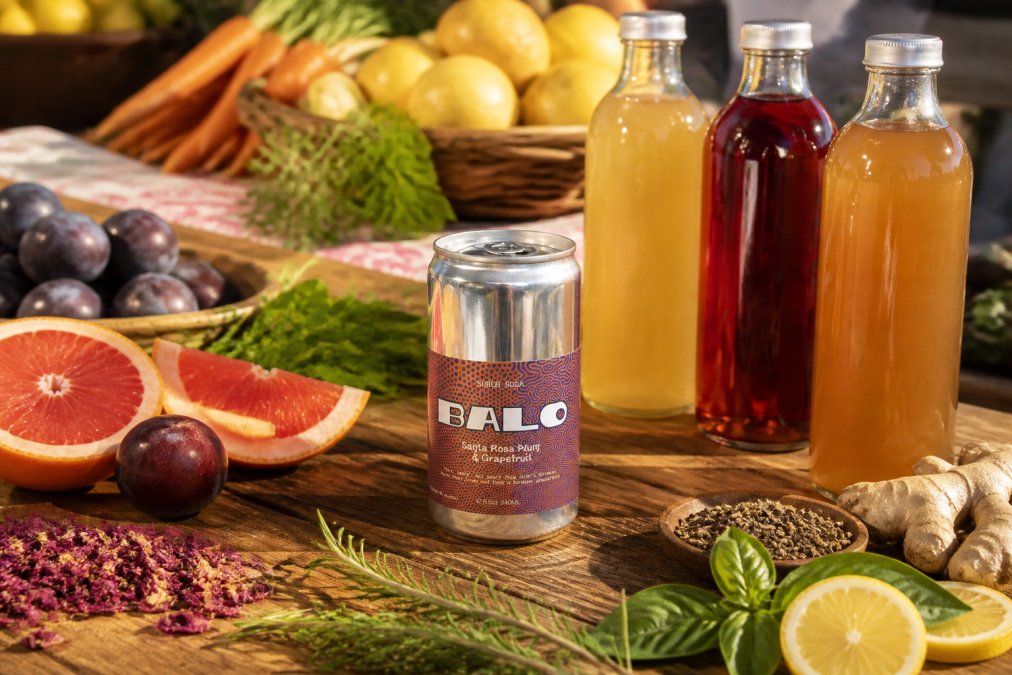
Santa Rosa Plum & Grapefruit Shrub Soda
This variety captures stone fruit sweetness balanced against grapefruit's bright, slightly bitter notes. The 4 pack Santa Rosa plum & grapefruit shrub soda retails for $18.00 per 4-pack of 8.5-ounce bottles. Each bottle is naturally fermented with just 4 grams of cane sugar and stays fresh for 9 months. This transforms excess summer stone fruit into a zero-waste product with minimal carbon footprint.

Seasonal Citrus & Stone Fruit Options
Seasonal shrub sodas rotate with farmers market availability: winter brings blood oranges and grapefruit; spring introduces strawberries and rhubarb; summer peaks with stone fruits; fall offers apples and pears. This rotation eliminates pressure to source out-of-season produce or maintain artificial supply chains.
The 4 pack Melon Satsuma Mandarin Shrub soda and 4 pack Concord grape, lime & guava leaf shrub soda both retail for $18.00 per 4-pack. These fermented, adaptogenic beverages celebrate seasonal ingredients while supporting local growers.
Best Mixers for Mocktail Recipes at Home
The sober-curious movement has created demand for sophisticated non-alcoholic mixers that deliver complexity beyond simple juices. Shrub mixers are purpose-built for this role because their fermented, vinegar-based profile mimics the depth that spirits provide.
When building a home bar for mocktails, choose mixers concentrated enough to make 15-20 drinks per bottle, stable enough to last months, and flavorful enough to mix with just sparkling water and ice. This eliminates the need for multiple bottles and creates less waste.
Shrub Mixers: Building Blocks for Sophisticated Drinks
Shrub mixers are concentrated syrups designed to be mixed with sparkling water. The fermentation process creates depth that simple syrups can't achieve. The vinegar component adds subtle tang that tricks your palate into perceiving the drink as more sophisticated.
The Blueberry, moringa, yuzu shrub mixer and Santa Rosa Plum Grapefruit Shrub Mixer are both priced at $19.50 per bottle, making approximately 16-18 drinks. This works out to roughly $1.20 per drink, less than a craft cocktail at a bar, and you control every variable. Each bottle stays fresh for 6 months after opening, giving you flexibility to stock multiple flavors.
Pairing Shrub Mixers with Sparkling Water & Fresh Botanicals
The formula for a sophisticated mocktail is simple: 1 ounce shrub mixer, 5 ounces sparkling water, ice, and a fresh garnish. Use quality sparkling water with good carbonation that doesn't compete with the mixer. Fresh botanicals, mint, citrus, berries, rosemary, or basil, let you customize each drink using what's in season and on hand.
Non-Alcoholic Drinks in Los Angeles: Farm-to-Glass Options
Los Angeles has emerged as a hub for innovative non-alcoholic beverages, driven by the sober-curious movement and a thriving year-round farmers market culture. The city's climate allows extended growing seasons, and its conscious consumers demand products aligned with wellness and environmental values. specialty coffee brands.
Farm-to-glass beverages represent the next evolution beyond farm-to-table dining. Instead of a one-time meal, you're choosing a drink you integrate into daily life, supporting local growers consistently. The best sustainable drinks in Los Angeles are made by people who understand their ingredients personally, they know which farms their fruit comes from, which seasons yield the best flavors, and how to preserve quality through fermentation rather than pasteurization.
Benefits of Shrub Sodas: Probiotics, Low Sugar & Functional Wellness
Shrub sodas deliver multiple wellness benefits distinguishing them from conventional sodas. Fermentation creates live probiotics supporting gut health, while naturally low sugar content (typically 4-5 grams per serving) avoids blood sugar spikes. Adaptogenic and prebiotic ingredients amplify functional value.
Probiotics are living microorganisms that colonize your gut microbiome, supporting digestion, immunity, and mental health (peer-reviewed research). Naturally fermented shrub sodas contain beneficial bacteria. Low sugar content matters because it means you can drink shrub sodas regularly without metabolic consequences. A typical soda contains 35-40 grams of sugar per 12 ounces; a shrub soda contains 4 grams (the CDC). Replacing one daily soda with a shrub soda eliminates roughly 11,000 grams of sugar per year.
Adaptogenic ingredients like moringa, yuzu, and hojicha work synergistically with the probiotic base. Moringa is nutrient-dense, yuzu provides vitamin C and antioxidants, and hojicha offers gentler caffeine than coffee. Combined in a fermented base, these create a functional beverage supporting wellbeing.
How Sustainable Beverage Choices Support Local Growers
When you choose a beverage made from farmers market surplus, you directly support small-scale agriculture's economic viability. Farmers often face a choice: compost surplus produce that doesn't meet retail standards, or sell it at a discount. When beverage makers buy this surplus, they create a profitable outlet incentivizing farmers to grow more diversity and maintain smaller, more resilient operations.
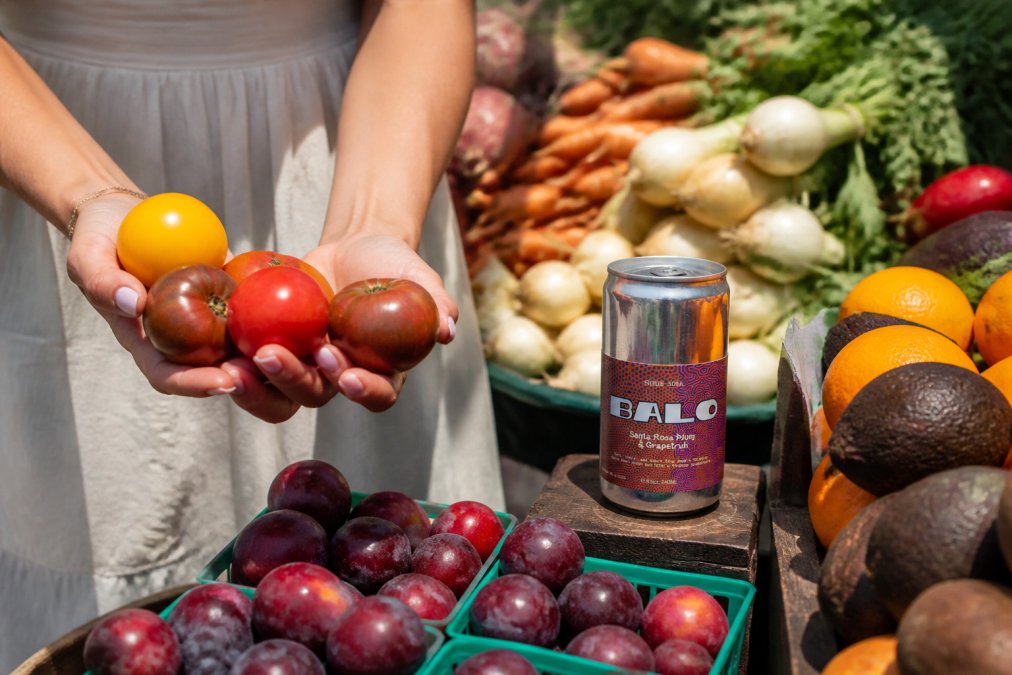
Producers like Drink Balo visit farmers markets regularly, build relationships with vendors, and commit to purchasing surplus at fair prices. This consistency allows farmers to plan their growing season knowing they have a market for seconds and surplus. It also encourages agricultural diversity, farmers experiment with heirloom varieties when they know a committed buyer will take the harvest.
Supporting local growers means supporting agricultural practices prioritizing soil health and biodiversity. Small-scale farmers practice crop rotation, integrated pest management, and soil building techniques industrial agriculture skips. The carbon footprint advantage is substantial: a shrub soda made from locally sourced fruit requires minimal transportation compared to beverages made from overseas concentrate. Fermentation itself is low-energy, relying on natural microbial activity rather than industrial processing.
Why Sustainable Drinks Matter: Carbon Footprint & Circular Economy
The beverage industry is one of the largest contributors to global carbon emissions, driven by agricultural inputs, processing, transportation, and packaging. Sustainable beverages interrupt this linear extraction model by embracing circular economy principles. Instead of growing crops specifically for beverage production, circular beverage makers transform existing waste streams, farmers market surplus, seasonal abundance, ingredients that would otherwise be discarded, into valuable products.
The packaging difference is significant. A shrub mixer bottle making 16-18 drinks has roughly one-sixteenth the packaging waste of pre-mixed beverages. Choosing a shrub mixer over pre-made drinks directly reduces personal packaging waste while supporting a more efficient supply chain.
According to research on food waste reduction, preventing food waste is one of the most impactful individual actions for reducing carbon emissions. Choosing beverages made from farmers market surplus directly prevents waste that would otherwise require landfill space and generate methane.
The conscious consumption movement reflects recognition that individual choices aggregate into systemic change. When enough people choose sustainable beverages, demand shifts. Farmers invest in diverse crops. Producers invest in fermentation infrastructure. Retailers allocate shelf space to zero-proof options. Supply chains that were once niche become mainstream.
Drink Balo exemplifies this model. By sourcing excess farmers market produce and transforming it into fermented beverages, the company creates economic incentives for local growers while reducing waste and carbon emissions. Every bottle represents a direct connection between consumer choice and agricultural impact.
| Beverage Type | Sugar per Serving | Probiotics | Packaging per Drink | Best For |
|---|---|---|---|---|
| Shrub Soda | 4g | Yes (live cultures) | Low (concentrate) | Daily wellness, entertaining |
| Raw Kombucha | 4g | Yes (live cultures) | Moderate (12oz bottle) | Caffeine boost, gut health |
| Shrub Mixer | 5g per mixed drink | Yes (live cultures) | Very low (makes 16-18 drinks) | Home entertaining, cost-conscious |
| Conventional Soda | 35-40g | None | High (single-serve) | Occasional treats only |
Choosing sustainable beverages isn't about sacrifice. Raw kombucha tastes better than mass-produced alternatives. Shrub sodas deliver sophistication conventional mixers can't match. Non-alcoholic options let you participate fully in social settings without compromising wellness. The best sustainable drinks in Los Angeles prove that conscious consumption means choosing products that align with your values while delivering superior flavor and function.
Choosing sustainable beverages is one of the most direct ways to support local agriculture and reduce your environmental impact without compromising taste or sophistication. Start with Drink Balo's raw kombucha or shrub sodas, which transform farmers market surplus into fermented beverages that support local growers while delivering probiotics and adaptogenic benefits. Add to cart and experience how choosing sustainable can feel like choosing better.
Frequently Asked Questions
What makes a beverage brand sustainable?
A sustainable beverage brand prioritizes local sourcing, reduces food waste, uses natural fermentation processes, minimizes carbon footprint through eco-friendly packaging and shipping, supports farmers directly, and avoids synthetic additives. Brands like Drink Balo transform excess farmers market produce into drinks, supporting regenerative agriculture and circular economy principles. Look for companies with transparent supply chains, ethical sourcing practices, and certifications that verify environmental impact reduction.
What are the benefits of shrub sodas?
Shrub sodas deliver probiotics from natural fermentation, supporting gut health and digestive wellness. They contain adaptogenic botanicals that promote stress relief and functional benefits. With only 4 grams of cane sugar per bottle, they offer a low-sugar alternative to conventional sodas. Shrub sodas made from seasonal, locally sourced produce provide concentrated flavor with minimal processing, making them ideal for health-conscious consumers seeking sophisticated, non-alcoholic options without artificial ingredients or additives.
How does using surplus farmers market produce reduce food waste in the beverage industry?
Beverage companies that source excess farmers market produce prevent perfectly good fruits and vegetables from going to landfills. By purchasing surplus items that don't meet retail cosmetic standards, these brands create economic value for local growers while eliminating waste. This circular approach reduces the environmental impact of agriculture, lowers carbon emissions from transportation, and strengthens local food systems. Drink Balo's model demonstrates how transforming farmers market surplus into premium drinks supports both sustainability and community.
Are there eco-friendly alternatives to traditional cocktails in Los Angeles?
Yes. Non-alcoholic beverages like raw kombucha and shrub sodas offer sophisticated, zero-proof alternatives to traditional cocktails. These drinks deliver complex flavor profiles, probiotics, and functional benefits without alcohol. Shrub mixers, such as the Santa Rosa Plum Grapefruit or Blueberry Moringa Yuzu varieties, can be combined with sparkling water and fresh botanicals to create craft mocktails at home. Sober-curious consumers in Los Angeles can achieve the same social experience and flavor complexity as cocktails while supporting sustainable, locally-sourced brands.
This article was written using GrandRanker