

Get the Buzz Without Alcohol: Sustainable Alternatives
Table of Contents
- What Gives You a Buzz Without the Alcohol
- How Adaptogens and Nootropics Create That Lift
- What Are Shrub Sodas and Why They Matter
- Benefits of Raw Kombucha for Mood and Focus
- How to Reduce Food Waste With Functional Beverages
- Top Ingredients for Relaxation and Cognitive Enhancement
- Choosing Sustainably Sourced Non-Alcoholic Drinks
- Frequently Asked Questions
Last Updated: September 30, 2026
What Gives You a Buzz Without the Alcohol
The sober-curious movement has shifted how people think about social drinking. More consumers are seeking that mood-lift and mental clarity, the buzz without alcohol, without the hangover, the empty calories, or the alcohol itself. Adaptogens, nootropics, and fermented beverages are filling this gap with a buzz without the alcohol that feels sophisticated and intentional.
What exactly creates that sensation? It's not intoxication. Instead, it's a combination of botanical compounds that influence your nervous system, enhance focus, or trigger a subtle sense of calm and clarity. Think of it as a functional shift rather than impairment, your mind feels sharper, your body feels more relaxed, and you're fully present.
Drink Balo has built an entire approach around this idea. By crafting non-alcoholic raw kombucha and shrub sodas from excess farmers market produce, we deliver that sensory and functional experience while supporting local growers and reducing food waste. The fermentation process itself creates bioactive compounds that contribute to mood and cognitive enhancement without any intoxicating effects.

The key difference between getting a buzz without the alcohol and traditional alcohol is sustainability, both for your body and for the planet. You get the social ritual, the flavor complexity, and the functional lift, but without the metabolic cost or the environmental footprint of conventional beverages.
How Adaptogens and Nootropics Create That Lift
Adaptogens and nootropics are the workhorses behind mood-boosting functional beverages. An adaptogen is a plant compound that helps your body manage stress by supporting your nervous system's natural balance. A nootropic enhances cognitive function, focus, memory, or mental clarity. Together, they create the buzz without alcohol that people are seeking.
Ashwagandha is one of the most researched adaptogens. L-theanine, an amino acid found in tea, works differently, it increases alpha brainwaves, the frequency associated with relaxed alertness (pubmed.ncbi.nlm.nih.gov). These ingredients don't get you intoxicated. Instead, they shift your mental state in ways that feel purposeful and controlled.
Raw kombucha naturally contains beneficial compounds through fermentation. The live cultures and organic acids created during fermentation support gut health. When you drink kombucha, you're not just consuming a beverage, you're introducing bioavailable compounds that your body can actually use.
The buzz without the alcohol comes from this cumulative effect. Your nervous system responds to the adaptogens. Your gut microbiome benefits from the probiotics. Your mind feels clearer. There's no crash afterward, no impaired judgment, no regret the next morning. It's a functional experience designed for people who want to feel better, not worse.
What Are Shrub Sodas and Why They Matter
A shrub soda is a drinking vinegar, a concentrated syrup made from fruit, sugar, and vinegar that you mix with sparkling water. The term "shrub" comes from the Arabic word for drink, and it's an old-world method for preserving seasonal fruit. Today, shrub sodas are experiencing a renaissance as a sustainable, flavorful alternative to conventional soft drinks.
Why do they matter? Shrub sodas use excess produce that would otherwise go to waste. A farmers market might have beautiful fruit that didn't sell. Instead of discarding it, producers transform it into a shelf-stable concentrate that delivers complex flavor and functional benefits. This is the sustainability angle that sets them apart, they're literally reducing food waste with every bottle.
The flavor profile of a shrub soda is tart, complex, and sophisticated. Unlike mass-produced sodas, which rely on high fructose corn syrup and artificial flavoring, shrub sodas feature real fruit, real herbs, and real vinegar. The fermentation process creates depth. A shrub made from Santa Rosa plums and grapefruit tastes like the intersection of those fruits, bright, slightly bitter, deeply flavorful. When you mix it with sparkling water and ice, you get a social tonic that feels special without requiring alcohol.
Drink Balo's shrub sodas come in flavors like Passionfruit Makrut Lime and Blueberry Moringa Yuzu. Each one is designed to deliver both taste and function. The moringa adds nutritional density. The yuzu provides tartness and complexity. The passionfruit brings tropical brightness. These aren't accidental flavor combinations, they're intentional pairings that create a beverage experience worth savoring.

Benefits of Raw Kombucha for Mood and Focus
Raw kombucha is fermented tea, black or green tea combined with sugar and a culture called SCOBY (Symbiotic Culture of Bacteria and Yeast). During fermentation, beneficial bacteria and yeast consume the sugar and create organic acids, B vitamins, and compounds that support both mood and cognitive function.
The probiotics in raw kombucha are live microorganisms that colonize your gut. When you consume raw kombucha regularly, you're introducing beneficial bacteria that support these processes.
Raw kombucha also contains caffeine, depending on the base tea used. Drink Balo's Cold Brew, Dates & Calamansi raw kombucha delivers approximately 80 mg of caffeine per bottle, providing a gentle lift in focus and energy without the jitters you might experience from coffee. The caffeine is paired with L-theanine from the tea, which smooths the caffeine's edge and promotes calm alertness.
4 pack Cold brew, dates & calamansi raw →
The fermentation process creates other beneficial compounds. When you drink raw kombucha, you're consuming a living beverage with multiple functional pathways working together. This is the buzz without the alcohol that people seek, a tangible shift in how they feel, backed by compounds that actually do something in your body.
| Kombucha Type | Caffeine Content | Key Benefit | Storage |
|---|---|---|---|
| Cold Brew, Dates & Calamansi | ~80 mg | Energy + Focus | 9 months refrigerated |
| Buddha's Hand Hojicha | Minimal | Calm + Relaxation | 9 months refrigerated |
| Cherry Fig Leaf | Minimal | Mood Support | 9 months refrigerated |
| Strawberry Fennel Flower | Minimal | Digestive Support | 9 months refrigerated |
How to Reduce Food Waste With Functional Beverages
Food waste is an environmental crisis. Roughly one-third of food produced globally never reaches a consumer's plate. Farmers markets, despite their sustainability reputation, generate significant waste, produce that doesn't meet retail standards, items that don't sell before the market closes, seasonal abundance that exceeds demand.
Functional beverages offer a direct solution. When you transform excess produce into kombucha, shrub soda, or shrub mixer, you're capturing nutritional value and flavor that would otherwise be discarded. A batch of imperfect stone fruit becomes a Concord Grape, Lime & Guava Leaf shrub soda. Overripe berries become the base for a probiotic-rich kombucha. This isn't waste reduction, it's value creation.
The math is straightforward. One bottle of shrub soda represents multiple pounds of fruit that would have gone to landfill. One bottle of kombucha represents tea and fruit that now delivers functional benefits instead of decomposing. When you buy these beverages, you're voting for a food system that values resource efficiency and regenerative agriculture.
Drink Balo's model exemplifies this approach. By working directly with farmers market growers, we source produce at the point where it would otherwise be wasted. We pay fair prices for this material. The growers benefit economically. The environment benefits from reduced waste. The consumer benefits from a superior product made with intention. It's a circular system where everyone wins.
To reduce food waste with functional beverages in your own consumption, choose brands that explicitly source from farmers markets or use "seconds" (produce that's perfectly edible but cosmetically imperfect). Ask about their sourcing practices. Support businesses that view food waste as an opportunity rather than an inevitability.
Top Ingredients for Relaxation and Cognitive Enhancement
The best functional beverages combine ingredients that address multiple pathways. You want relaxation without sedation, focus without jitters, mood support without stimulation. This requires understanding which ingredients do what.
For relaxation: Ashwagandha reduces cortisol and promotes calm. Passionflower has been used traditionally to ease anxiety. Chamomile supports sleep quality and daytime calm. Kava creates a unique sensation of social ease and mild euphoria without intoxication, this is where the buzz without the alcohol truly shines. Kava affects the nervous system in ways that feel subtle but noticeable, creating a state of relaxed confidence.
For cognitive enhancement: L-theanine increases alpha brainwaves and pairs beautifully with caffeine to create focused alertness. Moringa is nutrient-dense, containing vitamins, minerals, and antioxidants that support brain health. Ginkgo biloba has traditional use for memory and circulation.
Choosing Sustainably Sourced Non-Alcoholic Drinks
Sustainable sourcing means understanding where your ingredients come from and how they're grown. It means considering the environmental impact of production, the fairness of compensation for growers, and the reduction of waste throughout the supply chain.
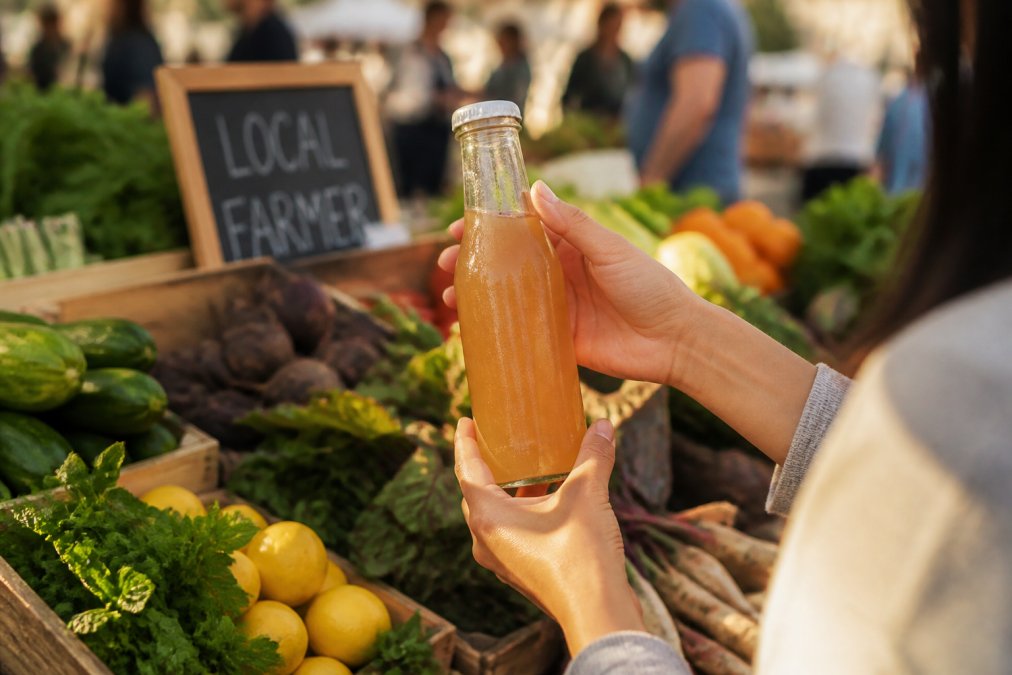
Look for these markers of genuine sustainability:
- Direct farmer relationships: The brand can name specific farmers or farmers markets they work with
- Waste reduction metrics: They track and report how much produce they save annually
- Transparent sourcing: You can trace ingredients back to their origin
- Fermentation methods: Raw fermentation preserves live cultures and bioavailability better than pasteurization
- Minimal packaging: Glass bottles are recyclable; some brands offer refill programs
- Fair pricing: If a bottle costs more than mass-produced alternatives, understand why, usually it's because growers are paid fairly
Frequently Asked Questions
What non-alcoholic drink actually gives you a buzz?
Raw kombucha and shrub sodas deliver a natural lift through the fermentation process itself. The combination creates a relaxed-yet-alert sensation without intoxication. This is why sober-curious drinkers report feeling a genuine shift in their mental state, it's functional, not just flavor.
What are the benefits of raw kombucha?
Raw kombucha offers probiotics that support gut health. The fermentation process preserves live cultures and bioavailable nutrients, making each bottle a functional beverage rather than just a drink.
How does sustainable sourcing actually reduce food waste?
Beverages made from excess farmers market produce, like overripe fruit or seasonal surplus, transform what would otherwise be discarded into delicious drinks. This upcycling model supports local growers by creating demand for their imperfect produce, reduces landfill waste, and shortens supply chains. Every bottle represents food that stayed in circulation instead of becoming waste, making your choice a direct environmental action.
Are shrub sodas better than regular kombucha?
Shrub sodas and kombucha serve different purposes. Raw kombucha offers probiotics and adaptogens in a naturally fermented base, while shrub sodas provide concentrated botanical flavors with probiotic benefits and lower sugar per serving in some formats. Shrub mixers let you control sweetness and portion size by mixing with sparkling water. Choose based on your preference: kombucha for sustained fermentation benefits, shrubs for flavor intensity and flexibility.