

Farmers Market Drink Delivery in LA: What to Know
Table of Contents
- How Farmers Market Drink Delivery in LA Works
- Costs, Minimums, and Payment Options
- Drink-Specific Delivery: Kombucha and Shrub Sodas
- How to Reduce Food Waste Through Local Drink Delivery
- The Benefits of Raw Kombucha and Shrub Sodas
- Why Sustainable Beverage Brands Are Reshaping Local Delivery
- Drink Balo: A Local Option for Farmers Market Drink Delivery
- Frequently Asked Questions
Last Updated: September 16, 2026
How Farmers Market Drink Delivery in LA Works
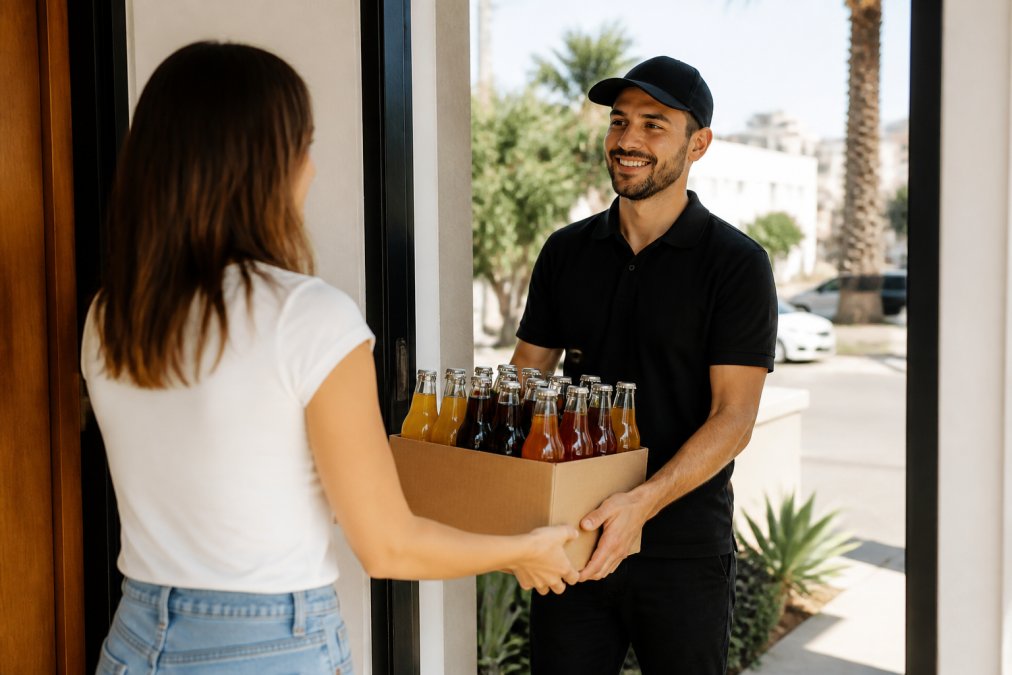
Farmers market drink delivery LA connects small-batch beverage makers directly to customers through online ordering, scheduled drop-offs, and neighborhood routes, bypassing the grocery shelf for drink delivery LA customers. At Drink Balo, we build our model around farmers market produce that would otherwise go unsold.
Online Ordering and Order Scheduling
Ordering usually runs through a direct-to-consumer website rather than a marketplace app: pick your bottles, choose a delivery window, pay at checkout. Most vendors batch orders by neighborhood, so the day you order determines when your box ships.
Delivery Zones and Zip Code Availability
Check coverage first: enter your zip code at checkout before building a cart. Smaller producers run tight routes, and a zone that looks close on a map may sit outside the route entirely.
Costs, Minimums, and Payment Options
Budget for more than the bottle price. Delivery fees, minimums, and service charges stack on top and vary widely by vendor, so know the real total before checkout.
Delivery Fees and Service Charges
Fees usually follow one of three structures:
| Fee Structure | How It Works | Best For |
|---|---|---|
| Flat fee per order | Same charge regardless of size | Small orders |
| Free above a threshold | Fee waived once cart hits a minimum | Stocking up |
| Zone-based fee | Price rises with distance from route | Dense urban cores |
Accepted Payment Methods Including EBT and CalFresh
Payment options vary by vendor. Some California online produce and grocery platforms accept EBT and CalFresh for eligible food items, while smaller beverage makers may only take standard cards. Check the checkout page before you commit, since eligibility rules differ by product and platform.
Drink-Specific Delivery: Kombucha and Shrub Sodas
Beverage delivery adds a wrinkle produce boxes don't have: carbonation, glass, and cold-chain handling. Raw kombucha needs refrigeration and careful packing, not a loose spot in a grocery bag. Most competitors treat drinks as an add-on SKU, which is why these logistics rarely get explained.
Why Drinks Break the Standard Produce-Box Playbook
Three physical properties separate a beverage route from a vegetable route:
- Pressure. Sealed raw kombucha keeps fermenting, building carbon dioxide, and warmth accelerates it. A bottle left in a hot car can push the cap or crack the glass. Cold-chain handling is a safety and quality requirement, not a luxury.
- Weight and fragility. Glass is heavy and breakable. A case of twelve 12-ounce bottles outweighs the same volume of leafy greens, changing how routes are packed, how many stops a driver makes, and how boxes are cushioned.
- Cold chain. Raw drinks must stay refrigerated from packing to doorstep, which means insulated liners, gel packs, and delivery windows timed so boxes don't sit on a porch in afternoon heat.
Packaging Formats You'll Actually See
A common pattern among small producers is a tiered packaging approach:
| Format | What It's For | Trade-off |
|---|---|---|
| Single bottle | Market stall, tasting, first try | Highest per-ounce cost |
| 6-pack | Low-commitment entry, gifting | Moderate shipping weight |
| 12-pack | Daily drinkers, best per-bottle value | Heaviest, needs sturdy box |
| Mixed pack | Flavor rotation without a subscription | Limited to current seasonal lineup |
The Freshness-vs-Speed Trade-off
You generally choose between two delivery models:
- Third-party apps (fast). A courier picks up from a retail shelf or dark store and delivers within an hour or two. Convenient, but the bottle may have sat in a warehouse for weeks, and the courier has no cold-chain obligation to your door.
- Direct farm-to-door (fresher). The producer packs to order on a set route day. Slower, often two to four days, but the bottle leaves the fridge and arrives cold, traceable to a harvest date.
For a live, unpasteurized drink, the direct model protects what you paid for. If you just need a bottle tonight and don't care about batch age, an app is fine.
Subscription Boxes vs. One-Time Orders
Subscriptions suit daily drinkers; one-time orders suit entertaining, gifting, or testing a flavor.
- Subscription: predictable weekly or biweekly delivery, usually at a lower per-bottle cost
- One-time: no commitment, better for events and first tries
- Mixed packs: the 8-pack mixed raw kombucha ($45.00) lets you rotate flavors without a full subscription
How to Reduce Food Waste Through Local Drink Delivery
Reducing food waste through local drink delivery starts with buying from producers who ferment surplus produce instead of discarding it. Unsold ripe fruit has a shelf life measured in days.
- Ask what happens to unsold market produce
- Check whether the brand names its farm partners
- Look for seasonal flavor rotations that track harvest, not fixed year-round menus
- Confirm packaging is returnable or recyclable
- See whether the brand sells at the same markets it sources from
The Benefits of Raw Kombucha and Shrub Sodas
Raw kombucha and shrub sodas are probiotic-rich, low-sugar alternatives to sugary soda and alcohol. Raw kombucha is unpasteurized fermented tea with live cultures; shrub soda is a tart, lightly sweet fermented fruit-and-vinegar drink.

Why Sustainable Beverage Brands Are Reshaping Local Delivery
Sustainable beverage brands are reshaping local delivery by shortening the supply chain and routing around neighborhoods instead of warehouse hubs. The shorter the chain, the fresher the bottle and the lower the transport footprint, but "sustainable" is a word every brand uses, so here's what you can verify.
What "Local" Actually Means in a Delivery Model
A drink made from this week's market surplus and delivered within the same metro travels a fraction of the distance a nationally distributed bottle does. The mechanism is less obvious:
- Route density over route length. Tight neighborhood zones let a producer fill a van with stops minutes apart. A national distributor runs long-haul trucks to warehouses, then local trucks to stores, then you drive there, each leg adds handling and time.
- Batch size matches harvest. Small producers ferment batches sized to that week's farm surplus rather than contracting fixed commodity volumes a season ahead. That's why the menu shifts.
- Money stays in the region. When the grower, the fermenter, and the customer are all in the same metro, the margin doesn't leak out to a distant co-packer.
The Packaging Trade-off, Honestly
Packaging choices matter, and there's no free lunch:
| Format | Strength | Weakness |
|---|---|---|
| Glass, returnable | Reusable many times, inert, keeps carbonation | Heavy to ship, needs a return loop |
| Glass, single-use | Recyclable, widely accepted in curbside bins | Energy-intensive to make, heavy |
| Aluminum cans | Light, highly recyclable, chills fast | Not reusable, can impart taste over long storage |
| Plastic | Light and cheap | Lowest recycling rate, the format most likely to end up in landfill |
The honest position: glass is heavier to ship but recyclable and reusable, while lighter formats cut transport emissions but often end up in landfill. A brand claiming sustainability without naming its format and where it goes is telling a story, not a supply chain.
A Seasonal Availability Guide for Drinks
Because raw fermentation tracks the harvest, what's in your bottle changes through the year. A rough pattern for a market-sourced lineup:
- Late winter to early spring: citrus, lemon, grapefruit, blood orange, plus the tail end of stored apples. Tart, bright shrubs.
- Spring: strawberries, then cherries and early stone fruit. Lighter, more floral ferments.
- Summer: the peak. Stone fruit, berries, melon, cucumber, mint. The widest flavor rotation of the year.
- Early fall: figs, late peaches, plums, and the first apples and pears. Richer, deeper shrubs.
- Late fall to winter: apples, pears, cranberry, pomegranate, and warm spice blends. The most shelf-stable flavors.
How to Verify a Sustainability Claim
- Ask what happens to unsold market produce
- Check whether the brand names its farm partners
- Look for seasonal flavor rotations that track harvest, not fixed year-round menus
- Confirm packaging is returnable or recyclable, and ask where it actually goes
- See whether the brand sells at the same markets it sources from
Drink Balo: A Local Option for Farmers Market Drink Delivery
Drink Balo is a Los Angeles-based beverage company that turns excess farmers market produce into raw kombucha, shrub sodas, and shrub mixers, supporting local growers and reducing food waste with every bottle. The lineup is non-alcoholic, naturally fermented, and carries just 4 grams of cane sugar per serving.
Frequently Asked Questions
How can I support local farmers through beverage delivery?
You can support local farmers by choosing drink delivery services that source produce directly from regional growers. Many sustainable beverage brands, like Drink Balo, transform excess farmers market produce into drinks, which reduces food waste and provides additional income to small farms. When you order a subscription box or one-time delivery from such companies, you're directly funding the local food economy and helping farmers sell cosmetically imperfect but perfectly nutritious fruits and vegetables.
What are the benefits of drinking raw kombucha and shrub sodas?
Raw kombucha and shrub sodas are naturally fermented, meaning they contain live probiotics that support gut health. They also typically have less sugar than conventional sodas. For example, Drink Balo's options contain only 4 grams of cane sugar per serving and are non-alcoholic, making them a refreshing alternative for sober-curious individuals. The fermentation process creates a tangy, complex flavor. Always check labels for live cultures and refrigerate to maintain freshness.
Are there sustainable drink delivery options available for home delivery?
Yes, several sustainable beverage brands offer home delivery in Los Angeles. Look for companies that use recyclable or compostable packaging, source locally, and practice upcycling of excess produce. Drink Balo, for instance, delivers raw kombucha and shrub sodas directly to your door, with options like a 12-pack of shrub soda for $52.00 or a 12-pack of raw kombucha for $66.00. You can schedule weekly or one-time deliveries, making it convenient to enjoy farm-to-table drinks at home.
What makes a beverage 'farmers market fresh'?
A 'farmers market fresh' beverage is made with produce sourced directly from local farmers markets, often within days of harvest. This means the ingredients are at peak ripeness and flavor, and the drink retains more nutrients. For fermented drinks like kombucha and shrub sodas, using fresh produce also supports a vibrant fermentation process. Brands that prioritize this approach, such as Drink Balo, often highlight their partnerships with local growers and their commitment to reducing food waste by upcycling excess produce.
Farmers market drink delivery rewards a little planning. Check your zip code, clear the free-delivery minimum, and pick a pack size that matches how fast you actually drink. Drink Balo makes that easy with raw kombucha and shrub sodas built from surplus local produce, naturally fermented and low in sugar, with nine months of fridge life. Add to cart and taste what your local harvest can do.