

Health-Ade Alternative for Lower Sugar: 2026 Guide
Table of Contents
- Why Health-Ade Drinkers Are Searching for Lower Sugar Options
- How to Identify Authentic Raw Kombucha
- Low Sugar Kombucha Brands: What to Compare Before You Switch
- Glycemic Index and Gut Health: What Sweetener Choices Actually Change
- Shrub Soda as a Lower Sugar Kombucha Swap: The Drink Balo Lineup
- Taste, Price, and Freshness: Trade-Offs of Lower Sugar Drinks
- Frequently Asked Questions
Last Updated: September 24, 2026
Why Health-Ade Drinkers Are Searching for Lower Sugar Options
If you love kombucha's tang but wince at the sugar line, you're not alone. The search for a Health-Ade alternative for lower sugar usually starts the same way: check the nutrition panel, see the grams add up, and hunt for a swap that keeps the live cultures without the sweet load.
How to Identify Authentic Raw Kombucha
Authentic raw kombucha is unpasteurized, unfiltered fermented tea that still contains live cultures at bottling. Heat-treated bottles lose those cultures, leaving flavored tea with acids.
- "Raw" or "unpasteurized" stated on the label, not just implied
- Refrigeration required before and after purchase
- Visible sediment or a small amount of floating culture, which is normal in raw product
- A live culture count or "contains live cultures" claim, ideally backed by third-party testing
- A short, recognizable ingredient list, usually tea, sugar, fruit, herbs, and cultures
Reading the Label: Live Cultures, Sugar, and Fermentation Clues
The ingredient list tells you what went in; the nutrition panel tells you what's left. A kombucha that started with a lot of sugar can finish dry if fermentation ran long enough; one that started with less sugar but fermented briefly can finish sweeter. A "low sugar" claim without a fermentation story is only half the picture.
Low Sugar Kombucha Brands: What to Compare Before You Switch
Most guides stop at "check the label", a shopping tip, not a swap guide. What helps is a repeatable framework you can run on any two bottles.
Sugar per Bottle vs. Sugar per Serving
Sugar per serving is the front-of-panel number. Sugar per bottle is what actually hits your body if you drink the whole thing, which most people do.
Here's how to normalize it:
- Find the servings per container on the nutrition panel
- Multiply grams of sugar per serving by that number
- Compare that total across brands, not the per-serving figure
The Swap Framework: Matching Your Reason for Drinking Kombucha to the Right Alternative
The right low-sugar swap depends on why you drank kombucha. Three common reasons each point to a different category.
Category-by-Category Comparison
| Category | Typical Sugar per Bottle | Live Cultures? | Sweetener Type | Best For |
|---|---|---|---|---|
| Traditional kombucha | Varies widely; often 8-16 g per bottle | Yes, if raw | Cane sugar, fruit juice | Gut support, ritual |
| Low-sugar / "dry" kombucha | Often 2-6 g per bottle | Yes, if raw | Cane sugar, sometimes stevia or monk fruit | Gut support with less sugar |
| Shrub soda | Commonly 3-6 g per bottle | Sometimes, if fermented | Cane sugar, fruit, vinegar | Flavor, mixers, lower sugar |
| Hard kombucha | Similar to traditional, plus alcohol | Yes, if raw | Cane sugar, fruit juice | Alcohol with functional angle |
| Sparkling probiotic soda | Often 0-2 g per bottle | Added, not fermented | Stevia, monk fruit, erythritol | Zero-sugar soda swap |
| Flavored sparkling water | 0 g | No | None or non-nutritive | Pure hydration |
Two things stand out: "low sugar" and "live cultures" are not the same axis, and sweetener type is the hidden variable determining both taste and gut impact.
What to Look For on the Label
| What to Compare | Why It Matters | What to Look For |
|---|---|---|
| Sugar per serving | Front-of-panel number, easy to misread | Compare only at equal serving sizes |
| Sugar per bottle | Total sugar you actually consume | Multiply per-serving by servings per container |
| Sweetener type | Affects taste and how it's processed | Cane sugar, fruit juice, or non-nutritive sweeteners |
| Fermentation detail | Explains where the sugar went | Batch notes, fermentation time, "raw" labeling |
| Live culture claim | Tells you if cultures survived | Third-party testing or a stated culture count |
| Refrigeration requirement | Signal of raw, unpasteurized product | "Keep refrigerated" on the label |
The Unique Angle Most Guides Miss
Every competitor article says read the label; none give you a decision tree. The framework above is that tree: start with your reason for drinking kombucha, filter by category, then verify with the four numbers and fermentation clues, a checkable answer in under two minutes at the shelf.
Glycemic Index and Gut Health: What Sweetener Choices Actually Change
The glycemic index measures how quickly a food or drink raises blood glucose versus a reference standard. For sweetened drinks, sweetener type and amount both shape that response, but the other half is what the sweetener does once it reaches your gut microbiome.
Glycemic Index Comparison: How Common Sweeteners Stack Up
Glycemic index values are reported on a 0-100 scale using glucose or white bread as reference; lower numbers mean a slower glucose response. The table below reflects commonly cited ranges; individual responses vary, and the food matrix (liquid vs. solid, fiber, fermentation) changes the real-world effect.
| Sweetener | Typical Glycemic Index | Calories per Gram | Fermentable by Gut Bacteria? |
|---|---|---|---|
| Cane sugar (sucrose) | ~65 | ~4 | Yes |
| Honey | ~55-60 | ~3 | Yes |
| Agave nectar | ~15-20 | ~3 | Yes (fructose-heavy) |
| Coconut sugar | ~35-54 | ~4 | Yes |
| Erythritol | ~0 | ~0.2 | Poorly fermented |
| Xylitol | ~7-13 | ~2.4 | Yes, slowly |
| Sorbitol | ~9 | ~2.6 | Yes, slowly |
| Monk fruit extract | ~0 | ~0 | No |
| Stevia | ~0 | ~0 | No |
| Sucralose | ~0 | ~0 | No |
| Aspartame | ~0 | ~4 | No |
Why Liquid Form Changes the Equation
Most sweetener comparisons are written for baking, where flour, fat, and fiber slow absorption. In a beverage there's no buffer: a sweetened drink empties quickly and delivers sugar or sugar alcohol to the small intestine in a concentrated pulse, so the same gram amount can produce a sharper glucose response than in solid food. Managing this rapid metabolic impact requires a careful look at how different ingredients influence your internal balance, which remains a primary consideration when selecting immunity boosting alternatives.
4 pack Santa Rosa plum & grapefruit →
The Gut Health Angle Competitors Skip
Here's the mechanism most articles leave out: gut bacteria ferment certain carbohydrates, including many sugar alcohols and residual sugars, producing short-chain fatty acids and gases. The acids are generally beneficial; the gas causes bloating, cramping, and loose stools in sensitive people.
The practical implications:
- Sugar alcohols in liquid form reach the colon faster and in higher concentration than the same dose in solid food, which is why a sugar-free soda can trigger digestive symptoms that a sugar-free candy does not.
- Erythritol is the sugar alcohol least likely to cause gas because most of it is absorbed before reaching the colon, but it has been the subject of ongoing cardiovascular research some consumers now weigh.
- Xylitol and sorbitol are most commonly linked to bloating and laxative effects, especially above roughly 10-20 grams in a sitting.
- Monk fruit and stevia pass through largely unmetabolized and don't feed gut bacteria, so they're generally well tolerated, but they also don't feed the live cultures in a fermented drink.
- Residual cane sugar in a fermented drink is already mostly consumed by yeast, so the amount reaching your gut is small, and the acids produced during fermentation (acetic, lactic, gluconic) are themselves associated with digestive benefits in fermented foods.
How to Use This When You're Choosing
If blood glucose management is your priority, filter by glycemic index, anything near zero is a safe start, and fermented drinks with low residual sugar land low because the sugar is already gone. If gut health is your priority, the fermentable-substrate column matters more: choose a drink with live cultures and some residual fermentable sugar, or a non-nutritive sweetener that won't cause gas.
Shrub Soda as a Lower Sugar Kombucha Swap: The Drink Balo Lineup
Shrub soda is a fermented fruit-and-vinegar drink that delivers kombucha's tangy, complex flavor with far less sugar. Drink Balo makes small-batch shrub sodas from excess farmers market produce that would otherwise go to waste, and each bottle carries 4 grams of cane sugar.
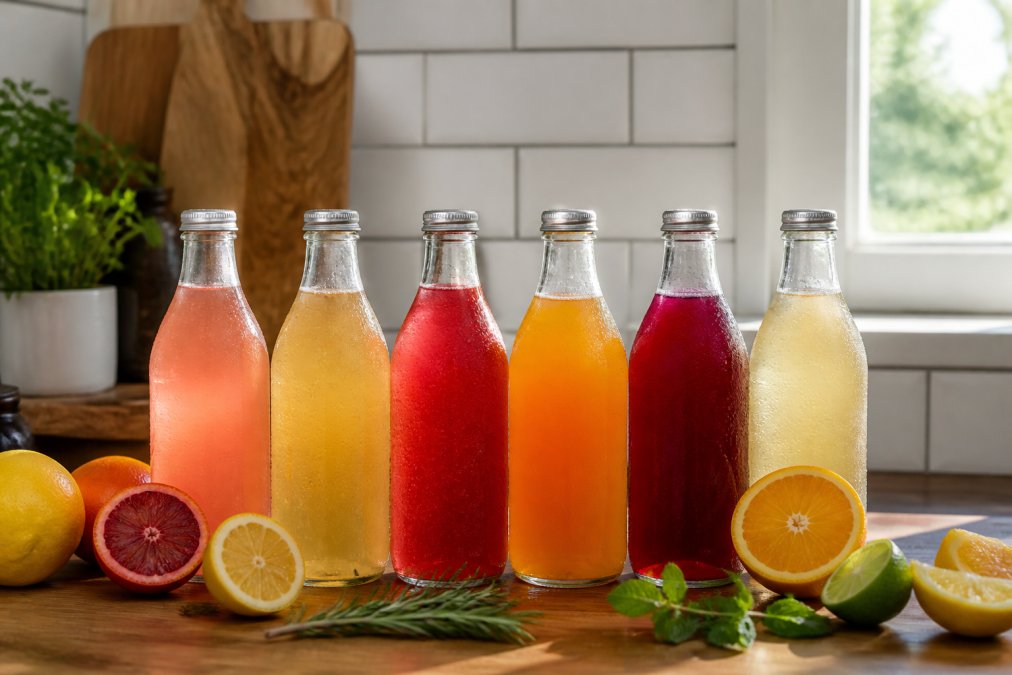
Five Flavors at 4 Grams of Cane Sugar Each
Flavor variety is where most low-sugar swaps fall flat. Drink Balo's lineup runs five profiles:
- Santa Rosa plum & grapefruit: tart, bright, and lightly floral
- Passionfruit Makrut lime: tropical and citrus-forward with a herbal edge
- Blueberry, moringa, yuzu: berry sweetness balanced by citrus and greens
- Melon Satsuma Mandarin: soft melon with a mandarin lift
- Concord grape, lime & guava leaf: deep grape with a tart finish
Taste, Price, and Freshness: Trade-Offs of Lower Sugar Drinks
For broader context on how fermented foods fit into digestive health, the Harvard T.H. Chan School of Public Health outlines the role of fermentation in the diet.

Frequently Asked Questions
Which kombucha brands have the lowest sugar content?
Most kombucha on shelves lands between 2 and 14 grams of sugar per serving, and the range widens once you account for bottle size. The lowest-sugar options are usually raw, long-fermented drinks where the culture has consumed most of the added sugar, or fermented fruit drinks built on a small cane sugar base. Check the nutrition panel for grams per serving and per bottle, then compare that number against the serving you actually drink. A bottle that reads low per serving can still add up if you finish the whole thing.
Is it possible to find raw kombucha with less than 5g of sugar?
Yes, though it takes label reading. Raw, unpasteurized kombucha that ferments longer tends to finish drier because the yeast and bacteria consume more of the sugar during fermentation. You will also find fermented fruit drinks, like shrub sodas, that sit at 4 grams of cane sugar per bottle. The reliable move is to scan the nutrition facts for total sugars and confirm the product is labeled raw and unpasteurized, since pasteurized versions lose the live cultures that drive that sugar reduction.
What should I look for on a kombucha label to ensure it is low in sugar?
Start with total sugars on the nutrition facts, then check the serving size against the bottle size so you are not comparing a 8-ounce serving to a 16-ounce bottle. Look for the words raw and unpasteurized, which signal live cultures are still present. Ingredients should list tea, sugar, and cultures rather than juice concentrates or added sweeteners. If the label mentions a second fermentation with fruit, expect a few extra grams from that fruit sugar even when the base is dry.
How does the sugar content in Drink Balo compare to mainstream brands?
Drink Balo shrub sodas list 4 grams of cane sugar per 8.5-ounce bottle, which is on the low end compared with many kombucha bottles that run higher per serving, especially fruit-forward flavors. Each 4-pack is $18.00 and the bottles keep for 9 months refrigerated before opening. The drinks are naturally fermented, non-alcoholic, and made with excess farmers market produce, so the sweetness comes from fruit and a small cane sugar base rather than added syrups.
Does fermentation time affect the sugar content in kombucha?
It does. Longer fermentation gives the yeast and bacteria more time to consume sugar, which is why extended-ferment batches often taste drier and read lower on the nutrition panel. That is also why sugar counts vary between batches of the same brand. If you want a consistent number, look for brands that publish their sugar content per batch or per flavor, and store bottles cold to slow fermentation so the sugar level does not keep dropping after you buy it.