

What Makes Raw Kombucha Different: A 2026 Guide
Table of Contents
- Raw vs Pasteurized Kombucha: The Core Difference
- The Benefits of Raw Kombucha for Gut Health
- How to Identify Authentic Kombucha on the Shelf
- Storage and Temperature Sensitivity: Keeping Live Cultures Alive
- The Environmental Impact of Cold-Chain Logistics
- Safety Considerations and Who Should Be Cautious
- Why Small-Batch Raw Kombucha Tastes Different
- Conclusion
- Frequently Asked Questions
Last Updated: September 11, 2026
Raw vs Pasteurized Kombucha: The Core Difference
Raw kombucha is an unpasteurized, naturally fermented tea that still contains live cultures, active enzymes, and fermentation byproducts. Pasteurized kombucha has been heat-treated to kill those cultures, extending shelf life but stripping the drink of what makes it functional. That single step, heat, divides a living drink from a sweet, shelf-stable tea.
At Drink Balo, we ferment in small batches and never heat-treat our bottles, because the live cultures are the entire point. The word "kombucha" on a label tells you almost nothing about whether the liquid inside is alive; you have to read the rest of the label.
What Heat Does to Live Cultures
Pasteurization raises a beverage to a temperature high enough to kill bacteria and yeast indiscriminately, destroying the probiotics, yeast strains, and active enzymes that define raw kombucha.
What survives is the flavor profile and the organic acids, which is why pasteurized kombucha can still taste tart and fermented. It just won't do anything for your gut. The FDA guidance on pasteurization and food safety explains the kill-step logic behind thermal processing: it exists to eliminate pathogens and extend shelf life, not to preserve living cultures.
Shelf-Stable vs Refrigerated: Why It Matters
Shelf-stable kombucha sits at room temperature in the grocery aisle; refrigerated kombucha lives in the cold case. That placement is a tell.
If a bottle can sit on a warm shelf for months without spoiling, the cultures inside are dead or were never there in meaningful numbers. Live bacteria and yeast keep fermenting, producing acid and gas, so the product must stay cold and sell within a defined window.
| Attribute | Raw (Refrigerated) | Pasteurized (Shelf-Stable) |
|---|---|---|
| Live cultures | Present | Killed by heat |
| Storage | Refrigerated | Room temperature |
| Shelf life | Weeks to months, chilled | Many months |
| Fermentation continues | Yes, slowly | No |
| Typical aisle | Cold case | Ambient shelf |
The Benefits of Raw Kombucha for Gut Health
The benefits of raw kombucha come from what fermentation leaves behind: live probiotics, active enzymes, and a diverse mix of organic acids. Pasteurization removes the first two, leaving essentially flavored tea with some acetic acid.
Probiotics, Enzymes, and Bacterial Diversity
Kombucha fermentation is driven by a SCOBY, a symbiotic culture of bacteria and yeast that transforms sweet tea into a tangy, lightly effervescent drink, converting much of the sugar into organic acids, trace ethanol, and metabolic byproducts.
The bacterial diversity in a raw bottle matters most for gut health. A single-strain probiotic supplement delivers one organism; a well-fermented raw kombucha can carry a broader mix, and diversity is what supports a varied microbiome.
A common mistake is assuming all fermented drinks are interchangeable. Kefir, kimchi, and raw kombucha each bring different organisms and acid profiles to the table.
Beyond Digestion: What the Research Says
Claims about kombucha and gut health are easy to overstate. The drink delivers live cultures and organic acids that many people find supportive of digestion, with far less sugar than soda if you are replacing a sugary drink.
Raw kombucha is not a medicine; it is a food. Many people find a daily fermented drink fits into a broader gut-health routine alongside fiber, varied plants, and adequate sleep. Treat it as one good habit among several, not a cure.
How to Identify Authentic Kombucha on the Shelf
Authentic kombucha is unpasteurized, sold refrigerated, and labeled with live cultures and a short ingredient list. The reliable signals describe how the drink was made and how it must be stored. The front of the bottle is written by marketing and the back by compliance, and only one is legally constrained. Learning to read the back is the whole skill.
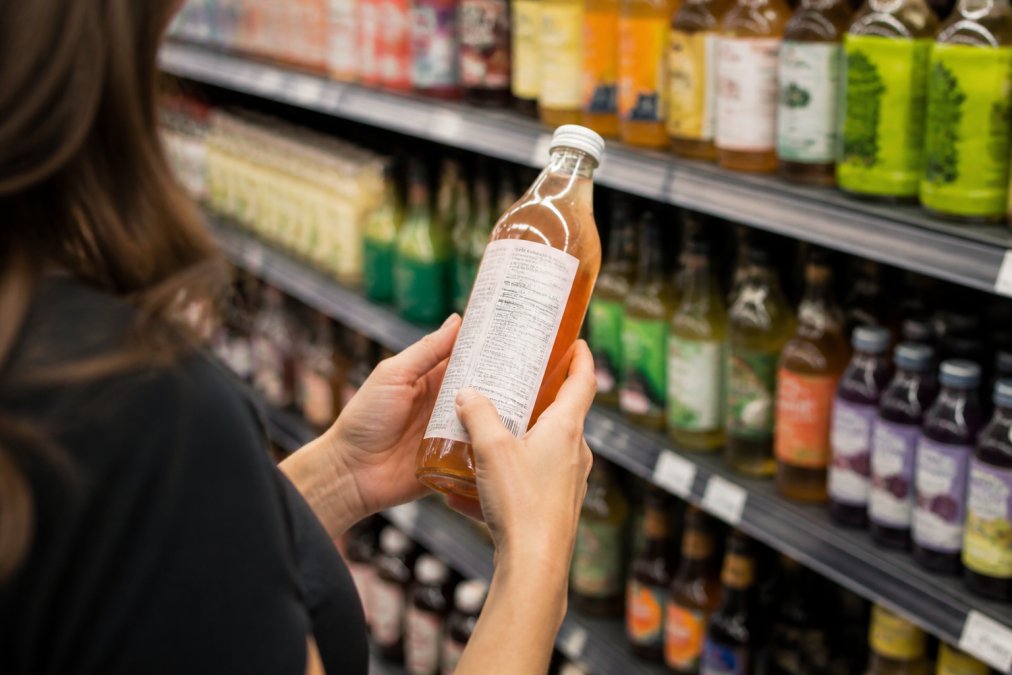
Label Literacy: Decoding the Words That Actually Mean Something
Start with the storage location, then work backward through the label:
- Locate the bottle in a refrigerated case, not an ambient shelf
- Find the words "raw," "unpasteurized," or "live cultures" on the front or back
- Read the ingredient list: tea, sugar, culture, and real fruit or botanicals, nothing you can't pronounce
- Check the sugar content per bottle, not per serving
- Look for a "keep refrigerated" instruction
- Ignore front-of-pack claims like "immunity boost" and read the actual ingredients instead
That checklist gets you to the right shelf. The harder part is the vocabulary on the back panel, where a handful of terms are used precisely and a much larger set is used loosely.
Terms that describe a real process:
- "Unpasteurized" and "raw" mean no thermal kill step was applied, and are usually paired with a refrigeration requirement.
- "Live cultures" or "live and active cultures" asserts the cultures survived processing. Credible on a refrigerated bottle; a contradiction on an ambient-shelf one.
- "Keep refrigerated" is a storage instruction that follows from the product being biologically active.
Terms that sound meaningful but are not:
- "Flash pasteurized" is still pasteurized. A short, high-temperature pass kills the same cultures a longer, lower-temperature pass does; "flash" describes speed, not survival.
- "Cold-pressed" describes how juice or fruit was extracted, not whether the finished kombucha was heat-treated.
- "Probiotic" alone is a marketing claim, not a regulated guarantee of live organisms at purchase. Look for the storage instruction instead.
- "Naturally fermented" is true of nearly all kombucha, including pasteurized versions, because fermentation happens before the heat step. It does not tell you what survived.
The USDA organic labeling standards are a useful reference point for how regulated food claims work, though note that "organic" and "raw" are separate claims. A product can be one and not the other. A bottle can be certified organic and still be pasteurized, and a raw bottle can be made from conventionally grown tea.
The Two-Second Test
If you only remember one thing: pick up the bottle and check whether it is cold. A living product has to be cold. If it sits on a room-temperature shelf while the label claims live cultures, one of those facts is wrong, and the shelf is the one you can verify.
Caffeine content varies too. Kombucha is made from tea, so some caffeine carries through fermentation, typically at lower levels than coffee. The ingredient list tells you what kind of tea went in, and black tea generally carries more through than green or white.
Storage and Temperature Sensitivity: Keeping Live Cultures Alive
Raw kombucha is a living product. The cultures inside do not stop working when the bottle is capped; they keep converting residual sugar into organic acids, trace ethanol, and carbon dioxide, just more slowly when cold. Refrigeration does not pause fermentation, it slows it to a crawl, the difference between a bottle that tastes the same in three weeks and one that tastes like vinegar in three days. raw unfiltered foods.
The mechanism explains every storage rule that follows. At refrigerator temperatures, roughly 35 to 40 degrees Fahrenheit, the culture's metabolic rate drops sharply and the flavor you bought stays put. At room temperature, that rate climbs, acid accumulates faster, and carbonation builds. Warmth does not just spoil raw kombucha; it keeps fermenting it.
What Happens After You Open the Bottle
Once you break the seal, oxygen feeds the acetic acid bacteria that turn ethanol into acetic acid, the compound that gives vinegar its bite. Carbonation escapes and the taste shifts toward vinegar. An opened bottle is best within a few days if kept refrigerated and capped tightly; pour what you need and recap immediately.
For unopened bottles, follow the producer's guidance. Drink Balo bottles hold in the fridge for up to nine months, so you can stock up without racing the clock. That stability comes from careful fermentation and cold storage, not heat treatment.
A Practical Storage Guide
- Keep unopened bottles refrigerated at all times, ideally in the main body of the fridge rather than the door, where temperatures swing
- Drink opened bottles within a few days, recapped and cold
- Store away from direct sunlight and warm appliances, since light and ambient heat speed fermentation
- Expect slight flavor drift over time, normal for a live product and not a sign of spoilage
- Never freeze a bottle, since expanding liquid can crack the glass
- Use a cooler when transporting bottles; a warm car ride is the most common way a good bottle goes bad before it reaches your fridge
How to Tell Whether a Bottle Has Gone Off
Flavor drift is normal; spoilage is not, and the two look different. A bottle that simply kept fermenting tastes sharper, more acidic, and possibly fizzier. That is the culture doing its job.
A bottle that has actually gone bad will usually show one of these:
- A smell that reads as rotten, sulfurous, or like nail polish remover rather than vinegary
- Visible mold, which appears as dry, fuzzy patches, not the stringy sediment that live cultures normally leave behind
- A bottle that has visibly bulged or deformed, which signals pressure buildup from uncontrolled fermentation
- A taste that is unpleasant in a way that is distinct from simple sourness
Sediment at the bottom of a raw bottle is normal: spent culture, yeast, and tea solids, and one of the clearest signs the product is alive. Pasteurized kombucha is typically clear because heat and filtration remove it.
The Environmental Impact of Cold-Chain Logistics
Cold-chain logistics carry a real environmental cost. Refrigerated trucks, chilled warehouses, and retail cold cases all draw power, the trade-off raw kombucha accepts in exchange for live cultures.
Local production changes the math. A beverage made and sold within a short radius spends far less time on refrigerated trucks than one shipped across the country, meaning less fuel, less spoilage, and a smaller footprint per bottle.
Producing close to home has a second benefit: it makes it practical to use surplus produce that would otherwise be thrown away. Drink Balo builds its kombucha and shrub sodas from excess farmers market produce, which keeps that fruit and botanicals out of the waste stream and gives local growers a market for what they can't sell at the stall. The EPA's food waste guidance notes that keeping edible food in the supply chain is one of the more effective ways to cut the emissions tied to wasted food.
Safety Considerations and Who Should Be Cautious
Raw kombucha is safe for most healthy adults, but not everyone. Because it contains live bacteria and yeast plus trace alcohol, some people should avoid it or check with a doctor first.
Groups who should be cautious:
- Pregnant or breastfeeding people
- Young children
- Anyone with a compromised immune system
- People who must strictly avoid alcohol for medical or recovery reasons
The trace ethanol in raw kombucha is small, typically well under the threshold that would matter for most adults, but not zero. If you are avoiding alcohol entirely, that distinction matters. A raw kombucha gives you the ritual and complexity of a grown-up drink without the intoxication, which is why it works as a social alternative.
Food safety basics still apply. Keep it cold, respect the shelf life, and don't drink from a bottle that smells or looks off.
Why Small-Batch Raw Kombucha Tastes Different
Small-batch fermentation produces a different drink, and it is not just marketing. Made in smaller volumes with real fruit and botanicals, the flavor comes from the ingredients themselves rather than added extracts and concentrates.
Big producers chase consistency, pushing them toward standardized flavorings and often pasteurization. Small-batch makers accept natural variation in exchange for depth. A cherry fig leaf kombucha tastes like cherry and fig leaf because those are what went in.
That variability is a feature. Seasonal produce shifts and yeast strains behave differently batch to batch, yielding a drink with more character than a shelf-stable equivalent. It is also why small-batch raw kombucha tends to be sold locally and kept cold, since a living product with real ingredients does not travel or sit indefinitely.
Conclusion
Choosing raw over pasteurized comes down to one question: do you want a living fermented drink or a preserved one? If live cultures, active enzymes, and bacterial diversity are what you are after, the label and the cold case will tell you which bottle delivers them.
Drink Balo ferments in small batches without heat treatment, using excess farmers market produce to support local growers and cut food waste. Our raw kombucha is non-alcoholic, naturally fermented, and made to taste good while helping you feel better, with flavors like cherry fig leaf and strawberry fennel flower available in 4-packs and 12-packs. If you want a functional, refreshing drink that earns its place in your fridge, add to cart and taste the difference a living bottle makes.

Frequently Asked Questions
What is the difference between raw and pasteurized kombucha?
Raw kombucha is never heated after fermentation, so it retains live probiotics, active enzymes, and yeast strains. Pasteurized kombucha is heat-treated to kill bacteria and extend shelf life, which also destroys the live cultures. Raw varieties must stay refrigerated and are typically found in the cold section. Pasteurized versions sit on regular shelves and have a much longer unrefrigerated shelf life but offer fewer gut health benefits.
Does raw kombucha need to be refrigerated?
Yes. Raw kombucha contains live cultures that remain active at room temperature. Without refrigeration, fermentation continues inside the bottle, which can lead to excess carbonation, pressure buildup, and changes in flavor or alcohol content. Keep raw kombucha refrigerated at all times, even before opening. Once opened, drink it within a few days for the best taste and bacterial diversity. Leaving it out overnight will not make you sick, but it will affect quality.
How can you tell if kombucha is truly raw?
Check the label for words like raw, unpasteurized, or live cultures. Look for the phrase keep refrigerated, which signals the product still contains active bacteria. If the bottle sits on a room-temperature shelf, it has almost certainly been pasteurized or otherwise heat-treated. You can also look for visible sediment or a small amount of floating culture, which are signs of an active, unfiltered brew. When in doubt, contact the brand and ask about their fermentation and filtration process.
Does pasteurization kill the probiotics in kombucha?
Yes. Pasteurization uses heat to kill bacteria and yeast, including the beneficial bacteria that make kombucha a probiotic drink. After pasteurization, the beverage may still contain organic acids like acetic acid and some metabolic byproducts, but it no longer delivers live cultures to your gut. If your goal is supporting microbiome diversity through food, choose a raw, refrigerated kombucha that has not been heat-treated or heavily filtered.