

Kombucha vs Apple Cider Vinegar: Which Fermented Drink Wins
Table of Contents
- Kombucha vs Apple Cider Vinegar: Quick Comparison
- What Is Kombucha?
- What Is Apple Cider Vinegar?
- Fermentation Process: How They're Made Differently
- Probiotic Benefits of Raw Kombucha
- How to Incorporate Fermented Drinks Into a Daily Routine
- Taste, Acidity, and Culinary Uses
- Cost-Per-Serving and Environmental Impact
- Frequently Asked Questions
Last Updated: September 29, 2026
Kombucha vs Apple Cider Vinegar: Quick Comparison
The choice between kombucha vs apple cider vinegar comes down to fermentation style, probiotic content, and how each fits your wellness routine. Both are fermented beverages that work differently in your body and taste nothing alike.
This guide breaks down the real differences between these two fermented drinks so you can pick the one that matches your goals.
| Characteristic | Kombucha | Apple Cider Vinegar |
|---|---|---|
| Main Culture | SCOBY (symbiotic bacteria and yeast) | Acetic acid bacteria and mother culture |
| Fermentation Time | 7-30 days | 30-90 days |
| Taste Profile | Sweet, tangy, slightly fizzy | Sharp, acidic, pungent |
| Probiotic Content | Living cultures present | Limited live cultures |
| Sugar Content | 2-8g per serving | Minimal to none |
| Carbonation | Natural carbonation | Still or minimal carbonation |
| Best For | Daily wellness drink | Culinary ingredient or diluted tonic |
What Is Kombucha?
Kombucha is a fermented tea beverage made by adding a SCOBY (symbiotic culture of bacteria and yeast) to sweetened black or green tea. Over 7-30 days, the SCOBY converts the tea and sugar into a slightly fizzy, mildly sweet, probiotic-rich drink with a tangy flavor.
Raw kombucha contains active probiotics that reach your gut intact because the living bacteria and yeast cultures survive in the final drink. [Drink Balo's 4 pack Cold brew, dates & calamansi raw kombucha](https://www.drinkbalo.com/products/product_5c816125-6f5f-57f9-c8dc-7e102d09dab8) is naturally fermented without pasteurization, preserving these living cultures.

Kombucha typically contains 4 grams of cane sugar per serving, which feeds fermentation but gets partially consumed. Natural carbonation comes from yeast producing CO2 during fermentation.
What Is Apple Cider Vinegar?
Apple cider vinegar undergoes two fermentation stages: yeast converts apple sugars to alcohol, then acetic acid bacteria convert that alcohol into acetic acid. The result is a sharp, pungent vinegar with minimal residual sugar and a pH around 2-3.
The "mother" in unpasteurized apple cider vinegar is a visible culture of acetic acid bacteria and a byproduct of fermentation. Unlike kombucha's SCOBY, it doesn't actively ferment the liquid. Live culture content is significantly lower than in raw kombucha, and most beneficial bacteria die off once fermentation completes.
Apple cider vinegar is shelf-stable and doesn't require refrigeration. It's typically consumed diluted in water or used as a culinary ingredient rather than drunk straight. The acidity makes it unsuitable for daily consumption without dilution, as it can erode tooth enamel and irritate the digestive tract (Experts provide latest science on apple cider vinegar).
Fermentation Process: How They're Made Differently
Kombucha fermentation relies on a living SCOBY that remains active throughout brewing. Yeast eats sugar and produces alcohol and CO2, while bacteria convert some alcohol into beneficial acids. This dual-organism process creates fizz, probiotics, and complex flavor.
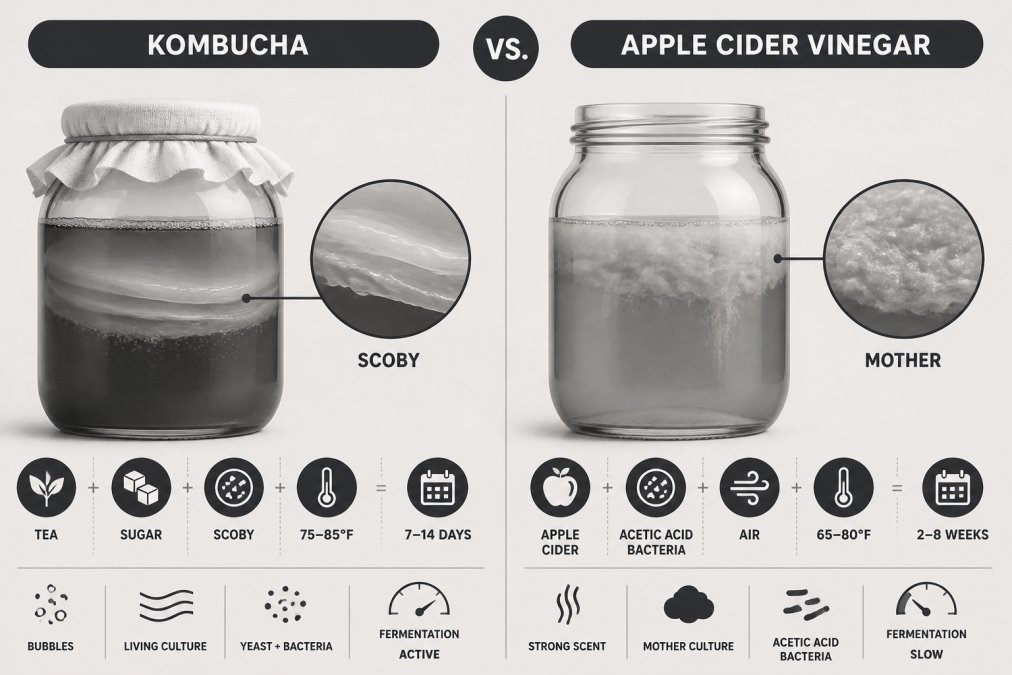
Apple cider vinegar fermentation is sequential: yeast ferments apple juice into alcohol over 1-2 weeks, then acetic acid bacteria convert that alcohol into acetic acid over 4-12 weeks. Once acidity reaches 4-6%, the process stops. Unlike kombucha, there's no ongoing microbial activity, the mother is essentially dormant.
This difference matters for probiotic survival. Kombucha's living SCOBY continues producing beneficial bacteria throughout fermentation and storage. Apple cider vinegar's fermentation ends when acidity peaks, leaving a stable but largely inactive culture. Raw kombucha supports gut microbiome diversity in ways diluted apple cider vinegar cannot.
Kombucha's carbonation develops naturally as yeast produces CO2; a second fermentation with fruit or flavoring can increase it. Apple cider vinegar produces no carbonation, any bubbles are residual CO2 that dissipate quickly.
Probiotic Benefits of Raw Kombucha
Raw kombucha contains living probiotics because the SCOBY remains active after bottling. You consume Acetobacter, Lactobacillus, and other beneficial microorganisms that reach your gut alive and support your microbiome.
Living cultures support digestion by increasing microbial diversity, which is linked to better nutrient absorption, improved immune function, and stable blood sugar regulation. Fermentation enzymes also aid food breakdown, reducing bloating and improving nutrient bioavailability.
Kombucha's acetic acid may help regulate blood sugar by slowing gastric emptying, preventing sharp spikes after meals.
Apple cider vinegar contains acetic acid in much higher concentrations (4-6% vs. 0.5-1% in kombucha), but probiotic content is minimal. Most beneficial bacteria die during fermentation, and pasteurization eliminates survivors. Diluted apple cider vinegar provides acetic acid's blood sugar-moderating effects but won't populate your gut with living microflora like raw kombucha.
Who Should Avoid or Limit Kombucha
Despite its probiotic benefits, kombucha is not suitable for everyone. The following populations should consult a healthcare provider before regular consumption:
4 pack Cold brew, dates & calamansi raw →
Kidney Disease:
Type 1 Diabetes: While kombucha's acetic acid may moderate blood sugar, the residual sugar content (4 grams of cane sugar per serving) and unpredictable fermentation make it risky for insulin-dependent patients. Blood glucose can spike unpredictably.
Autoimmune Conditions:
FODMAP Sensitivity and IBS:
Candida Overgrowth:
How to Incorporate Fermented Drinks Into a Daily Routine
Start with kombucha if you're new to fermented beverages. A single 12-ounce bottle in the morning or with lunch is an easy entry point. [Drink Balo's Cherry fig leaf raw kombucha](https://www.drinkbalo.com/products/product_7760bcdc-ee3f-c6b1-19d9-166e7677bfe8) works as a standalone drink with natural carbonation and pleasant flavor.

Taste, Acidity, and Culinary Uses
Kombucha tastes like lightly sweetened tea with vinegary notes and natural carbonation. Drink Balo's 4 pack Strawberry fennel flower raw kombucha delivers bright fruit notes balanced by subtle earthiness.

Cost-Per-Serving and Environmental Impact
Drink Balo's kombucha comes in 4-packs of 12-ounce bottles at $24.00 ($6 per bottle). Drink Balo costs more than mass-produced brands, but reflects raw fermentation, local produce, and active probiotic content.
DIY Kombucha vs. Store-Bought: The Cost Reality
Home fermentation dramatically changes economics for regular kombucha drinkers. A SCOBY starter kit costs $15-30, and brewing supplies run another $40-80 one-time. After that, per-batch cost is minimal:
- Black or green tea: $0.50-1.00 per batch (loose-leaf or bags)
- Organic cane sugar: $0.75-1.50 per batch (1 cup per gallon)
- Flavoring ingredients (optional): $1-3 per batch for fruit, herbs, or juice
- Total per batch: $2.25-5.50 for one gallon (roughly 10-12 servings)
- Cost per 12-ounce serving: $0.19-0.55
DIY Apple Cider Vinegar: Minimal Savings
Home apple cider vinegar fermentation offers minimal cost savings. Store-bought already costs $0.13-0.50 per serving, and home production requires:
- Organic apples or apple juice: $3-6 per gallon
- Starter culture (optional mother): $10-20 one-time
- Fermentation vessel and cloth: $15-30 one-time
- Fermentation time: 30-90 days with active monitoring
- Cost per gallon: $3-6
- Cost per serving (diluted 1:4): $0.09-0.15
Environmental Impact: Production and Packaging
Drink Balo's kombucha supports a closed-loop environmental model: excess farmers market produce is transformed into finished beverages, supporting local growers and preventing food waste.
The Economic Decision Framework
Choose store-bought kombucha if: You drink it 3-4 times per week or less, have limited kitchen space, or prioritize convenience. The premium price reflects quality assurance, probiotic viability, and local sourcing.
Frequently Asked Questions
Can I drink kombucha instead of apple cider vinegar for health benefits?
Both offer distinct health benefits, but they work differently. Kombucha provides probiotics and enzymes from its living cultures, supporting gut microbiome diversity and digestion. Apple cider vinegar contains acetic acid and enzymes but lacks the probiotic strains kombucha offers. Choose kombucha if you want probiotic diversity; choose ACV if you're seeking acetic acid's metabolic support. Many people use both for complementary benefits rather than as substitutes.
What are the primary probiotic differences between kombucha and apple cider vinegar?
Raw kombucha contains live bacterial cultures and yeast strains from the SCOBY that survive fermentation, directly populating your gut microbiome. These living probiotics support digestion and nutrient bioavailability. Apple cider vinegar may contain some beneficial bacteria, but it lacks the diverse probiotic strains and living cultures that make kombucha a functional probiotic drink. If probiotic content is your goal, kombucha delivers more diverse microflora.
Which is better for digestion: kombucha or apple cider vinegar?
Kombucha supports digestion through its living probiotics and enzymes, which improve nutrient absorption and promote healthy microflora. Apple cider vinegar aids digestion by stimulating stomach acid production and enzyme activity, helping break down food. Kombucha works by populating your gut; ACV works by enhancing digestive secretions. For long-term gut health and microbiome balance, kombucha's probiotic benefits have a broader impact, though both can support healthy digestion when used properly.
How do the sugar contents of kombucha and apple cider vinegar compare?
Raw kombucha typically contains 4 grams of cane sugar per 12 oz serving after fermentation. Apple cider vinegar contains virtually no sugar. However, kombucha's residual sugar feeds the living cultures that deliver probiotic benefits. If you're monitoring sugar intake strictly, ACV is lower, but kombucha's sugar content is modest and supports its functional probiotic value.
Is it safe to consume kombucha and apple cider vinegar daily?
Both can be consumed daily in moderate amounts. For kombucha, 8-12 oz daily is typical, providing probiotics without excess sugar. For apple cider vinegar, 1-2 tablespoons diluted in water daily is standard. However, kombucha's acidity and living cultures mean people with type 1 diabetes or those who are pregnant should consult a healthcare provider first. Start with small amounts to assess tolerance, and ensure any kombucha you consume is properly fermented and stored to maintain safety.