

Is Raw Kombucha Worth the Price?
Table of Contents
- What Makes Raw Kombucha Different from Store-Bought
- Raw vs Pasteurized Kombucha: Understanding the Core Difference
- Benefits of Raw Kombucha for Gut Health and Immunity
- How to Identify High Quality Kombucha Worth the Investment
- Cost-Per-Serving Analysis: Raw vs Mass-Produced Options
- DIY vs Store-Bought: The Real Financial Picture
- Is Raw Kombucha Worth It? The Final Verdict
- Frequently Asked Questions
Last Updated: September 4, 2026
Kombucha has moved from obscure health food stores to mainstream refrigerators, but the shelf price of raw, small-batch bottles still makes many shoppers pause. The question of whether raw kombucha is worth the price comes down to what you are actually paying for: live cultures versus a flavored soft drink with a health halo. At Drink Balo, we craft raw kombucha from excess farmers market produce, and we believe the value becomes clear when you compare fermentation methods, ingredient sourcing, and what survives the bottling process. This guide breaks down the real costs so you can decide if the premium for raw is justified.
What Makes Raw Kombucha Different from Store-Bought
Raw kombucha is a fermented tea that contains live probiotics and active enzymes because it skips pasteurization and filtration. Most mass-produced kombucha undergoes heat treatment after fermentation to create a shelf-stable product, which also kills the beneficial bacteria that make the drink distinctive. The result is a beverage that tastes like kombucha but lacks the living culture that drives the purported health benefits.
The fermentation process itself is where the difference begins. A SCOBY, or symbiotic culture of bacteria and yeast, ferments sweetened tea, producing organic acids, trace enzymes, and carbonation. Raw versions keep this biology intact, while pasteurized versions stop the process entirely.
Raw vs Pasteurized Kombucha: Understanding the Core Difference
The core difference between raw and pasteurized kombucha is whether the live microbial culture survives to the moment you drink it. Raw kombucha is never heated above fermentation temperature, preserving the probiotics, organic acids, and enzyme activity that develop during brewing. Pasteurized kombucha is heated after fermentation to extend shelf life and ensure consistency, which neutralizes those live cultures.
For consumers focused on digestive health, this distinction matters because probiotics are living microorganisms that must reach your gut to influence the microbiome. The National Center for Complementary and Integrative Health's overview of probiotics notes that while research is ongoing, live cultures are essential for any potential benefit. A pasteurized product simply cannot deliver what raw kombucha offers in this regard.
The Probiotic Count Difference
Raw kombucha typically contains live bacteria per bottle, depending on fermentation time and temperature. Pasteurized kombucha, by contrast, contains zero live cultures, the heat treatment (typically 160°F to 180°F for 15 to 30 seconds) eliminates all viable bacteria and yeast.
This probiotic count is what justifies the price premium. A single bottle of raw kombucha can deliver as many live cultures as a full container of yogurt or a serving of kefir, both of which are marketed as probiotic foods. When you compare cost-per-CFU, raw kombucha at $5 to $6 per bottle often delivers probiotics at a competitive rate to other fermented foods, making the premium less dramatic than the shelf price suggests.

Why the Cold Chain Adds Cost
Raw kombucha requires refrigeration from bottling to your glass. This cold chain, refrigerated transport, refrigerated storage at retail, and refrigerated storage at home, adds measurable cost for producers. Refrigerated logistics cost roughly 20 to 40 percent more than shelf-stable distribution, which is a major reason raw kombucha bottles cost $2 to $3 more than pasteurized versions. Pasteurized kombucha can sit on an unrefrigerated shelf for months, dramatically reducing supply chain overhead.
The Shelf-Life Trade-Off
Raw kombucha typically has a 6 to 9-month refrigerated shelf life, while pasteurized versions remain stable at room temperature for 12 to 18 months. This shorter window means raw kombucha producers must manage inventory more carefully and cannot sell to as many retail locations. The result is lower volume per production run and higher per-unit costs, which consumers ultimately pay at checkout.
Benefits of Raw Kombucha for Gut Health and Immunity
The benefits of raw kombucha center on its live probiotic content and the organic acids produced during fermentation. These compounds support the gut flora, which plays a role in digestion and immune system support. While clinical evidence for kombucha specifically remains limited, the broader research on fermented foods is encouraging.
A common claim is that raw kombucha can aid in maintaining a balanced microbiome, which is the community of bacteria living in your digestive tract. The live cultures in raw kombucha are the mechanism for this, which is why choosing unpasteurized matters. The acetic acid and other organic acids also contribute to the drink's slightly tart flavor and act as natural preservatives.
How to Identify High Quality Kombucha Worth the Investment
Knowing how to identify high quality kombucha prevents you from overpaying for a pasteurized product dressed up with premium branding. The first check is location: raw kombucha must be refrigerated. The second is the ingredient list, which should be short and recognizable, with tea, sugar, and a culture source at minimum.
Sugar content is another quality marker. A well-fermented kombucha has low residual sugar because the yeast consumes most of it during brewing. Many raw options contain 4 grams of cane sugar or less per serving, while commercial versions can pack significantly more. The presence of live culture sediment, sometimes called "floaties," is a positive sign of minimal filtration.
FDA guidance on fermented beverages and labeling requires accurate ingredient disclosure, so checking labels remains your best tool. Look for transparency about the brewing process and whether the product is certified raw or unpasteurized.
Cost-Per-Serving Analysis: Raw vs Mass-Produced Options
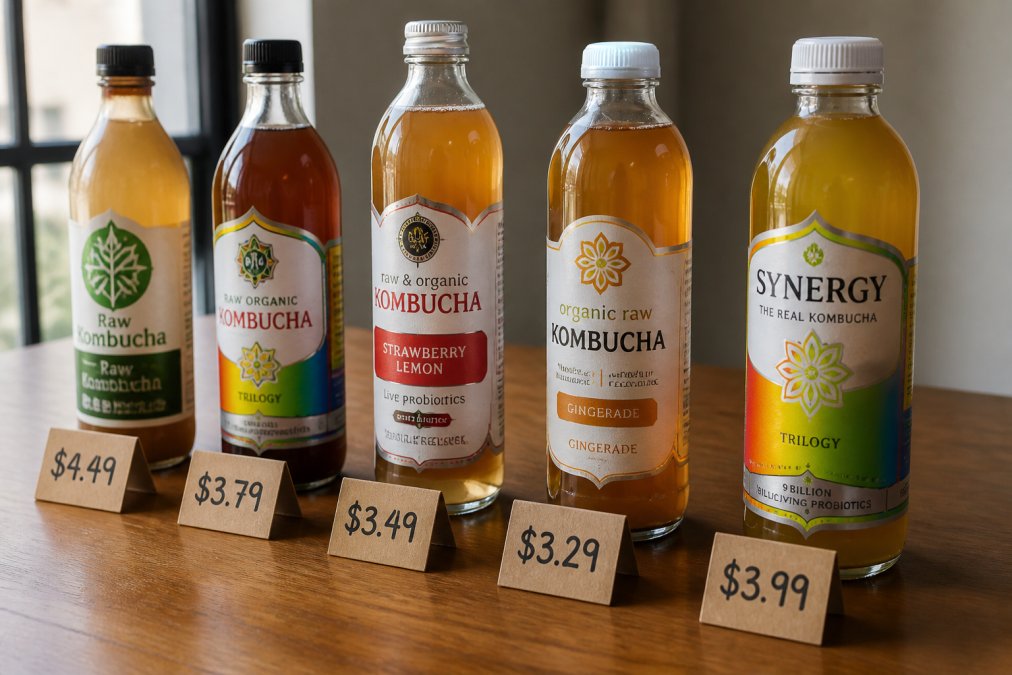
The price gap between raw and mass-produced kombucha narrows considerably when you calculate cost per serving rather than comparing bottle prices. A typical 12-ounce bottle of mass-produced kombucha costs several dollars at retail, but many raw options deliver comparable or better quality at a similar per-ounce rate when bought in multi-packs.
At Drink Balo, a 12-pack of raw kombucha costs $66.00, which breaks down to $5.50 per 12-ounce bottle. A 4-pack of a specialty flavor like Cherry Fig Leaf runs $24.00, or $6.00 per bottle. These prices sit at a premium, but they include live cultures, low sugar, and a 9-month refrigerated shelf life.

| Option | Typical Price | Servings | Cost per Serving | Live Cultures |
|---|---|---|---|---|
| Mass-produced bottle | $3-$5 | 1 | $3-$5 | No (pasteurized) |
| Raw specialty 4-pack | $24.00 | 4 | $6.00 | Yes |
| Raw 12-pack | $66.00 | 12 | $5.50 | Yes |
DIY vs Store-Bought: The Real Financial Picture
Brewing kombucha at home is the cheapest route on a per-bottle basis, but the real financial picture includes hidden costs and time investment that narrow the gap significantly. Understanding the full cost structure helps you decide whether the DIY route justifies the upfront effort.
Startup and Ingredient Costs
A starter SCOBY costs $10 to $25, and you need glass bottles (typically $15 to $40 for a set of four to six 16-ounce bottles), a brewing vessel ($20 to $50 for a food-grade glass jar), and basic ingredients. Per-batch ingredient costs are low: loose-leaf tea ($0.50 to $1.00 per batch), cane sugar ($0.50 to $1.00 per batch), and filtered water (negligible). The first batch takes 7 to 14 days to ferment, and results vary until you dial in your process.
Total startup investment: approximately $60 to $140 for equipment and a starter culture. At this point, you can produce your first batch.
Hidden Costs and Failure Rates
Many home brewers encounter failed batches during the learning phase, batches that taste too sweet, too vinegary, or develop mold. Industry estimates suggest new brewers experience a 15 to 30 percent failure rate in their first five batches. A failed batch wastes roughly $1.50 to $2.00 in ingredients and 7 to 14 days of fermentation time. Over your first month, you might lose $3 to $6 and two weeks of production to learning curve failures.
Continuous brewing also requires consistent attention. If you miss a fermentation window or forget to "feed" your SCOBY, you may need to restart the culture, adding another $10 to $25 cost. Equipment replacement (broken jars, worn bottle caps) typically runs $10 to $20 annually.
Per-Bottle Cost Calculation
Assuming you successfully brew 12 batches per year (one per month), each yielding four 12-ounce bottles:
- Annual ingredient cost: $12 to $24 (12 batches × $1 to $2 per batch)
- Annual equipment replacement and SCOBY maintenance: $15 to $30
- Amortized startup cost (spread over three years): $20 to $47 per year
- Total annual cost: $47 to $101 for 48 bottles
- Cost per bottle: $0.98 to $2.10
This is genuinely cheaper than store-bought raw kombucha ($5 to $6 per bottle), but it assumes consistent success and does not account for your time. If you value your time at $15 per hour and spend 2 hours per month managing your brew (feeding the SCOBY, bottling, cleaning), that adds $360 annually, raising the effective cost per bottle to $8.50 to $9.60, higher than buying raw.
The Break-Even Timeline
For a daily consumer (365 bottles per year), home brewing breaks even in approximately 3 to 4 months, after which the savings compound. For an occasional drinker (50 bottles per year), the break-even point extends to 18 to 24 months, making store-bought raw kombucha the more practical choice.
Quality and Consistency Trade-Off
Store-bought raw kombucha is quality-tested and consistent. Home-brewed kombucha varies batch to batch, which some brewers enjoy as part of the craft but others find frustrating. Professional producers maintain strict fermentation temperatures (typically 68°F to 85°F) and use standardized SCOBY cultures, resulting in predictable probiotic counts. Home brewers rarely test CFU counts, so you cannot verify whether your batch delivers the probiotic benefit you are seeking.
Is Raw Kombucha Worth It? The Final Verdict
Raw kombucha is worth the price if you value live probiotics, low sugar content, and a product made with quality ingredients, and you understand that you are paying for a refrigerated, perishable good. The premium over pasteurized options reflects real differences in production, not just marketing. Pasteurized kombucha is essentially a sweet tea beverage, while raw kombucha delivers the living culture that defines the category.
The sustainability angle adds another layer of value for environmentally conscious buyers. Drink Balo transforms excess farmers market produce into every bottle, supporting local growers and reducing food waste. Each purchase funds a supply chain that keeps edible produce out of landfills, which is a benefit that does not show up on a nutrition label but matters for the planet.
For most people, the answer is yes, provided you buy from a producer that is transparent about its fermentation process. Start with a mixed 8-pack at $45.00 to sample flavors, or commit to the 12-pack for the best per-bottle value. USDA guidance on reducing food waste supports the case that choosing upcycled products is a meaningful individual action.

Frequently Asked Questions
What does 'raw' actually mean on a kombucha label?
Raw kombucha contains live cultures and active enzymes because it hasn't been heat-treated. Pasteurized versions are heated to kill bacteria, extending shelf life but eliminating most probiotics and beneficial microorganisms. The fermentation process in raw kombucha creates organic acids, live SCOBY cultures, and functional compounds that support digestive health. When you see 'raw' on a label, it means the kombucha retained its living microbiome throughout production and storage.
Why is raw kombucha more expensive than mass-produced versions?
Raw kombucha costs more because it requires careful temperature control, longer fermentation times, and refrigeration throughout distribution to preserve live cultures. Mass-produced kombucha uses pasteurization to reduce production complexity and shipping costs. Raw fermentation also typically uses higher-quality ingredients. If sourced from local producers using excess farmers market produce, raw kombucha supports sustainable practices that add value beyond the bottle.
Is drinking raw kombucha good for you?
Raw kombucha contains probiotics and live cultures that support gut flora and microbiome health. The fermentation process produces organic acids and compounds that may support digestive health and metabolic function. However, clinical evidence on specific health claims remains limited. Raw kombucha does contain bioavailable nutrients and antioxidants from its tea and fruit base. Most people tolerate raw kombucha well when consumed in moderation, though safety concerns exist for those with compromised immune systems or SCOBY sensitivities.
What is a good price for kombucha?
A fair price for raw kombucha ranges from $5.50 to $6.00 per 12 oz bottle when buying individual bottles, or $4.50 to $5.50 per bottle when purchasing multi-packs. Drink Balo's 4-packs cost $24.00 (or $6.00 per bottle), while 12-packs cost $66.00 (or $5.50 per bottle). Mass-produced pasteurized kombucha typically costs $3.00 to $4.00 per bottle. The price difference reflects raw fermentation, refrigeration requirements, live cultures, and ingredient quality. Consider cost-per-serving over time and the functional benefits you're seeking.
Choosing raw kombucha means deciding what you want from your beverage: a functional drink with live cultures or just a flavored refreshment. The raw option costs more because it delivers more, from probiotic content to sustainable sourcing. Get started with Drink Balo and taste the difference that a truly raw, locally crafted fermentation makes.
This article was written using GrandRanker