

Sustainable Beverages Made From Produce: 2026 Guide
Table of Contents
- What Makes a Beverage Truly Sustainable (and What Does Not)
- Sustainable Beverages Made From Produce: How Real Drinks Get Built
- How to Reduce Food Waste by Choosing Produce-Based Drinks
- The Upcycled Food Movement and Why It Changed Beverage Shelves
- Benefits of Raw Kombucha: What the Fermentation Actually Delivers
- How to Spot a Genuinely Sustainable Beverage Brand
- Seasonal Produce Calendars and Why Your Drink Changes With the Harvest
- Frequently Asked Questions
Last Updated: September 20, 2026
What Makes a Beverage Truly Sustainable (and What Does Not)
Sustainable beverages are drinks produced to lower environmental impact across the entire supply chain, from how ingredients are grown to how the finished bottle is packaged and shipped. That definition sounds simple, but the reality is messier.
Many brands slap a leaf on the label and call it a day. At Drink Balo, we've watched this play out across the farmers markets and grocery shelves where we source and sell. The drinks that earn the label share specific traits. The ones that don't usually fail on at least two of the four pillars below.
The Four Pillars of a Sustainable Drink
A genuinely sustainable drink has to clear four bars at once:
- Sourcing: Ingredients come from growers who use regenerative or organic methods, and surplus produce gets used instead of dumped.
- Production: Fermentation and bottling run on minimal energy, with low water use and little waste.
- Packaging: Materials are recyclable, refillable, or compostable, and shipping distances stay short.
- Transparency: The brand can show you where ingredients came from and how the drink was made.
Miss one pillar and the whole claim weakens.
Sustainable Beverages Made From Produce: How Real Drinks Get Built
The most sustainable drinks start with produce that would otherwise go to waste: fruit too ripe for retail, misshapen vegetables, and seasonal surplus from local farms all become raw material instead of landfill.
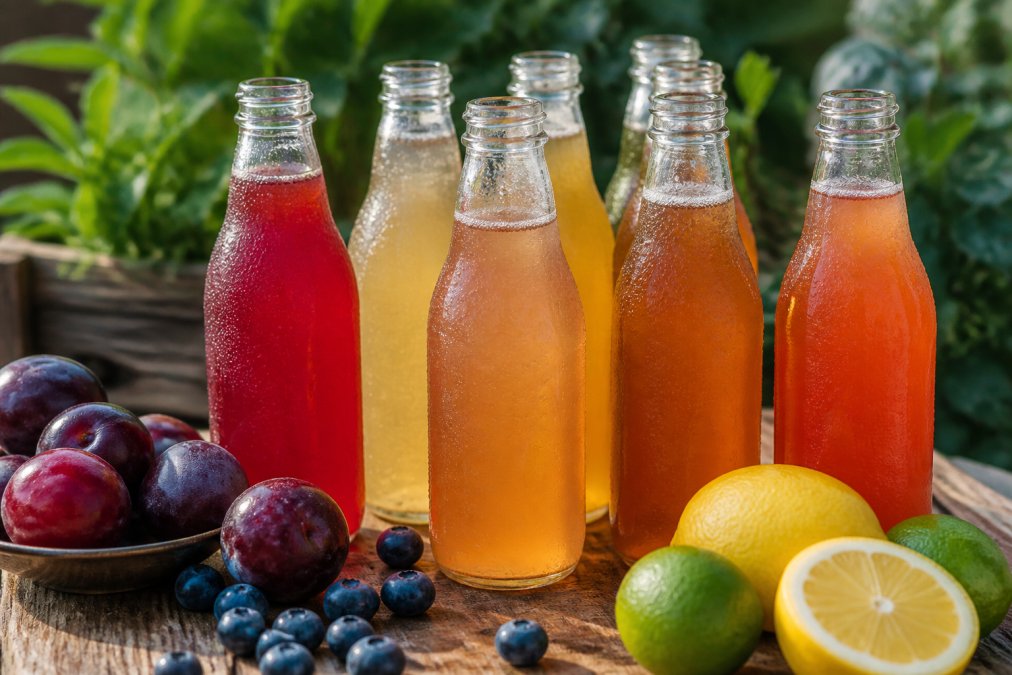
Shrub Sodas, Raw Kombucha, and Mixers: Three Formats Compared
| Format | How It's Made | Best For | Shelf Life (Refrigerated) |
|---|---|---|---|
| Shrub soda | Fruit + vinegar + sugar, fermented, then carbonated | Light, tart everyday drinking | 9 months |
| Raw kombucha | Sweet tea fermented with a culture, never pasteurized | Probiotic-focused daily drinkers | 9 months |
| Shrub mixer | Concentrated fruit-and-vinegar base, diluted to serve | Home entertaining and cocktails | 6 months after opening |
Shrub soda uses fruit and vinegar as its base, giving a tart, lightly sweet, naturally fermented drink. Raw kombucha ferments sweet tea with a live culture, the source of its probiotic content. Shrub mixers are concentrated, so one bottle stretches across many drinks. Each format keeps produce in circulation rather than letting it spoil.

How to Reduce Food Waste by Choosing Produce-Based Drinks
Choosing a produce-based drink is one of the simplest ways to reduce food waste, because every bottle diverts fruit that would otherwise be discarded. The EPA notes that food is the single largest category of material in municipal landfills, where it generates methane as it breaks down.
Here's how the math works in practice:
- A farm harvests more fruit than it can sell at peak ripeness.
- A beverage maker buys that surplus directly.
- The fruit gets fermented instead of thrown out.
- The finished drink reaches a customer who wanted something sustainable anyway.
Home-Scale Upcycling: What You Can Do in Your Own Kitchen
You don't need a commercial kitchen to keep produce out of the trash. A few habits go a long way:
- Freeze ripe fruit that's past its prime and blend it into smoothies later.
- Simmer fruit scraps with sugar and vinegar to make a quick shrub concentrate.
- Save citrus peels to flavor sparkling water or tea.
- Compost whatever's left instead of sending it to the landfill.
The Upcycled Food Movement and Why It Changed Beverage Shelves
The upcycled food movement turned surplus ingredients into a recognized product category, and beverages led the charge. What started as a niche idea among small makers is now a label shoppers actively seek, one with a formal definition, not just a marketing vibe.
What "Upcycled" Actually Means on a Label
The Upcycled Food Association's certification standards define an upcycled product as one that uses ingredients that otherwise would not have gone to human consumption, are procured and produced using verifiable supply chains, and have a positive impact on the environment. That third clause is the one most brands gloss over. Using a byproduct isn't enough; the supply chain has to be traceable and the environmental benefit has to be real.
- Cosmetically rejected produce, fruit that's the right variety and ripeness but the wrong size, shape, or color for retail display.
- Processing side streams, pulp, peels, and press cake left over after juice, sauce, or puree production.
- Surplus at peak ripeness, harvests that outpace retail demand and would otherwise be tilled back into the field.
- Brewing and distilling byproducts, spent grain and fruit pomace that still hold fermentable sugars and flavor compounds.
The Nutritional Profile Question Competitors Skip
Most upcycled beverage content stops at the environmental story. The more interesting question is whether an upcycled drink is nutritionally comparable to a conventional one, and the honest answer is: it depends on the stream.
4 pack Santa Rosa plum & grapefruit →
Why the Movement Reshaped Beverage Shelves
The shift happened for a few reasons: consumers began asking harder questions about where their food came from, small producers proved upcycled products could taste as good as conventional ones, and certification bodies gave brands a way to prove their claims instead of just asserting them.
Benefits of Raw Kombucha: What the Fermentation Actually Delivers
Raw kombucha delivers live cultures and organic acids that pasteurized versions lose during heat treatment. That's the core difference, and understanding the mechanism explains everything from the flavor to the shelf-life trade-off.
What the Culture Actually Does
A kombucha culture, often called a SCOBY, for symbiotic culture of bacteria and yeast, is a working consortium of organisms, not a single strain. The yeast fraction converts sucrose into glucose and fructose, then into ethanol and carbon dioxide. The bacterial fraction, typically acetic acid bacteria, oxidizes that ethanol into acetic acid, while Gluconobacter strains convert glucose into gluconic acid.
Raw vs. Pasteurized: The Real Trade-Off
Pasteurized kombucha gets heated to extend shelf life and stabilize flavor, and that heat kills the live cultures. You still get a fermented-tasting drink, but you lose the probiotics many people drink kombucha for.
The Lifecycle Angle: Where the Carbon Actually Sits
When you compare a produce-based raw kombucha to a conventional bottled soft drink, the ingredient stage usually dominates the footprint, not packaging or shipping. Upcycled produce that would otherwise decompose in a landfill avoids methane generation, and that avoided-emission credit is often larger than the savings from a lighter bottle.
How to Spot a Genuinely Sustainable Beverage Brand
A genuinely sustainable beverage brand can answer three questions without hesitating: where its ingredients came from, how the drink was produced, and what happens to the packaging. If a brand dodges any of those, treat the claim with skepticism.
Use this checklist when you're standing in the aisle:
- Does the label name specific farms, regions, or sourcing partners?
- Is there a third-party certification, not just a self-designed logo?
- Does the brand explain how it handles surplus or upcycled ingredients?
- Is the packaging recyclable, refillable, or compostable?
- Does the company publish any sustainability metrics or reporting?
Seasonal Produce Calendars and Why Your Drink Changes With the Harvest
Seasonal produce calendars explain why the best produce-based drinks change flavor throughout the year. A shrub made from summer stone fruit tastes nothing like one built on autumn grapes, and that's the point.
Frequently Asked Questions
How does upcycling produce reduce food waste in the beverage industry?
Upcycling redirects surplus or cosmetically imperfect produce that would otherwise be discarded into fermentation tanks instead of landfills. A shrub soda or raw kombucha can absorb fruit that a farmers market vendor cannot sell by closing time. This keeps edible calories in the food supply, cuts methane emissions from decomposing produce, and gives growers a revenue stream for crops they already harvested. The environmental impact assessment is straightforward: every bottle made from rescued produce displaces one made from purpose-grown ingredients.
Are fermented drinks like kombucha considered sustainable?
Fermentation itself is a low-energy process that requires no pasteurization when the product is raw, which reduces the carbon footprint compared to heat-treated beverages. The sustainability of a specific kombucha depends on where its ingredients come from, how far they travel, and whether the producer uses surplus produce or purpose-grown crops. A raw kombucha made from local farmers market excess scores well on all three. One made from imported concentrates shipped long distances scores poorly, even if the fermentation method is identical.
What are the benefits of raw kombucha compared to regular store-bought options?
Raw kombucha is never pasteurized, so the live yeast and bacteria cultures survive bottling. Pasteurized kombucha tastes similar but the heat treatment kills those cultures. The trade-off is that raw kombucha requires consistent refrigeration and has a shorter stable shelf life once opened. For anyone choosing a fermented drink for gut health support, the live cultures are the main reason to pick raw over pasteurized.
How can consumers identify eco-friendly beverage brands?
Look for three signals: ingredient sourcing transparency, packaging material disclosures, and third-party verification of sustainability claims. Brands that name their farm partners or specify that they use surplus produce are easier to verify than those making vague environmental statements. Check whether the packaging is recyclable, compostable, or reusable. Certifications like USDA Organic or B Corp status provide independent confirmation. If a brand cannot tell you where its produce comes from or how it handles waste, treat the sustainability claim as marketing rather than a commitment.