

Are Fermented Drinks Safe for Pregnancy? A 2026 Guide
Table of Contents
- What Makes a Fermented Drink Safe or Unsafe During Pregnancy?
- Understanding Alcohol Content in Kombucha Pregnancy Guidelines
- Benefits of Probiotics During Pregnancy for Gut Health
- A Quick Comparison: Safe Fermented Drinks for Expectant Mothers
- Which Fermented Beverages to Avoid and Why
- How to Reduce Food Waste with Fermented Beverages
- The Bottom Line on Fermented Drinks and Prenatal Nutrition
- Frequently Asked Questions
Last Updated: September 8, 2026
What Makes a Fermented Drink Safe or Unsafe During Pregnancy?
Fermented drinks occupy a gray area in prenatal nutrition, and the question of are fermented drinks safe for pregnancy requires looking past the health halo. The core question of whether fermented drinks are safe for pregnancy hinges on two factors: the presence of live cultures and the method of production. A fermented beverage is generally safe when it is pasteurized or heat-treated, commercially produced under strict quality controls, and contains negligible alcohol. It becomes risky when it is raw, unpasteurized, or home-brewed without rigorous monitoring.
The distinction between raw and processed products is the single most important safety filter for expectant mothers. The concern is not the fermentation process itself, which humans have used for millennia, but the potential for harmful pathogen growth in products that skip critical safety steps.
Pasteurized vs. Raw Fermented Products
Pasteurization is the dividing line. Pasteurized fermented drinks are heated to kill pathogenic bacteria, including listeria and salmonella, which pose serious risks during pregnancy. Raw or unpasteurized products skip this step, meaning they retain live bacteria that could include harmful strains if the production environment is not perfectly controlled.
The FDA guidance on food safety during pregnancy emphasizes that pregnant women should avoid unpasteurized juices and raw products because their immune systems are naturally suppressed. This does not mean all raw products are dangerous, but the margin for error is thin, and the consequences of a mistake are severe.
The Role of Live Active Cultures and Pathogens
Live active cultures are the reason people seek out fermented drinks, but they are also the source of the safety paradox. Beneficial probiotic strains such as Lactobacillus and Bifidobacterium support gut health, yet the same fermentation environment can host unwanted bacteria if pH levels or temperatures drift.
The key distinction is quality control. Commercial producers test batches for pathogens and maintain strict fermentation parameters. A common mistake is assuming all fermented drinks are equally safe because they all contain cultures. The reality is that safety depends entirely on production standards.
Understanding Alcohol Content in Kombucha Pregnancy Guidelines
Commercial kombucha typically contains trace alcohol from the fermentation process, usually below 0.5% ABV, which is why it is classified as non-alcoholic. However, home-brewed or improperly stored kombucha can ferment longer and produce significantly higher ethanol levels. This variability is why alcohol content in kombucha pregnancy guidelines consistently recommend caution with anything not commercially regulated.
The concern with alcohol during pregnancy is well documented. No safe threshold for ethanol exposure has been established, so even small amounts carry theoretical risk. While the trace amounts in commercial kombucha are generally considered acceptable by many healthcare providers, the lack of a defined safe limit means some practitioners advise complete avoidance.
For expectant mothers who want the probiotic benefits without any alcohol uncertainty, non-alcoholic shrub sodas can be an alternative. These vinegar-based drinks undergo fermentation but are formulated to contain no alcohol, providing the gut health benefits without the ethanol question.

Benefits of Probiotics During Pregnancy for Gut Health
The benefits of probiotics during pregnancy extend beyond digestion, but the current evidence points to several specific, measurable outcomes that go far beyond the vague claim of "gut health." The maternal microbiome undergoes dramatic shifts during pregnancy, estrogen and progesterone levels rise, which alters gut motility and immune tolerance. This is why many women experience new-onset constipation, heartburn, or bloating. Probiotic strains can directly address these shifts, but only if they survive stomach acid and colonize the gut.
Strain-specific evidence. The most studied strains in prenatal care are Lactobacillus rhamnosus GG (LGG) and Bifidobacterium lactis BB-12. A 2022 meta-analysis in the American Journal of Clinical Nutrition found that LGG supplementation reduced the incidence of gestational diabetes by 11% in high-risk women when started before 20 weeks of gestation. The mechanism is thought to involve short-chain fatty acid production, which improves insulin sensitivity and reduces systemic inflammation. Bifidobacterium lactis BB-12, meanwhile, has been shown in multiple trials to reduce the severity of constipation, a condition affecting up to 40% of pregnant women, by increasing stool frequency and softening stool consistency.
The gut-brain axis during pregnancy. The vagus nerve connects the gut microbiome to the brain, and pregnancy hormones amplify this signaling. A 2021 study from the NIH-funded Human Microbiome Project found that pregnant women with higher gut microbial diversity reported 23% lower scores on the Edinburgh Postnatal Depression Scale in the third trimester. While this is associative, not causal, the pattern is consistent: the gut microbiome produces 90% of the body's serotonin, and supporting it with probiotics may help stabilize mood during a period of significant hormonal fluctuation.
Beyond digestion: immune modulation. Pregnancy requires a delicate immune balancing act. The maternal immune system must tolerate a genetically distinct fetus while still defending against pathogens. Probiotics influence this balance through regulatory T-cell activation. Lactobacillus reuteri and Lactobacillus fermentum have both demonstrated the ability to increase regulatory T-cell populations in clinical trials, which may reduce the risk of allergic sensitization in the infant. A 2020 study in the Journal of Allergy and Clinical Immunology followed 400 mother-infant pairs and found that maternal probiotic supplementation from 36 weeks gestation through 3 months postpartum reduced the incidence of infant eczema by 22% at 12 months of age.
The Group B Strep connection. One of the most practical benefits of prenatal probiotics involves Group B Streptococcus (GBS) screening, which the CDC recommends for all pregnant women between 36 and 37 weeks. A 2019 systematic review in the Journal of Maternal-Fetal & Neonatal Medicine examined 12 randomized controlled trials and found that oral supplementation with Lactobacillus rhamnosus GR-1 and Lactobacillus reuteri RC-14 reduced GBS colonization rates by up to 30% in some studies. While probiotics are not a replacement for intrapartum antibiotic prophylaxis, the evidence suggests they may reduce the likelihood of a positive GBS screen in the first place.
What this means for fermented drinks. The challenge is that probiotic benefits are dose-dependent and strain-specific. A typical serving of commercial kefir contains 10-100 billion CFU (colony-forming units), which is comparable to a high-quality probiotic supplement. Kombucha, by contrast, contains far fewer viable bacteria, typically 1-10 million CFU per serving, because the acetic acid environment is less hospitable to Lactobacillus species. This does not make kombucha worthless; it means it should be viewed as a complementary source rather than the primary probiotic vehicle.
Consistency beats quantity. The gut microbiome turns over rapidly, roughly every 2 to 4 weeks. A single serving of kefir on a Sunday will not meaningfully shift microbial diversity by Friday. The clinical trials that show benefits use daily supplementation over 8 to 12 weeks. For pregnant women, this means choosing a safe, pasteurized source they can consume daily, whether that is a glass of kefir with breakfast or a shrub soda in the afternoon, rather than relying on sporadic raw products that carry higher risk.
The prebiotic synergy. Probiotics need food to thrive. Prebiotics, non-digestible fibers found in garlic, onions, bananas, and oats, feed beneficial bacteria. Fermented drinks that contain residual fiber or are consumed alongside prebiotic-rich foods show better colonization rates. This is why a fermented drink paired with a fiber-rich meal is more effective than the same drink consumed alone. For pregnant women managing nausea, a small glass of kefir with a handful of oats or a slice of whole-grain toast creates a more favorable environment for probiotic survival than drinking it on an empty stomach.
A Quick Comparison: Safe Fermented Drinks for Expectant Mothers
A simple safe/avoid list is not enough for a prenatal diet where hidden sugar and caffeine also matter. Gestational diabetes affects up to 10% of pregnancies in the United States, and the American College of Obstetricians and Gynecologists recommends monitoring carbohydrate intake. Meanwhile, the FDA advises limiting caffeine to 200 mg per day. Fermented drinks often hide both. The table below adds this layer of analysis to the basic safety verdict. chiropractic during pregnancy.
| Beverage | Pasteurized Options | Alcohol Risk | Probiotic Content | Sugar (per 8 oz serving) | Caffeine | Pregnancy Verdict |
|---|---|---|---|---|---|---|
| Kombucha (commercial, e.g., GT's Synergy) | Yes (most major brands) | Trace (<0.5% ABV) | High (live cultures) | 4-8 g | 0-15 mg (if made from tea) | Generally safe; check label for sugar and pasteurization |
| Kombucha (home-brewed) | No | Variable, can exceed 1.5% ABV | High | Variable | Variable | Avoid, alcohol and pathogen risk too high |
| Kefir (dairy, commercial) | Yes (most grocery store brands) | Negligible | High (Lactobacillus, Bifidobacterium) | 9-12 g (plain, from lactose) | 0 mg | Safe when pasteurized; choose plain to control sugar |
| Water Kefir (commercial) | Yes (some brands) | Trace | Moderate | 5-10 g | 0 mg | Generally safe; confirm pasteurization |
| Shrub sodas (vinegar-based) | Yes (commercial) | None | Moderate (from raw vinegar) | 4-10 g | 0 mg | Safe; check sugar content |
| Raw miso drinks | Rarely | None | Moderate | 1-3 g | 0 mg | Caution, unpasteurized soy can carry pathogen risk |
| Unpasteurized kvass | No | Trace | High | 2-5 g | 0 mg | Avoid, no pasteurization step |
The hidden sugar problem. A commercial kombucha with 8 g of sugar per serving might seem harmless, but many flavored varieties add juice or cane sugar, pushing the count to 12-15 g per bottle. For a pregnant woman managing gestational diabetes, that is nearly half the recommended added-sugar limit of 25 g per day from the American Heart Association. Kefir is another trap: flavored versions can contain 15-20 g of sugar per cup, more than a can of soda. The safest choice is plain, unsweetened kefir or a shrub soda with 4 g or less per serving.
The caffeine angle. Kombucha brewed from black or green tea retains residual caffeine. A standard 8 oz serving of kombucha contains roughly 5-15 mg, which is negligible on its own. But when combined with a morning coffee (95 mg) and a piece of dark chocolate (12 mg), a pregnant woman can approach the 200 mg daily ceiling faster than she realizes. Herbal-tea-based kombuchas or vinegar-based shrubs eliminate this concern entirely.
Strain specificity matters. Not all probiotics are equal. Dairy kefir typically contains Lactobacillus kefiranofaciens and Lactobacillus acidophilus, which have shown promise in clinical trials for reducing gestational constipation. Kombucha contains a broader mix of Acetobacter and yeast species, but the bacterial strains are less studied in pregnancy. Shrub sodas, which rely on the acetic acid bacteria from raw vinegar, provide a different set of metabolites that support the gut lining but have less documented probiotic viability than kefir. This is not a reason to avoid them, it is a reason to rotate sources rather than relying on one drink for all probiotic benefits.
A note on serving size. Most commercial kombucha bottles are 16 oz, which means the label's sugar and caffeine numbers double if you drink the whole bottle. The CDC's listeria guidelines and general prenatal nutrition advice both suggest portion control. Treat a 16 oz fermented drink as two servings, not one.
Which Fermented Beverages to Avoid and Why
Raw kombucha, unpasteurized kefir, and any fermented drink from a farmers market stall without visible safety certifications should be avoided during pregnancy. The risk is not theoretical; listeria is a pathogen that can survive refrigeration and poses particular danger to pregnant women and their developing babies.
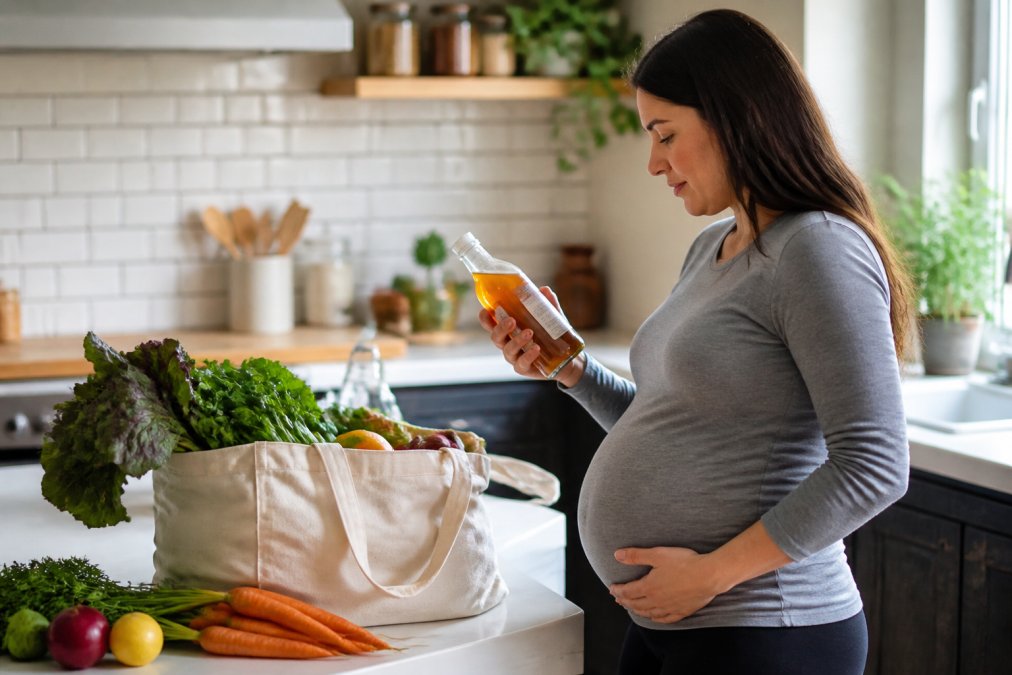
The CDC guidelines on listeria prevention specifically list unpasteurized dairy and raw sprouts as high-risk foods for pregnant women. Fermented beverages made from raw ingredients fall into a similar category because the fermentation process does not inherently eliminate pathogens. It can actually create conditions where they thrive if the starting ingredients are contaminated.
Home-Brewing Risks and Safety Protocols
Home-brewing fermented drinks during pregnancy introduces variables that commercial producers control through testing and equipment. Without proper pH monitoring, temperature control, and sanitization protocols, the risk of pathogen growth increases substantially.
If you are brewing for a pregnant household member, follow strict protocols: use pasteurized base ingredients, maintain fermentation temperatures within recommended ranges, test pH regularly, and consider pasteurizing the finished product by heating it briefly before consumption. These steps reduce but do not eliminate risk, which is why many healthcare providers recommend simply avoiding home-brewed products during pregnancy.
How to Reduce Food Waste with Fermented Beverages
Fermentation is one of humanity's oldest food preservation methods, and it remains a practical tool for reducing kitchen waste. Excess produce that would otherwise spoil can be transformed into flavorful, probiotic-rich beverages that extend their shelf life dramatically.
This is where the sustainability angle of fermented drinks shines. A common approach is using overripe fruit for shrub bases, vegetable scraps for kvass, or excess citrus for kombucha flavoring. These practices divert food from landfills while creating nutritious drinks. The USDA food loss and waste research highlights that a significant portion of household food waste comes from produce spoilage, and fermentation directly addresses this problem.
For expectant mothers who want to participate in this sustainable practice, the safe route is preparing fermented beverages for others while choosing commercially pasteurized options for themselves. Alternatively, shrub sodas made from rescued produce offer the same food-waste reduction benefits without the safety concerns of raw fermentation.
The Bottom Line on Fermented Drinks and Prenatal Nutrition
Fermented drinks can be part of a healthy pregnancy diet, but only when chosen with careful attention to production methods. The deciding factors are pasteurization, commercial quality control, and verified low or zero alcohol content. Are fermented drinks safe for pregnancy? The answer is yes for pasteurized commercial products and no for raw, unpasteurized, or home-brewed varieties.
Prenatal nutrition benefits from the probiotics and nutrient bioavailability that fermentation provides, but those benefits are only worth pursuing through safe channels. When in doubt, consult your healthcare provider about your specific situation, as individual risk factors vary.
For expectant mothers seeking the gut health benefits of fermentation without the alcohol or pathogen concerns, Drink Balo's shrub sodas offer a practical solution. Made from excess farmers market produce through a raw fermentation process that produces no alcohol, they deliver probiotic content with only 4 grams of cane sugar per serving. The vinegar-based fermentation creates an acidic environment that naturally inhibits harmful bacterial growth, and the products remain stable for 9 months refrigerated. Drink Balo product offerings provides options like the Santa Rosa plum and grapefruit shrub soda that fit within pregnancy-safe dietary guidelines.
Choosing fermented drinks during pregnancy comes down to informed decisions about production methods and risk tolerance. The safest path combines the benefits of probiotics with the certainty of pasteurization and verified alcohol content. Drink Balo offers non-alcoholic, probiotic-rich shrub sodas that support gut health and reduce food waste, giving you the fermentation benefits without the safety trade-offs. Get started with Drink Balo and enjoy fermented drinks that are sustainable.
Frequently Asked Questions
Is it safe to drink kombucha while pregnant if it has less than 0.5% alcohol?
Most commercial kombucha contains trace alcohol under 0.5% ABV, which falls within the non-alcoholic definition. However, raw and unpasteurized kombucha carries a listeria risk that matters more than the ethanol content during pregnancy. If you choose kombucha, select a pasteurized, heat-treated brand with verified low alcohol content and live active cultures added after processing. Always confirm the label states pasteurized or heat-treated to avoid potential pathogens.
Can I have fermented kimchi or miso while pregnant?
Yes, but with conditions. Fermented foods like kimchi, miso, and fermented soybeans offer probiotic benefits for gut health during pregnancy. The key distinction is pasteurization: heat-treated versions eliminate listeria risk while retaining some nutritional value. Raw, unpasteurized kimchi or homemade miso may harbor harmful bacteria. For safety, choose commercially pasteurized products or cook fermented foods thoroughly to kill potential pathogens before eating.
What are the benefits of probiotics during pregnancy for my baby?
Probiotic-rich fermented drinks support maternal health by promoting a balanced gut microbiome, which may reduce the risk of gestational diabetes and pre-term birth. Research suggests maternal probiotic intake positively influences fetal microbiota development and immune system programming. While fermented drinks like shrub sodas provide live cultures, you can also get probiotics from pasteurized yogurt and kefir. Always discuss supplementation with your prenatal care provider.
Do fermented drinks contain enough alcohol to harm a fetus?
Commercially produced fermented drinks typically contain less than 0.5% alcohol by volume, which is generally considered negligible. However, homemade kombucha and improperly stored fermented beverages can develop higher ethanol content through continued fermentation. Since no safe level of alcohol during pregnancy has been established, choose products with verified low alcohol content. Check labels for batch testing results or choose non-alcoholic options like shrub sodas that undergo controlled fermentation.