

How to Identify Real Probiotic Kombucha in 2026
Table of Contents
- What Makes Kombucha Actually Probiotic?
- Pasteurized vs Raw Kombucha: The Core Difference
- A Practical Kombucha Label Reading Guide
- How to Spot Real Probiotic Kombucha by Sight and Taste
- Why Organic Raw Kombucha Matters for Gut Health
- Common Mistakes When Judging Kombucha Quality
- Conclusion: Trust the Process, Not the Marketing
- Frequently Asked Questions
Last Updated: September 7, 2026
Real probiotic kombucha is the result of a traditional fermentation process where a SCOBY converts sweet tea into a living, carbonated beverage. Most bottles on the shelf claim to be probiotic, but the reality is that many are pasteurized or filtered after fermentation, which kills or removes the very cultures that define the drink. At Drink Balo, we craft raw kombucha, and we have learned that distinguishing genuine products from clever marketing requires looking past the front label. This guide shows you exactly how to identify real probiotic kombucha by examining the process, the label, and the liquid itself.

The good news is that verification does not require a laboratory. A few simple checks at the store or in your kitchen can reveal whether a product is truly raw and alive. Below, we will walk through the science of live cultures, the critical difference between pasteurized and raw kombucha, and a practical label-reading system you can use on your next shopping trip.
What Makes Kombucha Actually Probiotic?
Kombucha is probiotic when it contains live microorganisms that survive digestion and reach your gut. The fermentation process, driven by a symbiotic culture of bacteria and yeast known as a SCOBY, produces organic acids, trace alcohol, and natural effervescence. For a product to genuinely qualify as a probiotic beverage, those active cultures must remain alive in the bottle at the time of consumption.
The distinction matters because the mere presence of a SCOBY during brewing does not guarantee a probiotic end product. Many commercial producers ferment kombucha and then heat-treat it to extend shelf life, a step that destroys the delicate yeast and bacteria. According to the International Scientific Association for Probiotics and Prebiotics, a probiotic must be alive and administered in adequate amounts to confer a health benefit, which excludes any heat-killed or filtered product.
The Role of the SCOBY and Live Cultures
The SCOBY, which stands for symbiotic culture of bacteria and yeast, is the engine of kombucha fermentation. It consumes the sugar in the tea infusion and produces beneficial compounds like acetic acid and various organic acids. The liquid itself, not the rubbery disc, holds the majority of the live bacteria and yeast that make the drink probiotic.
Real probiotic kombucha relies on this microbial profile remaining intact. If the liquid is cloudy and contains sediment, it is a strong signal that the culture is still active. Conversely, a crystal-clear product has likely been filtered to remove the yeast and bacteria, stripping away the probiotic potential.
Pasteurized vs Raw Kombucha: The Core Difference
Raw kombucha is unpasteurized and retains its live cultures, while pasteurized kombucha has been heat-treated to kill microorganisms for stability. This single processing step is the defining difference between a functional probiotic drink and a flavored tea soda. Pasteurization makes products shelf-stable, allowing them to sit unrefrigerated for months, but it destroys the living bacteria and yeast that provide gut health benefits.
The trade-off is straightforward: shelf-stable kombucha cannot be raw. If a bottle sits on an unrefrigerated shelf at room temperature, it has almost certainly been heat-treated or heavily filtered. Real raw kombucha requires refrigeration to keep the live cultures dormant and prevent over-fermentation, which is why you will only find it in the cold section of the grocery store.
A Practical Kombucha Label Reading Guide
Reading a kombucha label requires looking for three specific markers: the absence of heat treatment, the presence of live cultures, and minimal added ingredients. Start by checking for the words "raw" and "unpasteurized" on the front or back of the bottle. Next, scan the ingredient list for added probiotics like Bacillus coagulans, which are often used to fortify pasteurized products with lab-grown cultures rather than naturally occurring ones.
The sugar content also tells a story. During fermentation, the SCOBY consumes sugar, so a truly fermented kombucha should have relatively low residual sugar. If a product lists a high sugar content, it may have been sweetened after fermentation or fermented for a short time. A common approach is to compare the sugar content against the fermentation time, as a longer ferment typically yields a drier, more tart beverage with less sugar.
| Label Claim | What It Means | What to Look For |
|---|---|---|
| Raw / Unpasteurized | Live cultures intact | Refrigerated section, sediment present |
| Pasteurized / Heat-treated | Cultures destroyed | Shelf-stable, clear liquid |
| Added Probiotics | Lab-grown strains added | Bacillus coagulans, Lactobacillus on label |
| Naturally Fermented | SCOBY-driven process | Cloudy appearance, acetic acid tang |
How to Spot Real Probiotic Kombucha by Sight and Taste
Real probiotic kombucha has a distinct appearance: it is cloudy, slightly effervescent, and often contains visible sediment at the bottom of the bottle. This cloudiness comes from the suspended yeast and bacteria, while the sediment is a collection of dead and living cells that settle over time. A clear, perfectly transparent kombucha has likely been filtered, removing the very components that make it a living food.
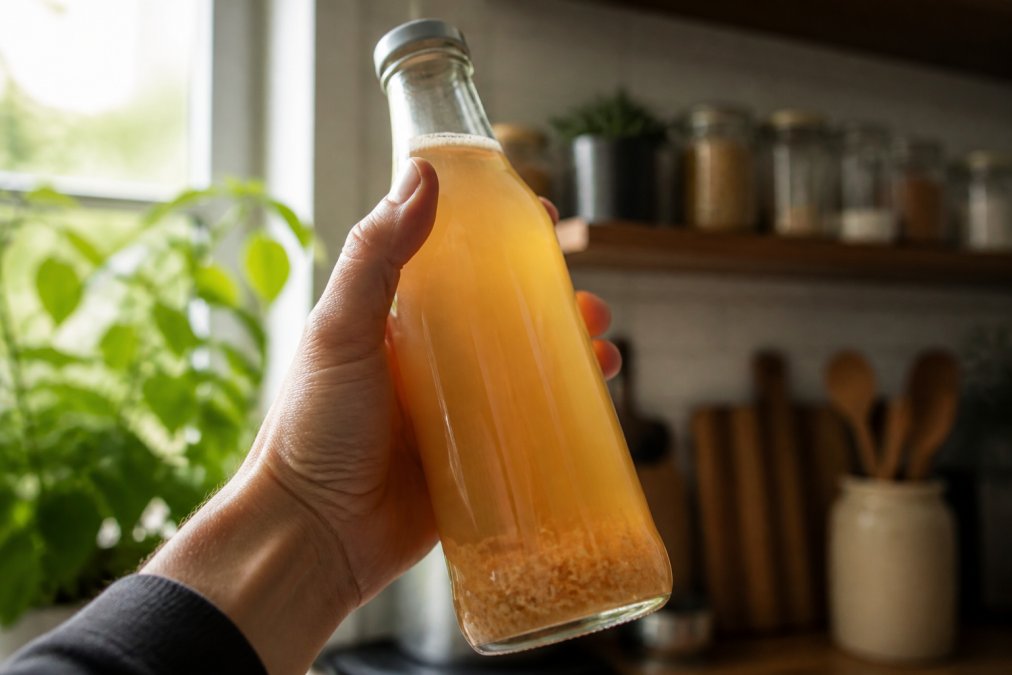
The taste test is equally revealing. Authentic raw kombucha has a characteristic sharpness from acetic acid, a mild tang from the fermentation process, and a subtle natural effervescence. It should taste slightly tart and complex, not like sweetened soda water. If a product tastes predominantly sweet with little acidity, it may have been fermented briefly or sweetened post-fermentation, which reduces the probiotic content.
Sediment, Cloudiness, and Stringy Bits
Sediment and cloudiness are not defects; they are evidence of a living product. The stringy bits you sometimes see floating in raw kombucha are colonies of yeast, a normal byproduct of the SCOBY's activity. These strands, sometimes called the "mother," confirm that the culture is active and healthy. authentic herbal remedies.
A home-test verification method is simple: turn the bottle upside down and observe. In real raw kombucha, the sediment will swirl and disperse, clouding the liquid as the cultures mix. In a filtered product, the liquid will remain clear no matter how vigorously you shake it. This visual check takes seconds and provides immediate confirmation of whether the product is genuinely alive.
Why Organic Raw Kombucha Matters for Gut Health
The organic label on kombucha is not just about avoiding pesticides, it is a signal about the integrity of the entire fermentation process. For a beverage whose primary benefit is delivering live microorganisms to your gut, the quality of the starting ingredients directly affects the microbial ecosystem you are consuming. Organic certification, overseen by the USDA, prohibits synthetic pesticides, fertilizers, and genetically modified organisms in the tea leaves and any fruit or herb additions (usda.gov). This matters because the same live bacteria and yeast you are trying to support can be sensitive to chemical residues that may end up in the brew.
The Added Probiotic Trap: Lab-Grown vs. Naturally Occurring
A major point of confusion in the kombucha market is the difference between naturally occurring probiotics and added probiotics. Many commercial producers ferment kombucha, then pasteurize or micro-filter it to extend shelf life and create a clear, consistent product. This process kills or removes the SCOBY-derived cultures. To still make a 'probiotic' claim on the label, these brands often add lab-grown strains like Bacillus coagulans or Lactobacillus rhamnosus back into the bottle after processing.
This is a fundamentally different product from raw kombucha. Naturally occurring probiotics from a SCOBY are a complex, symbiotic community of multiple yeast and bacteria strains that produce organic acids, enzymes, and vitamins together. Added probiotics are typically single, isolated strains selected for their ability to survive manufacturing and shelf-stable conditions, not for their synergy with the other compounds in the drink. When you see a specific probiotic strain name on the ingredient list of a shelf-stable kombucha, it is a strong indicator that the original fermentation was heat-treated and the 'probiotic' was added later as a supplement, not grown by the SCOBY.
The Organic and Raw Connection
For raw kombucha, the organic choice is even more critical. Because the product is unpasteurized and alive, it is a living food that can be more susceptible to absorbing and concentrating any residues from its environment. Choosing organic tea and fruit reduces the toxic load on the beneficial bacteria you are trying to ingest. Furthermore, the concept of bioavailability applies here: a healthy gut lining, supported by a diverse microbial community, is better equipped to absorb the polyphenols and antioxidants from the organic tea. A common pattern among raw kombucha brewers is that the quality of the tea is an important factor in the flavor profile and the health of the SCOBY itself, a stressed culture from poor-quality inputs produces a less vibrant, less complex brew.
Common Mistakes When Judging Kombucha Quality
The most common mistake is equating shelf-stable convenience with probiotic benefits. A product that sits unrefrigerated for months cannot contain live cultures in meaningful amounts. Heat treatment, whether through pasteurization or flash heating, is the only way to achieve that kind of stability, and it destroys the delicate yeast and bacteria that define a probiotic beverage. This is a fundamental rule of microbiology: live cultures require cold temperatures to remain dormant and viable.
A second frequent error is assuming that added probiotics, such as Bacillus coagulans listed on the label, are equivalent to the naturally occurring cultures from fermentation. These lab-grown strains may offer some benefits, but they are not the same as the complex ecosystem produced by a SCOBY. The label is the first place to spot this, if a specific strain is listed as an ingredient, it was likely added after processing, not created during fermentation.
The Sugar and Fermentation Time Relationship
A third mistake is ignoring the sugar content without understanding its relationship to fermentation time. The SCOBY consumes sugar as its primary food source, converting it into organic acids and carbon dioxide. A longer fermentation period means more sugar is consumed, resulting in a drier, more tart, and less sweet beverage. Conversely, a short fermentation or a post-fermentation sweetening step leaves high residual sugar.
To use this as a verification tool, compare the sugar content to the taste. A truly fermented kombucha with 4-6 grams of sugar per serving should taste noticeably tart and vinegary (peer-reviewed research). If a product lists 10 grams of sugar or more and tastes predominantly sweet, it has likely been fermented for a very short time or sweetened after fermentation to mask the lack of microbial activity. This is a key indicator of a 'soda-like' kombucha that offers little probiotic value.
A Home-Test Verification Method
A second home test involves observing the liquid's reaction to agitation. Turn the bottle upside down and watch the sediment. In a raw, unpasteurized product, the sediment will swirl and disperse, clouding the liquid as the cultures mix. In a filtered or pasteurized product, the liquid will remain clear no matter how vigorously you shake it. This visual check takes seconds and provides immediate confirmation of whether the product is genuinely alive.
Conclusion: Trust the Process, Not the Marketing
Identifying real probiotic kombucha comes down to understanding the process behind the bottle. If the product is raw, unpasteurized, refrigerated, and shows visible signs of life like cloudiness and sediment, it is delivering the live cultures that make kombucha a functional beverage. Marketing terms like "probiotic" and "gut-friendly" mean little without the processing details to back them up.
At Drink Balo, we ferment our raw kombucha using excess farmers market produce, supporting local growers and reducing food waste with every bottle. Our drinks are naturally fermented, unpasteurized, and contain 4 grams of cane sugar, with a 9-month refrigerated shelf life that preserves the live cultures. When you choose a 12-pack of raw kombucha from Drink Balo, you are getting a product grown to taste good and fermented to help you feel better, the buzz without the alcohol.
Frequently Asked Questions
Does pasteurization kill the probiotics in kombucha?
Yes. Pasteurization uses heat to extend shelf life, which destroys the live yeast and bacteria that make kombucha probiotic. If a bottle is shelf-stable and unrefrigerated, it has been heat-treated and will not contain live cultures. Look for raw and unpasteurized on the label and check that the bottle is refrigerated in the store to ensure you are getting real probiotic kombucha.
What ingredients should you avoid in store-bought kombucha?
Avoid kombucha with added artificial flavors, sweeteners, or juices that mask a lack of fermentation. Also be wary of labels that list added probiotics like Bacillus coagulans without mentioning live cultures from fermentation. Real kombucha should have a short ingredient list: tea, sugar, water, and a SCOBY. If it is shelf-stable or heavily filtered, it likely lacks the beneficial yeast and bacteria you want.
How can you tell if kombucha is truly raw and probiotic at home?
Check for visual cues first. Real raw kombucha is naturally cloudy and may have sediment or a small 'mother' culture at the bottom. It must be refrigerated.
Are there specific certifications to look for on kombucha labels?
While there is no single 'probiotic' certification for kombucha, look for third-party certifications like USDA Organic, which ensures ingredients are grown without synthetic pesticides. A Non-GMO Project Verified label is also a good sign. The most important indicator is the label term 'raw' or 'unpasteurized,' which confirms the live cultures have survived the bottling process.
The kombucha market is crowded with products that look alike but differ fundamentally in how they are processed. The challenge is separating genuine raw kombucha from heat-treated imitations that offer flavor without function. Drink Balo solves this by keeping the entire process transparent: raw fermentation, no pasteurization, and a commitment to using surplus produce from local farms. Get started with Drink Balo and taste the difference that a living, unfiltered fermentation process makes.