

How to Support Local Farmers Daily: 13 Practical Ways
Table of Contents
- Why Your Daily Choices Matter More Than You Think
- How to Find Local Farmers Markets Near You
- Make Farmers Markets Your Weekly Routine
- Seasonal Eating: A Direct Way to Support Local Farmers
- Cut Food Waste to Support Local Farmers Financially
- Buy Directly from Farms Through CSAs and Online
- Support Local Farmers in Winter and the Off-Season
- Advocate for Local Farms on Social Media and Beyond
- Frequently Asked Questions
Last Updated: September 6, 2026
Why Your Daily Choices Matter More Than You Think
Supporting local farmers daily doesn't require a complete lifestyle overhaul; it requires shifting a handful of small, repeatable habits. Every dollar spent at a farmers market or through a direct farm subscription keeps more money circulating within your regional economy compared to purchases at national grocery chains (ers.usda.gov). This guide from Drink Balo, a Los Angeles company that turns excess farmers market produce into fermented beverages, outlines practical ways to build these habits.
The conventional advice often focuses on grand gestures, but the real use lies in the routine. When you choose to support local farmers, you are voting for a food system that prioritizes freshness and regional resilience. By the end of this article, you will have a clear playbook for making local sourcing a seamless part of your week, regardless of the season or your budget.
How to Find Local Farmers Markets Near You
Finding a farmers market is the first logistical step, and it is easier than most people think. The USDA maintains a National Farmers Market Directory that is searchable by zip code, making it a reliable tool for discovering markets you might not encounter by chance (usda.gov).
Beyond the directory, a quick social media search for your neighborhood or city name paired with "farmers market" often reveals pop-up markets and smaller weekly gatherings that don't appear in national databases. Look for markets that explicitly state they feature local growers rather than resellers, as this ensures your money reaches the farm directly.
Vetting a Market: Beyond the Name
A critical step that many guides miss is vetting whether a market is truly a "producer-only" market or a "reseller" market. Producer-only markets require every vendor to have grown or made what they sell. Reseller markets allow vendors to buy from wholesale distributors and resell it, often at a markup, which means your money may not be going to a local farmer at all.
Before you go, check the market's website or call the manager to ask a direct question: "Are all vendors required to be the producer of their goods?" If the answer is vague or hedged, treat it as a red flag. Another practical test is to ask a vendor about their farm. A genuine farmer can tell you about their soil, their irrigation challenges, or what they planted last season. A reseller will often struggle to answer basic questions about growing conditions.
The SNAP and Double Up Food Bucks Advantage
A significant barrier for many households is the perception that farmers markets are more expensive than grocery stores. This is not always true, especially when you factor in programs designed to make local food accessible. Many markets across the country now accept SNAP (Supplemental Nutrition Assistance Program) benefits.
Even better, many states participate in "Double Up Food Bucks" or similar incentive programs, which match SNAP dollars spent at participating markets, dollar-for-dollar, up to a certain amount per day (fns.usda.gov). For example, if you spend $20 in SNAP benefits, you receive an additional $20 in tokens to spend on fresh fruits and vegetables. Check with your state's Department of Agriculture or the market's info booth to see if this program is available in your area.
Using Technology to Find Markets on the Go
While the USDA directory is comprehensive, it is not always updated in real time. For up-to-date information, consider using a dedicated app. Local Harvest maintains a searchable database of farms, CSAs, and farmers markets, frequently updated by the farms themselves. The app also lists farm stands and u-pick operations, which are excellent options for buying directly from the source.
Another approach is to follow your local university extension office, which often publishes the most accurate seasonal lists of markets and farm stands. A quick search for "[your state] extension farmers market list" will usually surface a reliable, locally vetted resource that national directories miss.
Make Farmers Markets Your Weekly Routine
Treating the market as a weekly errand, rather than an occasional outing, is the single most effective way to support local farmers consistently. Plan your menu around what you purchase there, and consider it the anchor of your grocery schedule. This consistency provides farmers with predictable income, which helps them plan their planting and harvest cycles.
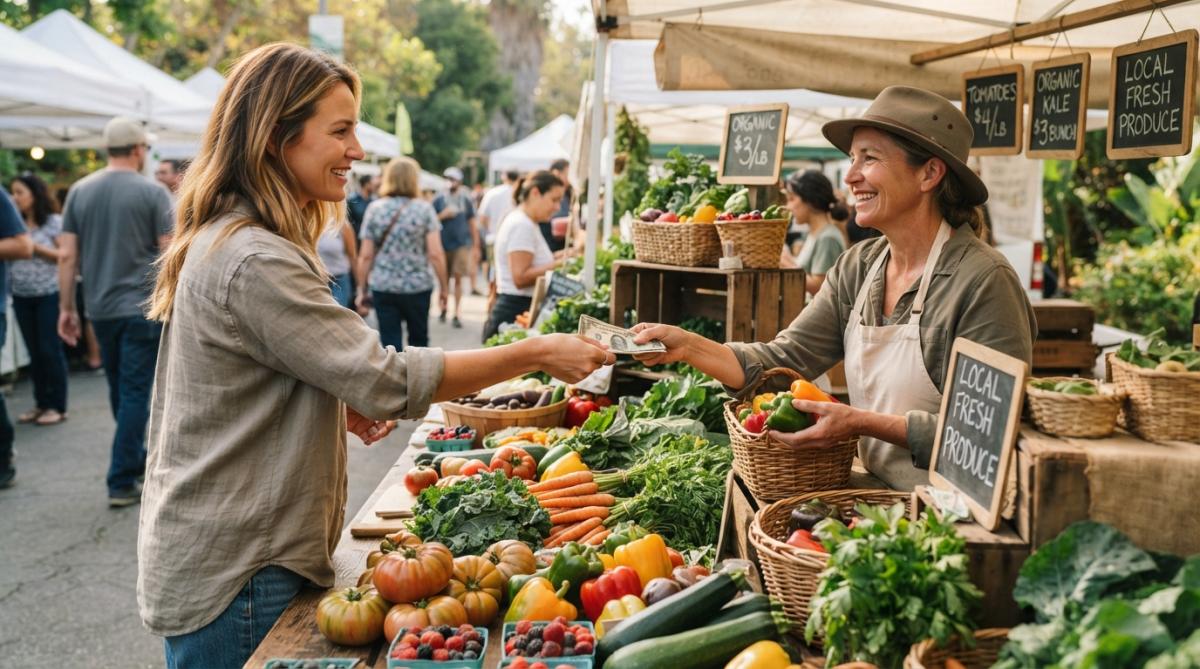
When you shop with cash, you help vendors avoid credit card processing fees, which can eat into their already thin margins. A common mistake is going to the market without a plan, which often leads to impulse buys and wasted food. Instead, walk the market first to see what is abundant, then make your selections based on what looks best.
Seasonal Eating: A Direct Way to Support Local Farmers
Eating seasonally means aligning your meals with the natural harvest calendar of your region, which is one of the most direct ways to support local farmers financially. When you buy a crop that is in peak season, you are purchasing at its highest volume, which typically means better prices for you and a reliable sale for the grower.
The benefits of eating seasonal produce extend beyond economics; flavor and nutritional quality are often at their peak when fruit is allowed to ripen naturally on the plant. To get started, look up a seasonal chart for your state and challenge yourself to build meals around those items.
The Economics of 'In-Season' vs. 'Out-of-Season'
The price difference between in-season and out-of-season produce is not marginal; it is often dramatic. A pint of locally grown strawberries in June might cost $3.50 at a market, while the same pint shipped from a warmer climate in December might cost $6.00 at a grocery store, having traveled an average of 1,500 miles. Out-of-season produce is often harvested early to survive transport, meaning it lacks the full sugar and nutrient development of a vine-ripened crop. supporting artisan communities.
A practical mechanism for eating seasonally on a budget is the "what's abundant" rule. At the market, the items piled highest and priced lowest are almost always the ones in peak season, as farmers price these to move volume. Building your weekly menu around these abundant items is the single most effective way to reduce your grocery bill while supporting the farm's cash flow.
The 'Ugly' Produce Opportunity
One of the best-kept secrets at farmers markets is the discount bin of "ugly" or "seconds" produce. These items are perfectly edible but may have cosmetic blemishes, odd shapes, or slight bruising. Supermarkets reject this produce because it does not meet their visual standards, meaning farmers often have surplus they cannot sell through traditional retail channels.
Many farmers will sell these seconds at a 30% to 50% discount rather than let them go to waste. Ask your farmer directly: "Do you have any seconds or cosmetically imperfect items today?" This question often unlocks a hidden stash of affordable produce perfect for cooking, juicing, or preserving.
A Seasonal Budget Framework
To make seasonal eating a daily habit without breaking the bank, consider this simple framework:
- Learn your region's two peak harvest windows. Most states have a spring/early summer window (leafy greens, peas, radishes) and a late summer/fall window (tomatoes, squash, apples, root vegetables).
- Buy in bulk during the peak. When a crop you love hits its peak price, buy extra and preserve it. Freezing berries, canning tomatoes, or dehydrating apples extends your local food supply into the off-season at a fraction of the cost of buying imported produce later.
- Use the "price-per-meal" calculation. A $4 head of local lettuce that you use for three salads costs less per meal than a $2.50 bag of pre-washed salad mix that only lasts for one meal. Local produce often has a longer shelf life because it was harvested recently, reducing your per-meal cost.
Cut Food Waste to Support Local Farmers Financially
When you waste food, you are not just wasting your own money; you are wasting the farmer's effort, water, and land that went into producing it. Reducing food waste is a powerful, often overlooked way to support local farmers. Meal planning is your best defense here, so buy only what you can realistically eat or preserve within the week.
A practical approach is to designate one night a week as "clean-out-the-fridge" night, where you create a meal from whatever produce is left over. Many people also find success with preserving techniques like freezing berries or making quick pickles to extend the life of their market haul.
Buy Directly from Farms Through CSAs and Online
Community Supported Agriculture (CSA) programs offer a direct financial lifeline to farms by requiring payment upfront for a season's worth of produce. This model gives farmers capital at the start of the season when they need it most for seeds and equipment, sharing the risk and reward of the harvest with the consumer.
For those who prefer more control over their weekly selection, many farms now offer online ordering with delivery or pickup options. This direct-to-consumer model has expanded significantly, allowing you to order specific cuts of meat, dairy, or produce boxes that fit your household's needs.
Support Local Farmers in Winter and the Off-Season
The end of the summer harvest does not mean the end of your support, as many farms extend their seasons with cold-weather crops or sell stored goods. Root vegetables, winter squash, and cold-hardy greens are often available at winter markets. Continuing to shop at these markets is a critical way to support local farmers during their leanest revenue months.
Another way to bridge the gap is to buy shelf-stable items like honey, preserves, and grains directly from farms or local producers. Consider purchasing a "storage share" from a CSA that includes potatoes, onions, and apples that keep well for months.
Advocate for Local Farms on Social Media and Beyond
Your voice is a valuable asset for local agriculture, and digital advocacy can translate into real sales for the farms you care about. When you visit a farm or find a great product at the market, take a photo and tag the farm in your story or post.
Beyond social media, you can advocate by simply talking to your neighbors and coworkers about where you shop and why. Encouraging your local restaurants and cafes to source from nearby farms is another form of advocacy that can create large, steady orders for producers.
Supporting local farmers daily is a habit that builds a more resilient and flavorful food system, but it does require a shift in routine. At Drink Balo, we live this mission by turning surplus farmers market produce into raw kombucha and shrub sodas, proving that sustainability can taste refreshing. Our commitment to using excess produce and supporting local growers means every bottle you choose helps reduce food waste while honoring the people who grow your food.
Frequently Asked Questions
Why is it important to support local farms for the environment?
Supporting local farms cuts food miles, the distance food travels from field to plate. Shorter supply chains mean fewer emissions from long-haul trucks and planes. Local farms also tend to use sustainable agriculture practices that protect soil and water. When you buy directly, you help preserve open space and biodiversity in your region. Your purchase keeps farmland in production instead of being sold for development.
How can I identify truly local produce at the grocery store?
Check the produce label or sticker for the country and state of origin. Many stores also post signage near the display case. Ask the produce manager which farms supply the store and how often deliveries arrive. Seasonal produce is a strong clue: local farms cannot grow tomatoes in January in cold climates. When in doubt, buy from a farmers market where you can ask the grower directly.
What are the most effective ways to reduce food waste at home?
Plan meals around what you already have before shopping. Store produce correctly: keep herbs in water, separate ethylene-producing fruits like apples from leafy greens. Use vegetable scraps to make stock, and freeze surplus before it spoils. Buy imperfect or 'ugly' produce that farmers might otherwise discard. Composting scraps returns nutrients to the soil and keeps waste out of landfills.
Does buying local produce actually help the economy?
Yes. Money spent at a local farm circulates within the community. Farmers buy supplies, equipment, and services from nearby businesses, creating a multiplier effect. Local farms also create jobs in production, harvesting, and direct sales roles. Supporting local farms helps preserve the agricultural community and the working landscape that defines many regions.
What do farmers need the most from consumers?
Consistent, predictable demand. Farmers plan their planting months ahead based on expected sales. When you commit to a CSA share or shop weekly at a farmers market, you give them financial stability. Farmers also need customers who understand seasonality and accept that fresh produce varies in size and appearance. Direct feedback helps them know what to grow next season.
How do fermented beverages help reduce agricultural food waste?
Fermented drinks like kombucha and shrub sodas use surplus or imperfect produce that would not sell in grocery stores. Farms often discard items that are cosmetically flawed or excess to demand. Companies that ferment this produce create a valuable product from what would become waste. This adds a revenue stream for growers and keeps food in the human food system rather than landfills.
The challenge is to move from intention to consistent action, one meal at a time. Drink Balo makes this easier by creating delicious, non-alcoholic beverages from the very produce that might otherwise go unsold. Get started with Drink Balo and make your next toast a celebration of local agriculture and a healthier planet.