

Does Mindful Drinking Improve Sleep Quality?
Last Updated: October 30, 2026
Quick Summary
Yes, mindful drinking can improve sleep quality for many people. A Sleep Foundation survey found that 61% of respondents who paused alcohol said they slept better, though roughly 4 in 10 noticed no big change. Mindful drinking means paying attention to when, why, and how much you drink so alcohol becomes a choice, not a habit.
- Even low-dose alcohol reduces REM sleep, the stage tied to feeling restored.
- Finish your last alcoholic drink at least three hours before bed to give your body a head start.
- Schedule at least two alcohol-free nights and put them on your calendar in advance.
- Sleep continuity and morning grogginess tend to improve first when you cut back on alcohol.
- See a doctor if insomnia lasts more than three weeks or you notice gasping during sleep.
Table of Contents
- What Mindful Drinking Means for Your Sleep
- How Alcohol and Sleep Quality Are Connected
- How to Drink Mindfully Without Losing the Social Hour
- Timing, Dose, and Why Your Response Is Different
- Sleep Changes After Quitting Alcohol or Cutting Back
- Non-Alcoholic Drinks for Evening Routines That Support Sleep
- How to Measure Whether Your Sleep Actually Improved
- When Sleep Trouble Needs More Than a Drink Swap
- Frequently Asked Questions
What Mindful Drinking Means for Your Sleep
Does mindful drinking improve sleep quality? A Sleep Foundation survey on taking a break from drinking found that 61% of respondents who paused alcohol said they slept better.
That last part matters most for sleep.
Below, we'll show you exactly how to run your own experiment, what the science says about alcohol and sleep quality, and where the evidence gets murky.
But first, here's what most guides get wrong: they treat "alcohol makes you sleepy" as proof that it helps sleep. It doesn't.
How Alcohol and Sleep Quality Are Connected
Alcohol changes sleep in two opposite directions at once. It helps you fall asleep, then it breaks the sleep you get.
The Sedative Effect and Why You Fall Asleep Faster
Ethanol acts on GABA, the brain's main calming chemical. That sedative effect is real. A drink before bed can shorten sleep latency, the time it takes to nod off.
One 2019 study in the Journal of Nursing Scholarship on alcohol, anxiety, and sleep found that daily drinking improved sleep latency for people with minimal to mild anxiety.
Knocking you out is not the same as sleeping well.
REM Sleep, Night Waking, and Fragmented Sleep
A 2025 review published in Sleep Medicine Reviews on alcohol and subsequent sleep reports that even low-dose alcohol reduces REM sleep.
Alcohol can also contribute to fragmented sleep, and some people wake more often in the second half of the night as their body processes ethanol.
The result: you fall asleep faster, then wake up groggy. That grogginess is the tell.
How to Drink Mindfully Without Losing the Social Hour
The approach below is built around sleep outcomes, so you are not just drinking less, you are collecting evidence about whether drinking less helps you sleep.
Step 1: Set a baseline week
Before you change anything, spend seven nights drinking the way you normally do and logging your sleep each morning. Record four things: the time you went to bed and woke up, your rough estimate of how many minutes it took to fall asleep, how many times you woke during the night, and a 1-10 rating of how rested you feel. This baseline is what you will compare everything else against. Without it, you are guessing.
Step 2: Set a drink ceiling and alcohol-free nights in advance
Pick a ceiling before the week starts, not in the moment. Two drinks per occasion is a common starting point for people testing sleep effects, but the right number is the one you can actually stick to. Then schedule at least two alcohol-free nights and put them on your calendar like any other appointment. Deciding in advance removes the negotiation that happens at 8 p.m.
Step 3: Change one variable at a time
If you cut your intake, add alcohol-free nights, and move your last drink earlier all in the same week, you will not know which change mattered. Pick one lever for the first week, usually the alcohol-free nights, and hold everything else steady. Add the next lever in week two.
Step 4: Space drinks and protect the last hour
Put a glass of water or a non-alcoholic option between each drink, and aim to finish your last alcoholic drink at least three hours before bed. This is not a universal rule, timing effects vary by person, but it gives your body a head start on clearing ethanol before sleep begins.
Step 5: Review and adjust
At the end of two weeks, compare your mindful-drinking week against your baseline week. Look at sleep continuity (night wakings) and morning grogginess first, since those tend to shift before anything else. If nothing changed, adjust one variable, earlier last drink, lower ceiling, or more alcohol-free nights, and run another week.
Keeping the social hour intact
A non-alcoholic drink in your hand can help you keep the social side of the evening. If you want concrete swaps that still work with dinner, see our guide to alternatives to wine for dinner. We cover that in can fermented drinks replace alcohol buzz. And if you are deciding between spirits and cocktails for a party, read non-alcoholic spirits vs traditional cocktails.
Timing, Dose, and Why Your Response Is Different
There is no single "safe" drink count for sleep. Your response depends on timing, dose, and your own baseline.
Timing matters because alcohol's sedative effect fades within a few hours. A drink at 6 p.m. clears your system well before bed.
Dose matters too. The Sleep Foundation survey found about 40% of respondents noticed alcohol's effect on sleep after just 3 to 4 drinks.
And your baseline matters most.
If you want practical habits to test while you experiment, our mindful drinking tips for resetting your relationship with alcohol walk through them step by step.
| Factor | What Changes | What to Try |
|---|---|---|
| Timing | Late drinks hit deep sleep | Last drink 3+ hours before bed |
| Dose | 3-4 drinks disrupt sleep for many | Cap at 1-2 and track results |
| Anxiety level | Severe anxiety sees worse quality | Test alcohol-free nights first |
| Body weight | Affects how fast ethanol clears | Space drinks with water |
Sleep Changes After Quitting Alcohol or Cutting Back
Most people notice a difference within one to two weeks, but not always in the direction they expect.
The first few nights can be rough. Your brain has adjusted to alcohol's sedative push, so falling asleep may feel harder at first.
Then the changes show up:
- Faster sleep onset returns as your natural sleep routine rebuilds
- Fewer night-time awakenings as fragmented sleep fades
- More vivid dreams, a sign REM sleep is recovering
The Sleep Foundation's 61% figure lines up with what people report. But that also means roughly 4 in 10 did not notice a big change.
Non-Alcoholic Drinks for Evening Routines That Support Sleep
A good alcohol-free drink does two jobs: it gives your hands and mouth something to do, and it signals to your brain that the evening is winding down. That ritual matters more than people think.
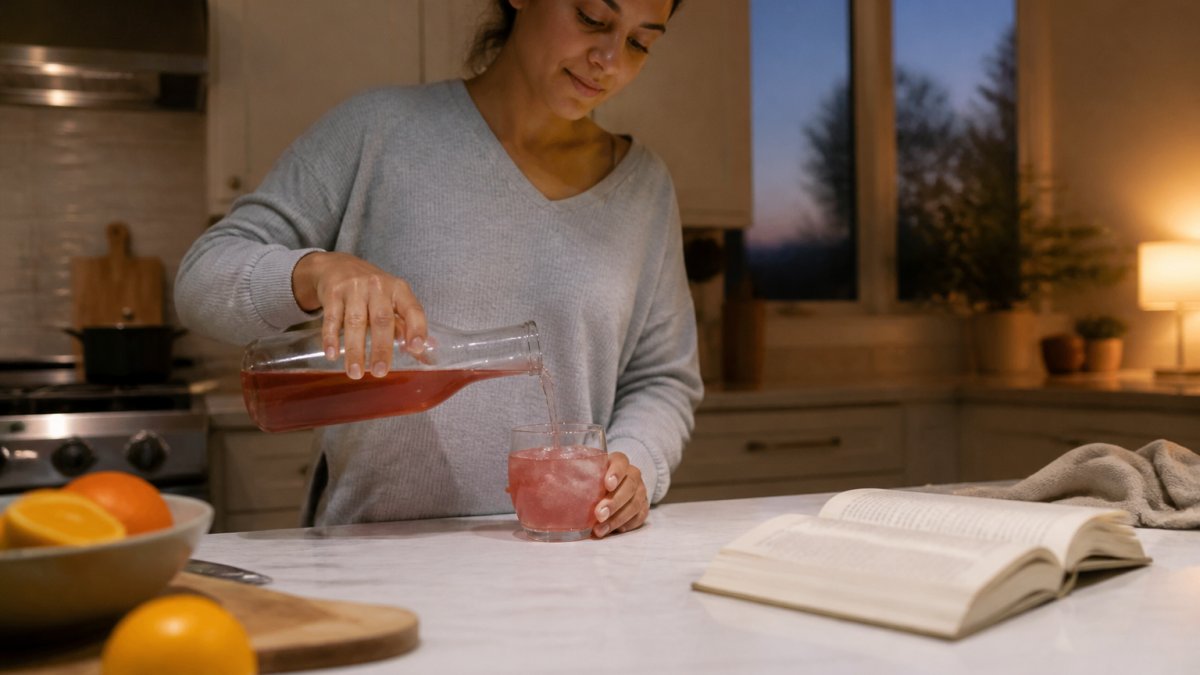
Build a simple routine:
- Pick a drink you actually like. Fancy juice you tolerate will not replace the habit.
- Keep it cold and serve it in a real glass. The ritual is the point.
- Pair it with a wind-down cue, like a book or a shower.
This is where our own work fits. Drink Balo makes non-alcoholic raw kombucha, shrub sodas, and shrub mixers from excess farmers market produce.
How to Measure Whether Your Sleep Actually Improved
You cannot trust your memory on this. People routinely misjudge how long they took to fall asleep and how often they woke. Track it instead, and track the right things.
The five indicators worth watching
A useful sleep log does not need to be complicated. Record these each morning:
- Sleep onset, your rough estimate of how many minutes it took to fall asleep
- Night awakenings, how many times you woke during the night
- Total sleep time, bedtime to wake time, minus time awake
Sleep continuity (awakenings) and morning grogginess tend to move first when people cut back on alcohol, so watch those closely even if total sleep time barely changes.
Run a two-week comparison
Log one week with your normal drinking habits, then one week with your mindful drinking plan. Keep the log in the same place and fill it in at the same time each morning. At the end, compare the two weeks side by side rather than trying to remember how you felt.
What wearables can and cannot tell you
A wearable or phone sleep tracker can help, but treat the numbers as trends, not verdicts. Consumer trackers are reasonably good at spotting night-time awakenings and estimating rough sleep duration. They are weaker at judging sleep stages, and they are not diagnostic tools. If a tracker says your REM sleep was low, that is a prompt to look at your log, not a medical finding.
Set realistic expectations
Improvement is common but not guaranteed. In the Sleep Foundation survey cited earlier, 61% of respondents who paused alcohol said they slept better, which means roughly 4 in 10 did not notice a big change. Some people see a difference within a week; others need several weeks of consistent alcohol-free nights before sleep continuity shifts.
When Sleep Trouble Needs More Than a Drink Swap
Cutting back on alcohol is a useful experiment, not a cure. Some sleep problems need real medical support.
See a doctor if you notice:
- Loud snoring, gasping, or pauses in breathing during sleep
- Daytime sleepiness that interferes with work or driving
- Insomnia lasting more than three weeks
Those signs can point to conditions such as sleep apnea or chronic insomnia. A doctor can evaluate the cause.
Also be honest about withdrawal. If you drink heavily and daily, cutting back suddenly can cause serious symptoms.
Frequently Asked Questions
Does mindful drinking improve sleep quality?
It can, for many people. The Sleep Foundation reports that 61% of surveyed respondents who took a break from drinking said they slept better, and about 40% noticed alcohol's effect on sleep after 3-4 drinks. A 2025 review in Sleep Medicine Reviews found that even low-dose alcohol reduces REM sleep. Mindful drinking works by cutting total drinks, spacing them out, and adding alcohol-free nights, which reduces REM disruption and night waking. Results vary by person, so track your own sleep for two to three weeks before judging.
How does alcohol affect sleep quality if it makes you fall asleep faster?
Falling asleep faster is not the same as sleeping well. Alcohol has a sedative effect that shortens sleep onset, but research shows it disrupts the second half of the night. A 2025 review reports that low-dose alcohol negatively affects REM sleep, and higher doses can fragment sleep with night-time awakenings. A 2019 study in the Journal of Nursing Scholarship found daily drinking may improve sleep latency for people with minimal to mild anxiety while decreasing sleep quality for those with severe anxiety. The trade-off is faster onset for worse continuity.
How long before bed should you stop drinking alcohol?
Give yourself at least three to four hours between your last drink and bedtime. The Sleep Foundation survey found about 40% of respondents noticed alcohol's impact on sleep after 3-4 drinks, which suggests both quantity and timing matter. A longer gap lets your body metabolize ethanol before sleep onset, reducing the chance of night-time awakenings and grogginess. If you do drink closer to bedtime, keep it to one drink and expect lighter, more fragmented sleep that night.
What sleep changes can you expect after quitting alcohol or cutting back?
Most people notice better sleep continuity first: fewer 3 a.m. wake-ups and less snoring. The Sleep Foundation survey found 61% of respondents reported sleeping better after taking a break from drinking. Deeper REM sleep often returns over one to two weeks as your sleep cycles stabilize. Some people initially find it harder to fall asleep without alcohol's sedative effect, especially if they used it as a sleep aid. Track sleep duration, latency, and how rested you feel to see the full picture.
Changing how you drink is one of the few sleep levers you fully control, and it costs nothing to test. At Drink Balo, we make that test easier with non-alcoholic raw kombucha and shrub mixers built for the evening ritual: fermented to feel better, made from local farmers market produce, and grown to taste good. Get started with Drink Balo and give your nights a drink that works with your sleep, not against it.
