

10 Mindful Drinking Tips for Gen Z to Reset Their Relationship With Alcohol
Last Updated: October 29, 2026
Quick Summary
Mindful drinking means paying deliberate attention to what, when, and why you drink instead of drinking on autopilot. For Gen Z, it starts with questioning your reason before you pour, setting limits before you go out, and slowing down so you savor each drink. Track your drinks, spending, and triggers for two weeks to spot patterns.
- Name your reason for drinking before the first sip, out loud or in your notes app.
- Set your maximum number of drinks, pace, and exit time before leaving the house.
- Alternate every alcoholic drink with water or a non-alcoholic option.
- Track drinks, money spent, and triggers for two weeks to find your patterns.
- Pick two numbers, like weekly drinks and monthly spending, and check them monthly.
Table of Contents
- Why Mindful Drinking Is Reshaping Gen Z Drinking Culture
- Tip 1: Question Why You're Drinking Before You Pour
- Tip 2: Set Limits and Make a Plan Before You Go Out
- Tip 3: Savor Your Drink and Slow Down
- Tip 4: Find the Best Mixers for Mocktail Recipes You Actually Crave
- Tip 5: Handle Peer Pressure, Dating, and Party Situations
- Tip 6: Track Drinks, Spending, and Triggers With Digital Tools
- Tip 7: Know Your Standard Drinks and Harm-Reduction Basics
- Tip 8: Build Alcohol-Free Activities Into Your Week
- Tip 9: Measure Progress Without Making Abstinence the Only Goal
- Tip 10: Know When to Seek Real Support
- Frequently Asked Questions
Why Mindful Drinking Is Reshaping Gen Z Drinking Culture
Mindful drinking is the practice of paying deliberate attention to what, when, and why you drink, rather than drinking on autopilot. For Gen Z, that shift is already measurable: Mintel's research on the sober curious generation reports that just under half of Gen Z respondents drink low- and no-alcohol beverages. Drink Balo makes non-alcoholic shrub sodas and mixers.
The story is more nuanced than "young people quit alcohol." Numerator's insights into Gen Z drinking habits found Gen Z favors hard beverages, champagne, and drinks with little or no alcohol over traditional wine and beer. They are not abstaining so much as trading down in strength and trading up in intention.
That distinction matters. TIME's reporting on why Gen Z is drinking less notes that experts point to a variety of factors, not one definitive cause. So treat the trend as a menu of reasons, not a verdict.
Curious whether fermented drinks can stand in for a buzz? Read can fermented drinks replace alcohol buzz to see what is realistic and what is hype.
Tip 1: Question Why You're Drinking Before You Pour
Before you pour, ask one question: what am I actually hoping this drink does? Thirst, nerves, boredom, and social cover are four very different needs, and only one of them is about thirst.
A simple habit: name your reason out loud or in your notes app before the first sip. If the answer is "everyone else is," that is a signal, not a reason. If the answer is "I want to taste something interesting," you have a lot of good options.
Watch out: skipping this step is how a single drink becomes four before you have decided anything at all.
Tip 2: Set Limits and Make a Plan Before You Go Out
The best limit is the one you set before you leave the house. Decide on a number, decide on a pace, and decide on your exit time, then write it down.
A plan that works for most people:
- Pick a maximum number of drinks and stick to it
- Alternate every alcoholic drink with water or a non-alcoholic option
- Eat before you go, not after
- Set a ride home in advance so leaving is easy
- Tell one friend your plan so someone else knows it
The plan is not a punishment. It is a decision made by the calm version of you, for the version of you standing in a loud bar at 11 p.m.
Tip 3: Savor Your Drink and Slow Down
Slowing down is the cheapest moderation tool you own.
Try this: put the glass down between sips, and take a real sip rather than a gulp. Notice flavor before you notice volume. Order something you actually want to taste, not something you tolerate.
Tip 4: Find the Best Mixers for Mocktail Recipes You Actually Crave
A mocktail only works if you genuinely look forward to it. The best mixers for mocktail recipes are the ones you enjoy.
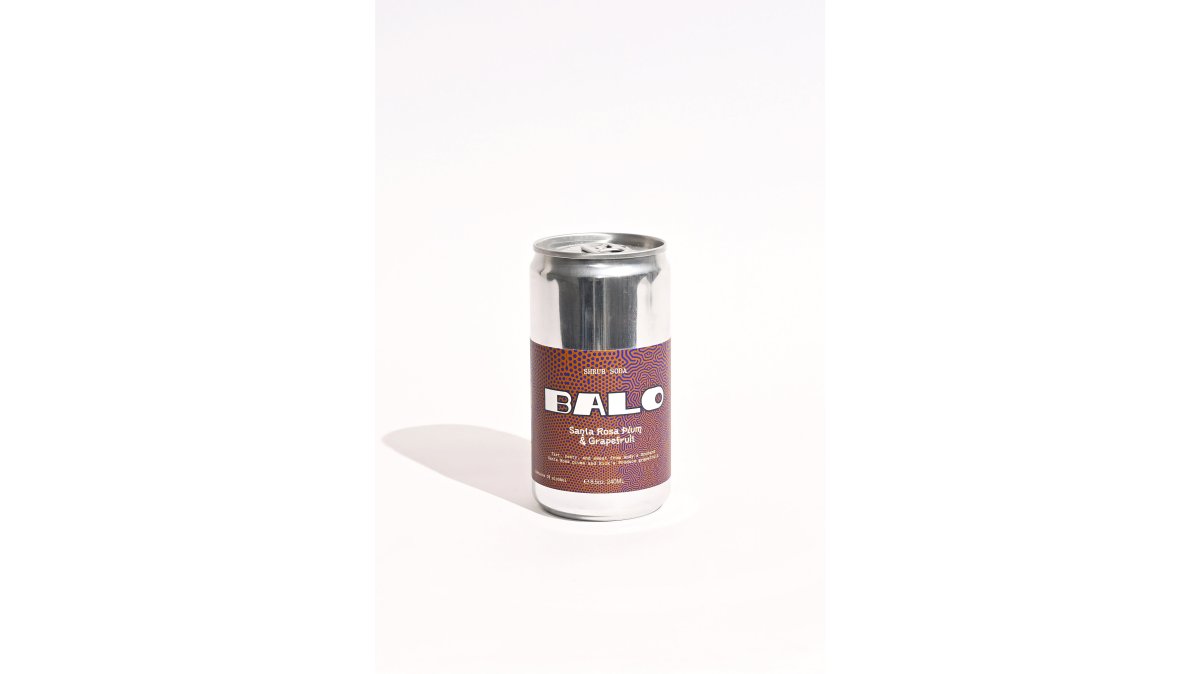
Our pick is a shrub mixer. One bottle makes about 16-18 drinks when you mix 1 oz with 5 oz sparkling water and ice. The Santa Rosa Plum Grapefruit Shrub Mixer is $19.50, and the Blueberry, Moringa, Yuzu Shrub Mixer runs the same. Prefer something already carbonated? The 4 pack Santa Rosa plum & grapefruit shrub soda is $18.00 for four 8.5 oz each, with 4 grams of cane sugar.
For a deeper shortlist, browse best mixers for mocktail recipes before your next gathering.
Tip 5: Handle Peer Pressure, Dating, and Party Situations
Peer pressure rarely looks like pressure. It looks like "you're not drinking?" at a rooftop party, and it lands hardest in dating and early-career social settings. The trick is to have a specific line ready for each scenario, not a generic refusal.

At a party or tailgate: Hold a non-alcoholic drink in your hand. If someone pushes, try "I'm pacing myself" or "I've got a big morning tomorrow." If they keep pushing, a flat "I said I'm good" is an option. You do not owe anyone a medical reason.
On a date: Say it early and casually, ideally before you order. Establishing these boundaries early on also plays a vital role in staying safe while drinking by ensuring you remain alert and in control of your environment throughout the evening.
At a work happy hour: Early-career social events are where "just one" becomes three because you feel watched. Order a sparkling water with lime in a rocks glass, or a non-alcoholic beer if the venue has one. If a colleague asks, keep it boring: "I'm taking a break tonight."
When you are hosting: Have at least two non-alcoholic options that are not just soda, a shrub mixer with sparkling water, a non-alcoholic beer, or a flavored tonic. Put them in the same cooler or on the same tray as the alcoholic drinks so no one has to ask. Learn how to host a dry party so the non-drinkers are not an afterthought.
If you are the one being pressured by a close friend: Pull them aside and say, "I'm trying something new and I need you to not make it a thing." Most friends will respect a direct ask more than a repeated no.
4 pack Santa Rosa plum & grapefruit shrub soda →
Tip 6: Track Drinks, Spending, and Triggers With Digital Tools
What gets tracked gets managed. A notes app, a budgeting app, or a habit tracker is enough; you do not need special software. But to make tracking useful, you need a method, not just a category.
Pick your tool based on what you already use. If you check your bank app daily, use its spending categories to track alcohol purchases. If you live in your notes app, create a simple table. If you like streaks, a habit tracker like the one built into your phone's health app works. The best tool is the one you will actually open.
Track three things for two weeks:
| What to track | Why it matters | What to do with it |
|---|---|---|
| Number of drinks | Shows your real baseline | Set a limit below it |
| Money spent | Makes the cost visible | Redirect savings to something you want |
| Triggers | Reveals patterns | Plan around the top two |
Use a simple rating scale for triggers. After each drinking occasion, note three things: where you were, who you were with, and how you felt before the first drink (anxious, bored, celebratory, lonely). After two weeks, look for the pattern. Once you can name it, you can plan for it.
Set a measurable goal that is not abstinence. For example: "No more than 4 drinks in a week," "At least 3 drink-free days per week," or "Spend under $40 a month on alcohol." Check your tracker weekly, not daily, daily checking can turn into obsessing.
Use the savings as a reward. If you cut $30 a month from alcohol, move that $30 to a separate savings account or a budgeting app category called "something I actually want." Seeing the number grow is more motivating than a vague intention.
Watch out for tracking fatigue. If you miss a day, do not quit the whole experiment. Pick up the next day. The goal is a trend line over two weeks, not a perfect record.
Tip 7: Know Your Standard Drinks and Harm-Reduction Basics
Harm-reduction basics worth keeping:
- Eat before and during drinking
- Alternate with water
- Never drive after drinking; plan a ride
- Do not leave a drink unattended
- Know the signs that mean calling for help, not sleeping it off
Weighing non-alcoholic against alcoholic options? Non-alcoholic spirits vs traditional cocktails breaks down the trade-offs honestly.
Tip 8: Build Alcohol-Free Activities Into Your Week
If every social plan centers on drinking, every plan will. Build a few that do not.
Ideas that hold up: a weekday run club, a cooking night, a bookstore trip, a long hike, a coffee walk with a friend. The goal is not to replace alcohol. It is to prove to yourself that a good Tuesday does not require a drink.
Start with one recurring activity. One is enough to shift the default.
Tip 9: Measure Progress Without Making Abstinence the Only Goal
Abstinence is one outcome, not the only one. Measure what actually changed: fewer drinks per week, less money spent.
Pick two numbers and check them monthly. If they trend the right way, the approach is working, even if you still drink sometimes.
Progress is a trend line, not a pass/fail test.
Tip 10: Know When to Seek Real Support
Some patterns need more than a plan. If you are drinking to manage anxiety or sleep, if you cannot stop once you start, or if withdrawal symptoms appear when you cut back, talk to a doctor or a licensed counselor. official guidance on alcohol and health from the National Institute on Alcohol Abuse and Alcoholism is a good starting point for understanding risk.
Asking for help early is not an overreaction. It is the same logic as Tip 1, applied to the bigger question.
Frequently Asked Questions
What is the mindful drinking movement?
Mindful drinking is the practice of paying attention to what, when, and why you drink instead of doing it on autopilot. It is not about quitting. It is about awareness: noticing your triggers, choosing lower-ABV or alcohol-free options when you want them, and setting limits before you go out. The movement overlaps with sober curiosity, where people question whether alcohol adds value to a given moment. Mintel reports that just under half of Gen Z respondents drink low- and no-alcohol beverages, which shows how mainstream the approach has become.
How does Gen Z approach alcohol consumption differently from older generations?
Numerator reports that Gen Z favors hard beverages, champagne, and drinks with little or no alcohol over wine and beer. Mintel reports that just under half of Gen Z respondents drink low- and no-alcohol beverages.
What are the benefits of being sober curious?
Sober curiosity is a way to question whether alcohol adds value to a given moment without adopting a permanent label. Balo's Concord grape, lime and guava leaf shrub mixer makes about 16 to 18 drinks for $19.50.
How can I socialize without drinking alcohol?
Suggest activities where alcohol is not the focus, and bring an alcohol-free option to share. Balo's 4 pack of Passionfruit Makrut lime shrub soda is $18.00 and gives you four 8.5 oz each. Have a short line ready, like "I'm good with this tonight," and change the subject.
How do I handle social pressure to drink?
Plan your response before you go out, keep it short, and do not over-explain. A simple "not tonight" or "I have an early morning" is one way to respond. Hold a drink so your hands are busy, and stay close to friends who support your choice. Gen Z drinking culture is shifting: Mintel reports that just under half of Gen Z respondents drink low- and no-alcohol beverages.
Cutting back works best when the alternative is genuinely good. That is the problem we set out to solve at Drink Balo. Our shrub mixers and shrub sodas are non-alcoholic, naturally fermented, and made from excess farmers market produce, so the drink in your hand is worth paying attention to. Start with a 6 Pack Shrub Soda at $27.00 or a single mixer bottle at $19.50, and get the buzz without the alcohol.
