

Why Drink Sustainably Sourced Fermented Beverages
Table of Contents
- What Makes a Fermented Beverage Sustainably Sourced?
- How to Reduce Food Waste One Bottle at a Time
- The Benefits of Raw Kombucha for Gut Health and Beyond
- What Are Shrub Sodas and Why They Fit a Sustainable Lifestyle
- Sourcing and Supply Chain Ethics: What to Look For
- Home-Brewing vs. Commercial Sustainability: Which Actually Helps?
- Packaging Sustainability: The Part Most Brands Skip
- Frequently Asked Questions
Last Updated: September 25, 2026
What Makes a Fermented Beverage Sustainably Sourced?
A sustainably sourced fermented beverage is one where every input, from the produce to the packaging, is chosen to reduce environmental harm while supporting the people who grow it. At Drink Balo, we built our entire production model around this idea: we transform excess farmers market produce into raw kombucha and shrub sodas, so nothing edible goes to waste and local growers get paid for crops that would otherwise be discarded.

The fermentation process itself is one of the oldest preservation techniques in traditional food systems. Lactic acid bacteria and wild yeasts convert sugars into organic acids, which lowers pH levels and naturally extends shelf life. That biochemical transformation means a sustainably sourced fermented drink can cut down on the food waste that happens when fresh produce spoils before anyone eats it.
The Role of Raw Materials and Local Supply Chains
Where your drink's ingredients come from matters as much as what's in the bottle. A short supply chain means produce travels fewer miles, arrives fresher, and supports regional agriculture instead of industrial monoculture. Many small producers find that sourcing locally also improves flavor, because fruit picked at peak ripeness carries more natural sugar and aroma than produce harvested early for long-distance shipping.
Drink Balo works directly with farmers market vendors, which keeps raw materials traceable and money circulating in the local food economy. The USDA Local Food Marketing Practices guidance outlines how direct-to-consumer and local sourcing arrangements strengthen regional food systems.
How to Reduce Food Waste One Bottle at a Time
Reducing food waste starts with using what already exists. The EPA estimates on wasted food puts wasted food at roughly a third of the food supply, and a meaningful share of that loss happens before anything reaches a kitchen, at the farm, the packing house, and the market stall, where produce is rejected for shape, size, or color rather than for anything wrong with it.
Fermentation is uniquely suited to this problem, and the reason is biochemical rather than sentimental. When you pitch a lactic acid bacteria or wild yeast culture into fruit, the microbes consume the sugars that would otherwise feed spoilage organisms. As they work, they produce organic acids, lactic acid, acetic acid, and smaller amounts of others, that drive the pH down into a range where molds and most spoilage bacteria can't reproduce. A bruised peach that would rot on a counter in three days can, once fermented, hold for an extended period. The waste is not "hidden" in the bottle; it is chemically converted into a shelf-stable product.
That matters because the alternative to fermentation is usually the landfill, and food in a landfill decomposes anaerobically and releases methane, a greenhouse gas with far more warming potential per molecule than carbon dioxide over a twenty-year window. Diverting edible surplus into a fermented drink keeps that carbon in the food system instead of the atmosphere.
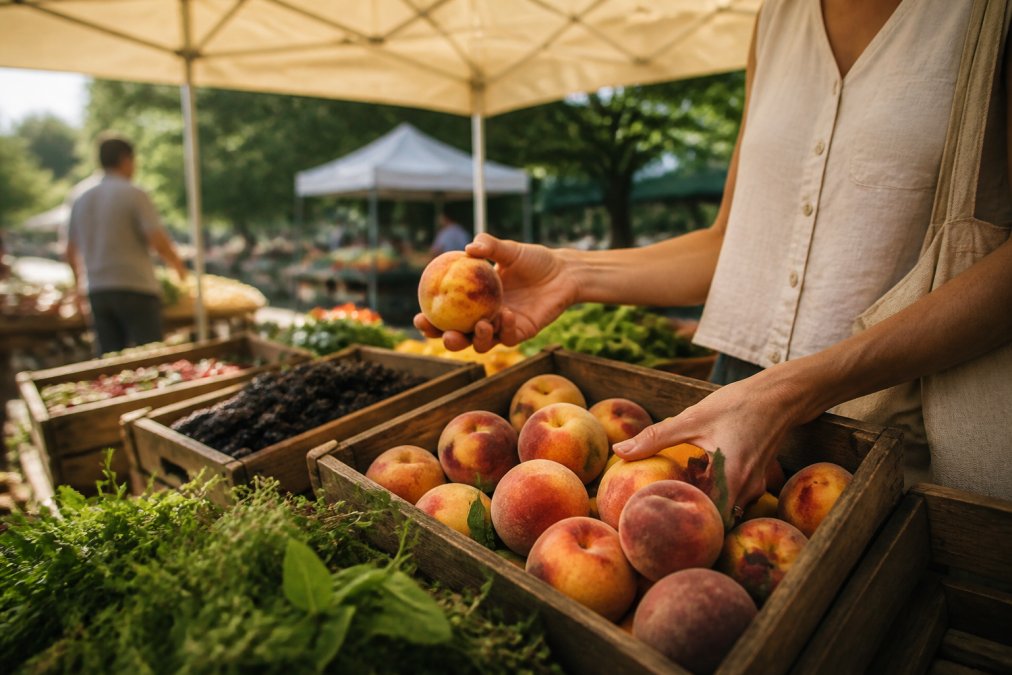
Turning Excess Farmers Market Produce Into Drinks
The practical workflow is simpler than most people assume, but the timing is unforgiving. Vendors set aside unsold crates at the end of market day; producers collect them and process within hours, because the window between "ripe enough to ferment well" and "too far gone to use" is short, often a single day in summer heat. From there it's a matter of blending, adjusting sugar and acid, pitching a starter culture, and letting fermentation do the rest.
A common mistake is assuming "ugly" produce is lower quality. In practice, a slightly soft plum or a misshapen strawberry ferments just as well as a perfect one, often better, because riper fruit carries more free sugar for the culture to consume and more developed aroma compounds. The trade-off is consistency: rescued produce varies batch to batch in sugar and acid, so a producer working this way has to taste and adjust rather than follow a fixed recipe. That variability is the price of the model, and it's why small-batch producers who source this way tend to blend to a target flavor rather than to a fixed formula.
The Benefits of Raw Kombucha for Gut Health and Beyond
Raw kombucha offers live cultures that many people turn to for digestive support. Because it isn't pasteurized, raw kombucha retains the probiotic yeasts and bacteria created during fermentation, along with organic acids and antioxidants produced along the way. These complex biological profiles mirror the broader craft beverage benefits found in artisanal spirits, where traditional production methods preserve the integrity of the original ingredients.
The benefits of raw kombucha center on the gut. Live cultures can support microbial diversity in the gastrointestinal tract, and the organic acids may aid digestibility by helping the body break down food more efficiently. Some research also points to broader metabolic health effects, including support for blood sugar regulation and cholesterol management, though results vary by person and strain. The NIH National Center for Complementary and Integrative Health overview of probiotics notes that probiotic benefits depend heavily on specific strains and doses.
Live Cultures, Probiotics, and Digestibility
Not all kombucha is created equal. Pasteurized versions lose their live cultures in the heating process, which is why "raw" matters if probiotics are your goal. A raw, naturally fermented drink keeps its enzymatic activity intact.
Drink Balo's raw kombucha is naturally fermented and carries 4 grams of cane sugar per 12-ounce bottle, far less than most commercial sodas. The Harvard T.H. Chan School of Public Health on fermented foods explains how fermented foods fit into an overall healthy diet.
What Are Shrub Sodas and Why They Fit a Sustainable Lifestyle
Shrub sodas are carbonated drinks made from a fermented fruit-and-vinegar base called a shrub. The shrub itself is an old preservation method: fruit, sugar, and vinegar combine to create a tart, concentrated syrup that keeps for months and mixes with sparkling water for a bright, refreshing drink.
That preservation angle is exactly why shrub sodas fit a sustainable lifestyle. A shrub captures fruit at its peak and holds that flavor long past the harvest window, which means less produce spoils and less gets thrown out. Drink Balo's shrub mixers, like the Blueberry, moringa, yuzu shrub mixer and the Santa Rosa Plum Grapefruit Shrub Mixer, each make about 16 to 18 drinks and stay good for six months refrigerated after opening.
For anyone sober-curious, a shrub soda delivers complexity and bite without alcohol. It reads as a crafted drink at a dinner party, not a consolation prize.
Sourcing and Supply Chain Ethics: What to Look For
Ethical sourcing comes down to transparency and traceability. A producer who can name their farms, explain how farmers are paid, and show how surplus is handled is doing the work. A producer who can't answer those questions usually isn't.
When you're evaluating any fermented beverage, run through this quick checklist:
- Can the brand name the farms or markets it sources from?
- Does it explain what happens to unsold or imperfect produce?
- Is the drink raw and unpasteurized, or heat-treated?
- Does the label list added sugars, additives, or "natural flavors"?
- Is the packaging reusable, recyclable, or refillable?
- Does the brand publish anything about farmer partnerships?
Most brands skip the sourcing story entirely, which is the gap that matters most.
Home-Brewing vs. Commercial Sustainability: Which Actually Helps?
Home-brewing wins on packaging and transport, but commercial production usually wins on scale and waste diversion. A home brewer avoids shipping entirely and can reuse the same bottles indefinitely, which cuts carbon footprint meaningfully. The trade-off is volume: a home setup can't absorb the crates of surplus produce a market generates in a single weekend.
Packaging Sustainability: The Part Most Brands Skip
Packaging is where sustainability claims most often fall apart, and it's also the part of the query almost no competitor addresses. The reason is that the trade-offs are genuinely uncomfortable, every common format wins on one axis and loses on another.
Frequently Asked Questions
Is drinking fermented drinks good for you?
Fermented drinks like raw kombucha and shrub sodas contain live cultures and organic acids that support gut microbiota and digestibility. They also provide antioxidants. However, quality matters: sustainably sourced fermented beverages made from fresh, whole ingredients. Look for naturally fermented options with no additives and moderate sugar levels, like those with 4 grams of cane sugar per serving.
How does sustainable sourcing impact the quality of fermented beverages?
Sustainable sourcing means raw materials come from local growers using practices that protect soil and reduce carbon footprint. Fresher produce retains more nutrients and natural yeast, which leads to a more active fermentation process and better flavor complexity. When brands use excess farmers market produce, they also reduce food waste and support traditional food systems. The result is a drink with a taste that reflects seasonal, regional ingredients.
What is the connection between food waste reduction and fermented drinks?
Fermentation is a preservation technique that extends shelf life and turns surplus produce into stable, value-added beverages. Brands that source excess farmers market produce prevent edible fruits and vegetables from being discarded. This reduces methane emissions from landfills and supports a circular economy. Choosing these drinks is a simple way to reduce food waste while enjoying probiotic-rich, shelf-stable options that last up to 9 months refrigerated.
What are shrub sodas and are they as healthy as kombucha?
Shrub sodas are fermented beverages made from fruit, sugar, and vinegar, creating a tart, fizzy drink rich in organic acids and prebiotic compounds. Unlike kombucha, which relies on tea and a SCOBY, shrub sodas often highlight seasonal fruit. Both support digestive health and provide antioxidants. Shrub mixers, for example, can make 16-18 drinks per bottle and contain 5 grams of cane sugar per mixed drink, offering a lower-sugar, non-alcoholic option for entertaining.